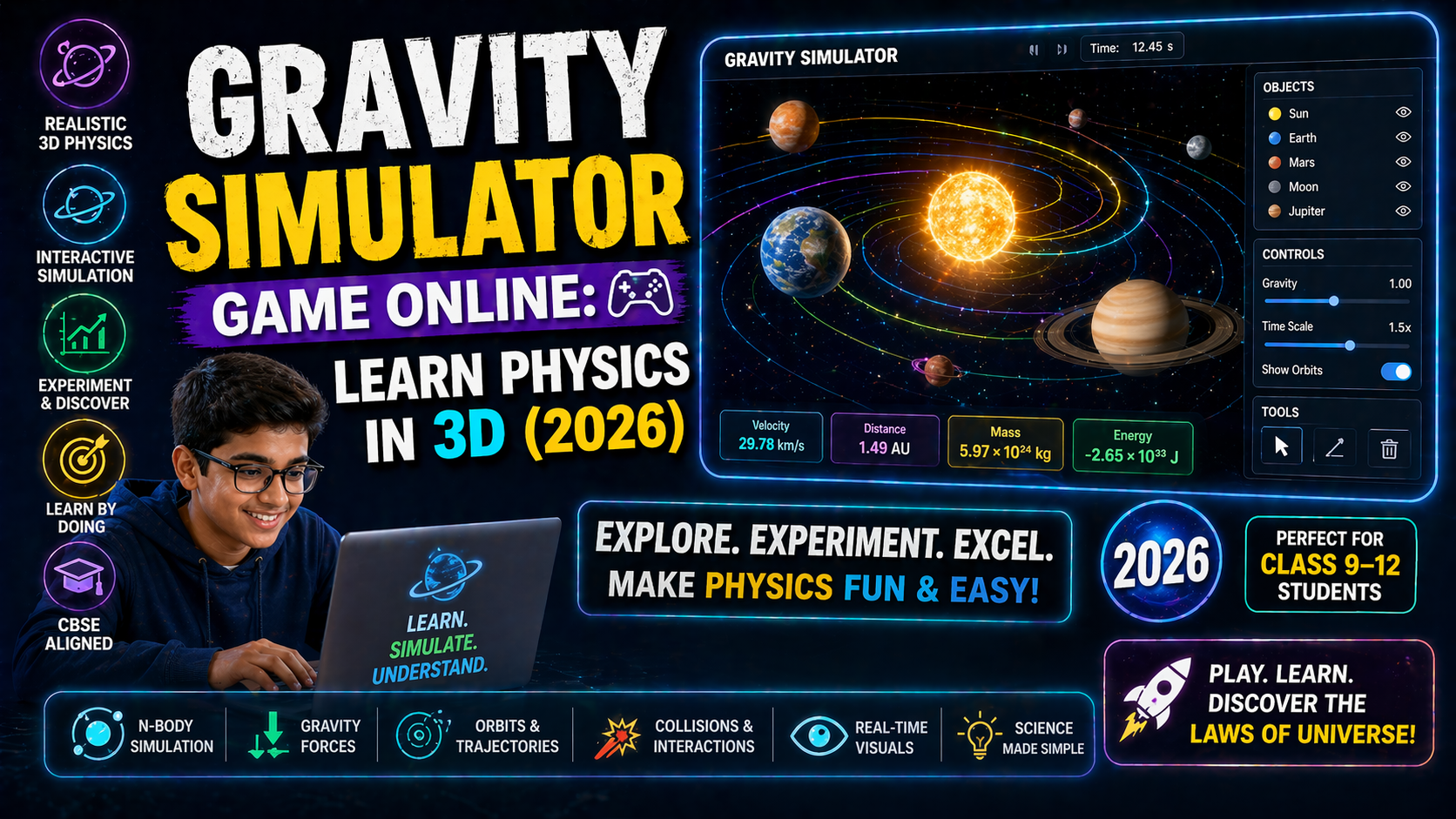
Imagine a world where surfaces glide effortlessly, where motion happens without the drag of friction. While such a world doesn’t exist in reality, friction-free tape brings us closer to simulating zero-resistance motion in physics experiments and simulations. For students in Class 9–12, understanding friction and its absence is not just theoretical—it’s a gateway to mastering concepts like motion, forces, and energy.
In this guide, we’ll explore what friction-free tape is, how it works in physics simulations, and how you can use it to visualize zero-resistance motion. Whether you're a student preparing for CBSE exams or a teacher looking for innovative ways to explain physics, this article is for you.
What Is Friction-Free Tape?
Friction-free tape is a conceptual tool used in physics simulations to represent surfaces or materials that offer zero resistance to motion. Unlike real-world tapes, which may have adhesive properties, friction-free tape is designed to simulate an idealized scenario where objects can move without any frictional forces opposing their motion.
In physics, friction is the force that resists the relative motion of two surfaces in contact. While friction is essential in many real-world applications (like walking or driving), it complicates the study of motion. Friction-free tape allows students to isolate and study other forces—such as gravity, applied force, or air resistance—without the interference of friction.
Real-World Analogues
While true friction-free surfaces don’t exist, some materials and setups come close:
- Air tracks: Used in physics labs, these tracks allow gliders to move with minimal friction by floating on a cushion of air.
- Magnetic levitation: Objects can be suspended and moved with almost no friction using magnetic fields.
- Lubricants: Oils and greases reduce friction between moving parts in machinery.
Friction-free tape in simulations mimics these setups, providing a virtual environment where students can experiment with motion under ideal conditions.
Why Simulate Zero-Resistance Motion?
Simulating zero-resistance motion isn’t just an academic exercise—it’s a powerful way to understand fundamental physics concepts. Here’s why it matters for CBSE Class 9–12 students:
1. Isolate Forces for Better Understanding
When friction is present, it becomes difficult to study other forces in isolation. For example:
- In a projectile motion experiment, friction with the ground can alter the trajectory of a rolling ball.
- In an inclined plane experiment, friction affects the acceleration of an object down the slope.
By using friction-free tape in simulations, students can observe the pure effects of applied forces, gravity, or other variables without interference.
2. Align with NEP 2020 and CBSE Curriculum
The National Education Policy (NEP) 2020 emphasizes experiential learning and the use of technology in education. Physics simulations, including those involving friction-free scenarios, align with NEP’s goals by:
- Encouraging hands-on, inquiry-based learning.
- Using digital tools to visualize abstract concepts.
- Preparing students for real-world problem-solving.
CBSE’s physics curriculum for Class 9–12 includes topics like motion, forces, and energy—all of which can be explored more effectively with friction-free simulations.
3. Prepare for Competitive Exams
For students aiming to excel in exams like JEE, NEET, or Olympiads, understanding friction and its absence is crucial. Simulations help students:
- Visualize complex concepts like Newton’s laws of motion.
- Practice problem-solving in a risk-free environment.
- Develop a deeper intuition for physics principles.
How to Simulate Friction-Free Motion in Physics
Simulating friction-free motion requires the right tools and setups. Here’s how you can do it using physics simulations:
1. Choose the Right Simulation Tool
Platforms like SPYRAL AI Workbench — Physics Simulations offer interactive tools to simulate zero-resistance motion. These tools allow you to:
- Create virtual surfaces with adjustable friction settings.
- Apply forces and observe motion in real time.
- Use pre-built templates for common physics experiments, such as inclined planes, projectile motion, and collisions.
2. Set Up a Friction-Free Surface
In a simulation, you can set the friction coefficient of a surface to zero. This means:
- Objects placed on the surface will experience no frictional force.
- Motion will continue indefinitely unless acted upon by another force (e.g., gravity or an applied push).
For example, you can simulate a block sliding down an inclined plane with zero friction to observe how it accelerates purely due to gravity.
3. Experiment with Forces
Once you’ve set up a friction-free surface, you can experiment with different forces:
- Applied Force: Push or pull an object and observe its motion.
- Gravity: Change the angle of an inclined plane to see how gravity affects motion.
- Air Resistance: Introduce a small amount of air resistance to study its effects.
These experiments help students understand the relationship between force, mass, and acceleration (Newton’s Second Law).
4. Compare with Real-World Friction
To deepen your understanding, compare the friction-free simulation with a simulation that includes friction. Observe how:
- Objects slow down more quickly on surfaces with higher friction.
- Energy is lost as heat due to friction.
- Friction affects the outcome of experiments like collisions or projectile motion.
This comparison highlights the importance of friction in real-world scenarios and why simulations are valuable for isolating variables.
Practical Applications of Friction-Free Tape in Physics
Friction-free tape isn’t just a theoretical concept—it has practical applications in physics simulations and experiments. Here are some ways you can use it in your studies:
1. Projectile Motion Simulator
In a projectile motion experiment, friction with the ground or air resistance can alter the trajectory of a launched object. By using a friction-free surface in a simulation, you can:
- Observe the ideal parabolic trajectory of a projectile.
- Study how initial velocity and angle affect the range and height of the projectile.
- Compare results with real-world experiments to understand the impact of friction.
Tools like the projectile motion simulator in SPYRAL AI Workbench allow you to tweak variables and visualize outcomes instantly.
2. Ohm’s Law Resistor Simulation
While friction-free tape is primarily a physics tool, its principles can be extended to other simulations, such as Ohm’s Law. In an electrical circuit simulation:
- Friction can be analogized to resistance in a circuit.
- A friction-free surface represents a circuit with zero resistance (ideal conditions).
- Students can observe how current flows without loss of energy.
This helps in understanding the difference between ideal and real-world circuits.
3. Fluid Pressure and Buoyancy Simulation
In fluid dynamics, friction-free tape can simulate ideal conditions where fluids flow without viscosity. For example:
- Observe how objects float or sink in a frictionless fluid.
- Study the principles of buoyancy and Archimedes’ principle without interference from fluid friction.
Simulations like the fluid pressure buoyancy simulation make it easy to visualize these concepts.
4. Doppler Effect Simulator
The Doppler effect describes how the frequency of a wave changes for an observer moving relative to its source. In a friction-free simulation:
- You can model sound or light waves moving through a medium without energy loss.
- Observe how the frequency shifts when the source or observer is in motion.
This is particularly useful for students studying wave physics or preparing for competitive exams.
How to Use Friction-Free Tape in Classroom Experiments
Teachers can incorporate friction-free tape simulations into their physics lessons to enhance student engagement and understanding. Here’s a step-by-step guide:
Step 1: Introduce the Concept
Start by explaining the role of friction in everyday life and why it’s often ignored in physics problems. Use real-world examples, such as:
- Why do we slip on icy surfaces? (Low friction)
- Why do car tires have treads? (Increased friction for better grip)
Introduce the idea of a friction-free surface as an idealized scenario for studying motion.
Step 2: Demonstrate the Simulation
Use a tool like SPYRAL AI Workbench — Physics Simulations to demonstrate a friction-free surface. Show students how:
- An object placed on the surface remains at rest until an external force is applied.
- Once pushed, the object moves indefinitely (in the absence of other forces).
- On an inclined plane with zero friction, the object accelerates purely due to gravity.
Encourage students to ask questions and predict outcomes before running the simulation.
Step 3: Hands-On Exploration
Divide students into groups and assign them different experiments to explore using the friction-free simulation. Examples include:
- Experiment 1: Observe the motion of a block on a frictionless inclined plane. Vary the angle and measure the acceleration.
- Experiment 2: Simulate a collision between two objects on a friction-free surface. Study the conservation of momentum.
- Experiment 3: Launch a projectile on a friction-free surface and measure its range and height.
Ask students to record their observations and present their findings to the class.
Step 4: Compare with Real-World Data
After the simulation, conduct a real-world experiment (e.g., using an air track or a low-friction surface) and compare the results. Discuss why the real-world experiment might differ from the simulation (e.g., air resistance, imperfections in the surface).
Step 5: Relate to NEP 2020 and CBSE Syllabus
Highlight how the simulation aligns with the NEP 2020 goals of experiential learning and the use of technology in education. Connect the activity to specific topics in the CBSE physics syllabus, such as:
- Laws of motion (Class 11)
- Work, energy, and power (Class 11)
- Gravitation (Class 11)
- Motion in a plane (Class 11)
Try It Free on SPYRAL
Everything discussed in this article is available for free on SPYRAL AI Workbench — Physics Simulations. No signup required for guest access — just open it and start learning.
Explore SPYRAL AI Workbench — Physics Simulations →Frequently Asked Questions (FAQs)
What is friction-free tape used for in physics?
Friction-free tape is a conceptual tool used in physics simulations to represent surfaces with zero resistance to motion. It allows students to isolate and study other forces (like gravity or applied force) without the interference of friction.
Can I use friction-free tape in real-world experiments?
While true friction-free surfaces don’t exist, you can approximate them using materials like air tracks, magnetic levitation, or lubricants. In simulations, friction-free tape is used to model these ideal conditions.
How does friction-free tape help in understanding Newton’s laws of motion?
Friction-free tape helps students observe Newton’s laws in their purest form. For example, Newton’s First Law (objects in motion stay in motion) is easier to observe when friction is eliminated. Students can see how objects accelerate or decelerate based solely on applied forces.
Is friction-free tape part of the CBSE physics syllabus?
While friction-free tape itself isn’t explicitly mentioned in the CBSE syllabus, the concepts it represents (friction, motion, and forces) are core topics. Simulations using friction-free tape align with the syllabus and help students grasp these concepts more effectively.
Where can I find a friction-free tape simulation tool?
You can explore friction-free tape simulations on platforms like SPYRAL AI Workbench — Physics Simulations. These tools are designed for CBSE Class 9–12 students and offer interactive, hands-on learning experiences.
Conclusion: Master Physics with Friction-Free Simulations
Friction-free tape is more than just a theoretical concept—it’s a powerful tool for understanding the fundamentals of physics. By simulating zero-resistance motion, students can isolate forces, observe ideal conditions, and deepen their understanding of motion, energy, and forces. For teachers, these simulations provide an innovative way to engage students and align with the goals of NEP 2020 and the CBSE curriculum.
Ready to explore friction-free physics simulations? Visit SPYRAL AI Workbench — Physics Simulations and start experimenting today. Whether you're studying for exams or teaching a classroom, these tools will help you visualize and master physics like never before.
Don’t let friction hold you back—simulate, learn, and excel!