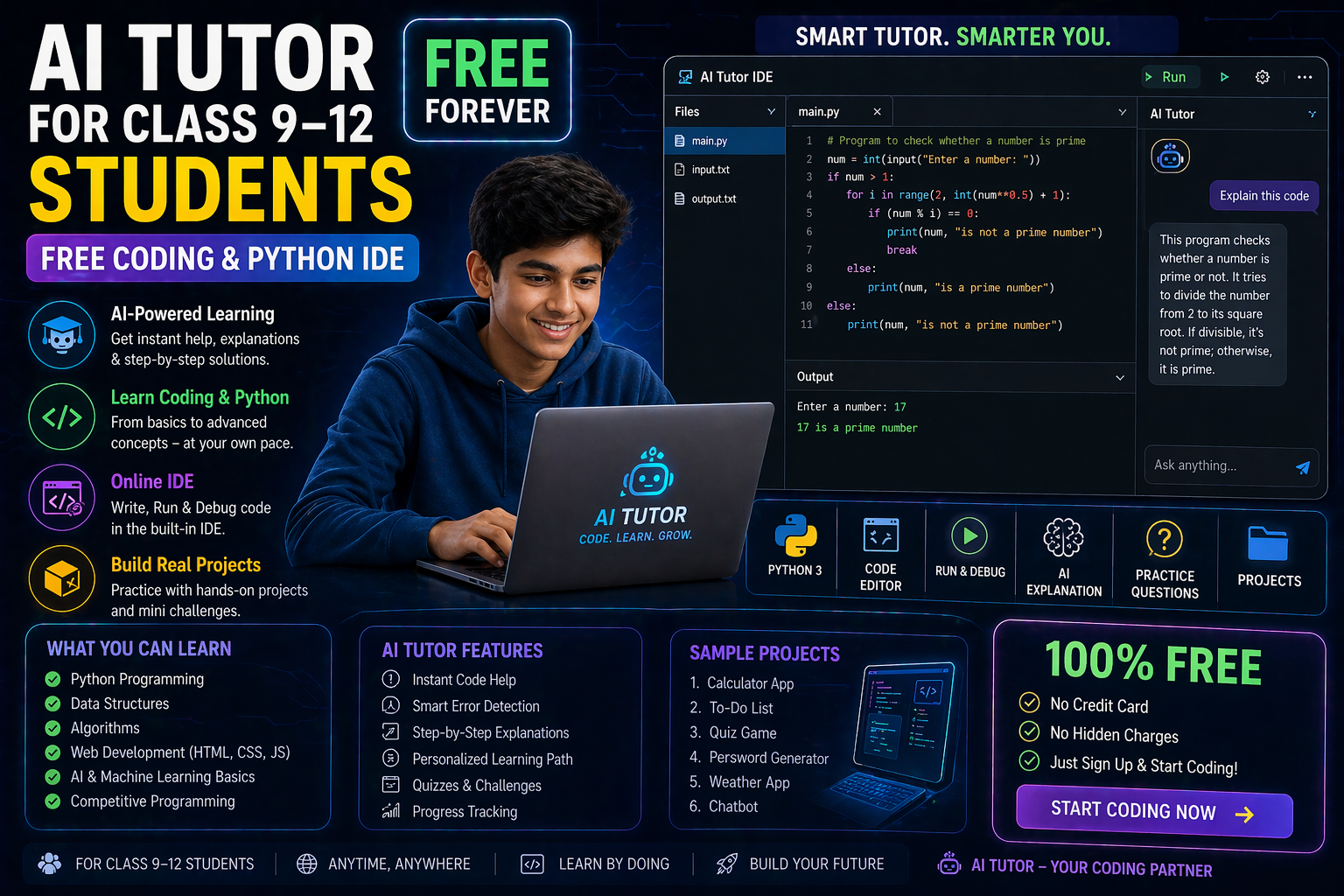
The CBSE school full form is Central Board of Secondary Education. It is India’s premier national-level education board, responsible for designing syllabi, conducting examinations, and promoting holistic learning for students from Class 1 to Class 12. In 2026, CBSE continues to play a pivotal role in shaping the academic journey of millions of students across India, especially as the education system evolves under the National Education Policy (NEP) 2020.
For students in Class 9 to 12, CBSE offers a structured, exam-oriented curriculum that balances theoretical knowledge with practical application. But what does this mean for your learning experience in 2026? How is CBSE adapting to modern educational needs, and how can AI-powered tools like SPYRAL help you stay ahead? Let’s explore.
What Is the CBSE School Full Form? A Quick Breakdown
The CBSE full form stands for Central Board of Secondary Education. It is a government-recognized board under the Ministry of Education, Government of India. CBSE is known for its:
- Standardized curriculum across India and abroad
- Focus on science, mathematics, and technology
- Emphasis on continuous and comprehensive evaluation (CCE)
- Introduction of AI, coding, and robotics in the curriculum
In 2026, CBSE has further integrated AI and coding into its syllabus for Classes 9 to 12, aligning with the goals of NEP 2020 to foster digital literacy and 21st-century skills.
Why CBSE Matters for Class 9–12 Students in 2026
The CBSE curriculum is designed to prepare students not just for board exams, but for higher education and competitive exams like JEE, NEET, and UPSC. Here’s why it’s significant in 2026:
1. Structured and Competitive Curriculum
CBSE’s syllabus is rigorous and well-structured, ensuring students build a strong foundation in core subjects. In 2026, the board has introduced AI and data science modules in Classes 11 and 12, reflecting the growing demand for tech skills in the job market.
2. NEP 2020 Alignment
The National Education Policy 2020 emphasizes experiential learning, multidisciplinary education, and the use of technology in classrooms. CBSE has responded by:
- Introducing AI as a skill subject in Classes 8 to 12
- Encouraging project-based learning and internships
- Promoting the use of digital tools and simulations in teaching
3. Focus on AI and Coding
In 2026, CBSE has made AI, Python, and robotics integral parts of the curriculum. Students are expected to:
- Learn the basics of machine learning and data science
- Work on AI projects using no-code platforms
- Understand the ethical implications of AI
This shift prepares students for careers in technology, research, and innovation — fields that are rapidly growing in India.
How AI Is Transforming CBSE Education in 2026
The integration of AI in education is no longer a futuristic concept — it’s a reality. In 2026, AI-powered tools are helping students and teachers enhance learning outcomes, personalize education, and save time. Here’s how:
1. Personalized Learning with AI Tutors
AI tutors analyze a student’s performance and provide customized study plans. For example, if a student struggles with calculus, the AI can recommend targeted exercises, videos, and simulations to improve understanding.
2. No-Code AI Training Playgrounds
Students can now build and train machine learning models without writing complex code. Platforms like SPYRAL’s AI Workbench offer drag-and-drop interfaces where students can:
- Train models using real-world datasets
- Test AI models in a safe, interactive environment
- Visualize how AI makes decisions
This hands-on approach makes AI accessible to students from all backgrounds, not just those with coding experience.
3. AI-Powered Assessments and Feedback
AI tools can automatically grade assignments, provide instant feedback, and highlight areas for improvement. This reduces the burden on teachers and allows students to track their progress in real time.
4. Interactive Simulations and Labs
CBSE’s emphasis on experiential learning is supported by AI-driven simulations. Students can conduct virtual experiments in physics, chemistry, and biology, making complex concepts easier to grasp.
CBSE and AI: What’s New in 2026?
In 2026, CBSE has taken several steps to integrate AI into its ecosystem:
1. AI as a Skill Subject
CBSE now offers AI as a skill subject for Classes 9 to 12. The curriculum includes:
- Introduction to AI and its applications
- Python programming for AI
- Data science and machine learning basics
- Ethical considerations in AI
2. AI in Board Exams
CBSE has introduced AI-based question papers in select subjects. These papers are designed to test students’ understanding of AI concepts and their ability to apply them in real-world scenarios.
3. AI for Teachers
Teachers are being trained to use AI tools for lesson planning, student assessment, and classroom management. CBSE has partnered with EdTech platforms to provide free AI training for educators across India.
How SPYRAL Supports CBSE Students and Teachers in 2026
At SPYRAL, we believe that AI should be accessible, interactive, and aligned with CBSE’s vision. Our platform offers a range of tools designed to enhance learning and teaching under the CBSE curriculum:
1. AI & Robotics Lab
Our AI & Robotics Lab provides students with a hands-on experience in AI and robotics. Features include:
- No-code ML trainer for building AI models
- Interactive simulations for physics, chemistry, and biology
- Robotics workbench for designing and testing robots
- Data explorer tool for analyzing datasets
Students can experiment with AI concepts without needing advanced programming skills, making it perfect for CBSE’s AI curriculum.
2. AI Workbench
The AI Workbench is a no-code platform where students can:
- Train machine learning models using drag-and-drop interfaces
- Test AI models with real-world data
- Visualize AI decision-making processes
This tool is ideal for CBSE students learning AI in Classes 11 and 12.
3. AI Quiz Generator
Teachers can use our AI quiz generator to create customized quizzes based on CBSE syllabi. This saves time and ensures that assessments are aligned with the curriculum.
Try It Free on SPYRAL
Everything discussed in this article is available for free on SPYRAL AI & Robotics Lab. No signup required for guest access — just open it and start learning.
Explore SPYRAL AI & Robotics Lab →FAQs: CBSE School Full Form and AI in Education (2026)
1. What is the CBSE school full form?
The CBSE school full form is Central Board of Secondary Education. It is India’s national education board responsible for conducting exams and designing syllabi for Classes 1 to 12.
2. Is AI part of the CBSE curriculum in 2026?
Yes! CBSE has integrated AI as a skill subject in Classes 9 to 12. Students learn about AI applications, Python programming, and data science as part of their curriculum.
3. How can I learn AI without coding experience?
Platforms like SPYRAL offer no-code AI training tools where you can build and train AI models using drag-and-drop interfaces. These tools are designed for beginners and align with CBSE’s AI curriculum.
4. What is the NEP 2020’s role in CBSE education?
The National Education Policy 2020 emphasizes experiential learning, multidisciplinary education, and the use of technology in classrooms. CBSE has aligned its syllabus with NEP 2020 by introducing AI, coding, and robotics.
5. How can teachers use AI in CBSE classrooms?
Teachers can use AI tools for personalized learning, automated grading, and interactive simulations. Platforms like SPYRAL provide free AI training for educators to help them integrate technology into their teaching methods.
Conclusion: The Future of CBSE Education Is AI-Powered
The CBSE school full form — Central Board of Secondary Education — represents more than just an education board. In 2026, it stands for innovation, adaptability, and a commitment to preparing students for the future. With the integration of AI, coding, and robotics, CBSE is equipping students with the skills they need to thrive in a technology-driven world.
Whether you’re a student looking to explore AI or a teacher seeking to enhance your classroom with digital tools, platforms like SPYRAL are here to support you. Start your AI journey today and experience the future of education firsthand.
Ready to dive into AI-powered learning? Visit SPYRAL AI & Robotics Lab and begin your exploration — no signup required!