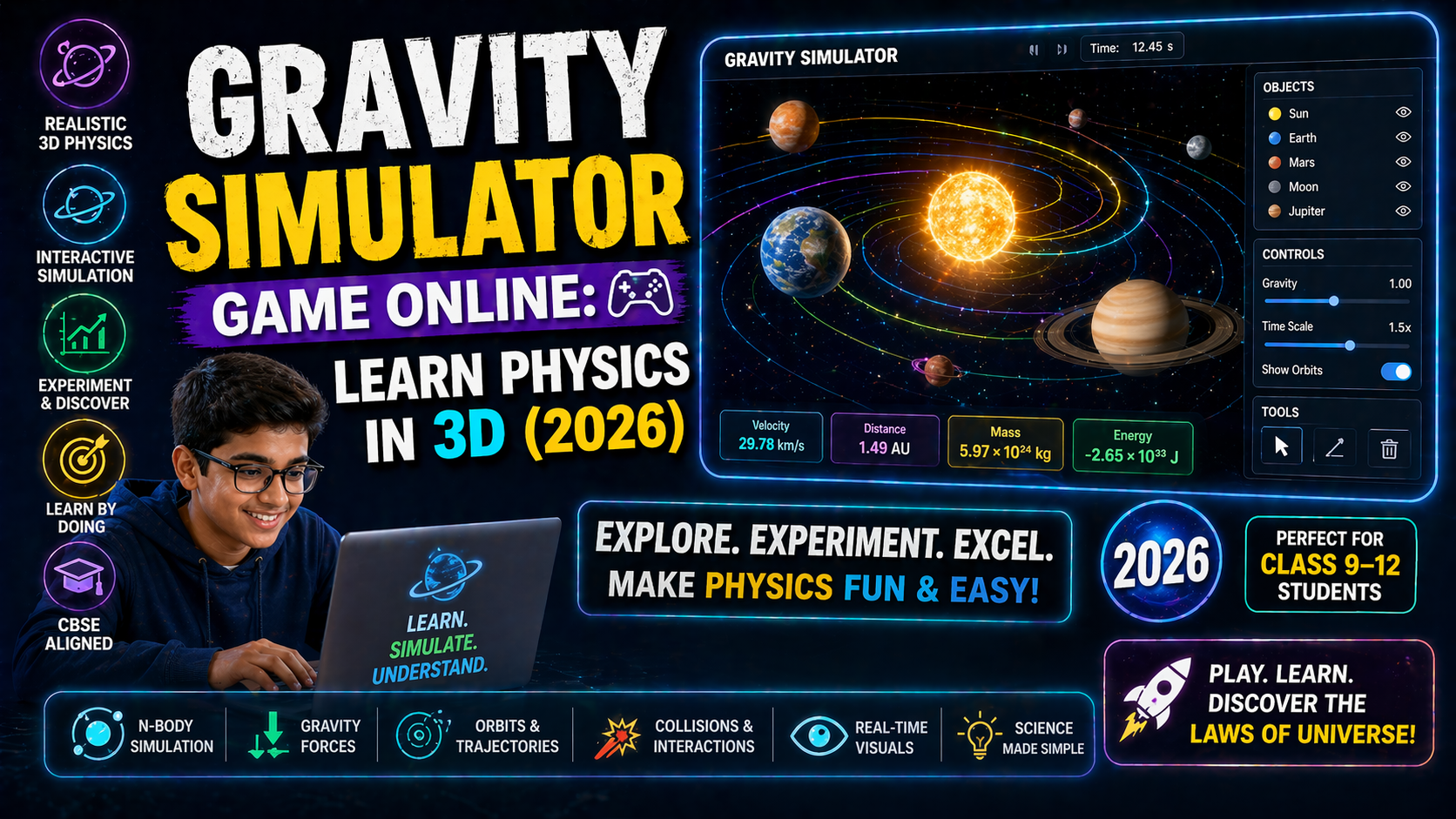
Have you ever wondered how a friction-free hair dryer delivers powerful airflow without the usual resistance? The secret lies in fluid dynamics, pressure gradients, and smart engineering. For Class 9–12 CBSE students and teachers, understanding these concepts isn’t just theoretical—it’s a gateway to real-world physics applications.
In this guide, we’ll break down the physics behind friction-free hair dryers using interactive simulations aligned with NEP 2020 and CBSE curriculum. You’ll learn how airflow, pressure, and energy efficiency work together to create a seamless drying experience. Plus, we’ll show you how to simulate these principles using free online tools.
Why Is a Hair Dryer Called "Friction-Free"?
The term "friction-free" in hair dryers refers to the minimized resistance in airflow. Traditional hair dryers lose energy due to friction between air molecules and the dryer’s internal surfaces. Modern friction-free models use:
- Smooth, aerodynamic designs to reduce turbulence.
- High-efficiency motors that convert more electrical energy into airflow.
- Advanced nozzle shapes that optimize pressure gradients.
This reduces energy waste and delivers faster, quieter drying. But how does this translate into physics concepts you study in school?
The Physics Behind Friction-Free Hair Dryers
1. Fluid Dynamics and Airflow
Airflow in a hair dryer follows the principles of fluid dynamics, a branch of physics that studies the motion of liquids and gases. Key concepts include:
- Laminar vs. Turbulent Flow: Laminar flow is smooth and efficient, while turbulent flow creates resistance. Friction-free dryers aim for laminar flow.
- Bernoulli’s Principle: As air speeds up, its pressure decreases. This principle helps explain how nozzles create suction or focused airflow.
- Viscosity: The "thickness" of air affects how easily it moves. Lower viscosity means less friction.
Try it yourself: Use the SPYRAL AI Workbench to simulate airflow in a virtual hair dryer. Adjust the nozzle shape and observe how it changes pressure and speed.
2. Pressure Gradients and Nozzle Design
The nozzle of a hair dryer is designed to create a pressure gradient, where air pressure is higher at the inlet and lower at the outlet. This gradient drives airflow. Key factors include:
- Cross-sectional area: A narrower nozzle increases air speed (thanks to the continuity equation).
- Shape: Curved or tapered nozzles reduce turbulence.
- Surface roughness: Smoother interiors mean less friction.
CBSE Connection: This ties into the fluid pressure and buoyancy topics in Class 9 Physics (Chapter 10: Gravitation) and Class 11 Physics (Chapter 13: Kinetic Theory).
3. Energy Efficiency and the First Law of Thermodynamics
A friction-free hair dryer is more energy-efficient because it minimizes energy loss due to friction and turbulence. The First Law of Thermodynamics states that energy cannot be created or destroyed—only transformed. In this case:
- Electrical energy → Kinetic energy (airflow) + Heat (some unavoidable).
- Less friction = More kinetic energy output.
NEP 2020 Alignment: This aligns with the experiential learning approach in NEP 2020, where students connect physics concepts to real-world technologies.
Simulate Friction-Free Hair Dryer Physics with SPYRAL AI Workbench
Want to see these principles in action? The SPYRAL AI Workbench offers interactive simulations for Class 9–12 students and teachers. Here’s what you can explore:
Try It Free on SPYRAL
Everything discussed in this article is available for free on SPYRAL AI Workbench — Physics Simulations. No signup required for guest access — just open it and start learning.
Explore SPYRAL AI Workbench — Physics Simulations →Key Simulations to Try:
- Fluid Pressure Buoyancy Simulation: Observe how pressure changes in a hair dryer’s nozzle.
- Projectile Motion Simulator: Model the trajectory of air molecules exiting the dryer.
- Ohm’s Law Resistor Simulation: Compare energy loss in traditional vs. friction-free motors.
- Doppler Effect Simulator: Hear how airflow speed affects sound waves (great for Class 12 Physics!).
For Teachers: Use these simulations to demonstrate NEP 2020’s emphasis on experiential learning. Students can tweak variables like nozzle shape, motor speed, and air viscosity to see real-time effects.
Classroom Activity: Design Your Own Friction-Free Hair Dryer
Turn this into a hands-on project for your students! Here’s a step-by-step guide:
Step 1: Research and Brainstorm
Ask students to research how hair dryers work. Discuss:
- What causes friction in traditional dryers?
- How can we reduce turbulence?
- What materials are used in modern dryers?
Step 2: Simulate with SPYRAL
Use the SPYRAL AI Workbench to:
- Simulate airflow in a basic hair dryer model.
- Adjust the nozzle shape and observe changes in pressure and speed.
- Compare energy efficiency between different designs.
Step 3: Prototype (Optional)
For advanced students, challenge them to design a simple prototype using household materials (e.g., cardboard, plastic bottles, and a fan). Test their designs using the simulation first!
Step 4: Present and Reflect
Students present their findings, explaining the physics behind their designs. Discuss how this project aligns with NEP 2020’s focus on innovation and critical thinking.
Frequently Asked Questions (FAQs)
1. How does a friction-free hair dryer reduce energy consumption?
A friction-free hair dryer minimizes energy loss due to air resistance and turbulence. By optimizing airflow and using efficient motors, it converts more electrical energy into kinetic energy (airflow) and less into heat waste. This aligns with the First Law of Thermodynamics, where energy is conserved but transformed more efficiently.
2. Can I simulate a hair dryer’s airflow at home?
Yes! The SPYRAL AI Workbench offers free simulations where you can model airflow, pressure gradients, and energy efficiency. No special equipment is needed—just a device with internet access.
3. How is this related to CBSE Class 9–12 Physics?
This topic connects to several CBSE Physics concepts:
- Class 9: Gravitation (pressure, buoyancy), Motion (airflow as motion).
- Class 11: Kinetic Theory (gas laws, viscosity), Thermodynamics.
- Class 12: Electromagnetic Induction (motor efficiency), Fluid Dynamics.
4. What is the role of nozzle shape in a hair dryer?
The nozzle shape creates a pressure gradient, where air pressure is higher at the inlet and lower at the outlet. A narrower nozzle increases air speed (thanks to the continuity equation: A1v1 = A2v2). This principle is also used in devices like Venturi meters and airplane wings.
5. How can teachers incorporate this into NEP 2020-aligned lessons?
NEP 2020 emphasizes experiential learning, interdisciplinary connections, and real-world applications. Teachers can:
- Use simulations to demonstrate abstract physics concepts.
- Encourage students to design and test their own models.
- Connect physics to engineering, sustainability, and technology.
- Use free tools like SPYRAL to save time on lesson planning.
Conclusion: From Classroom to Real-World Physics
The concept of a friction-free hair dryer is more than just a marketing term—it’s a practical application of fluid dynamics, thermodynamics, and energy efficiency. For CBSE students and teachers, it’s an opportunity to bridge the gap between textbook physics and real-world technology.
By using interactive simulations like those on the SPYRAL AI Workbench, you can explore these concepts hands-on, align with NEP 2020, and inspire the next generation of innovators. Whether you’re a student curious about how things work or a teacher looking for engaging lesson ideas, physics simulations make learning dynamic and fun.
Ready to dive in? Start exploring the physics of friction-free hair dryers today with SPYRAL AI Workbench — Physics Simulations.
Try It Free on SPYRAL
Everything discussed in this article is available for free on SPYRAL AI Workbench — Physics Simulations. No signup required for guest access — just open it and start learning.
Explore SPYRAL AI Workbench — Physics Simulations →