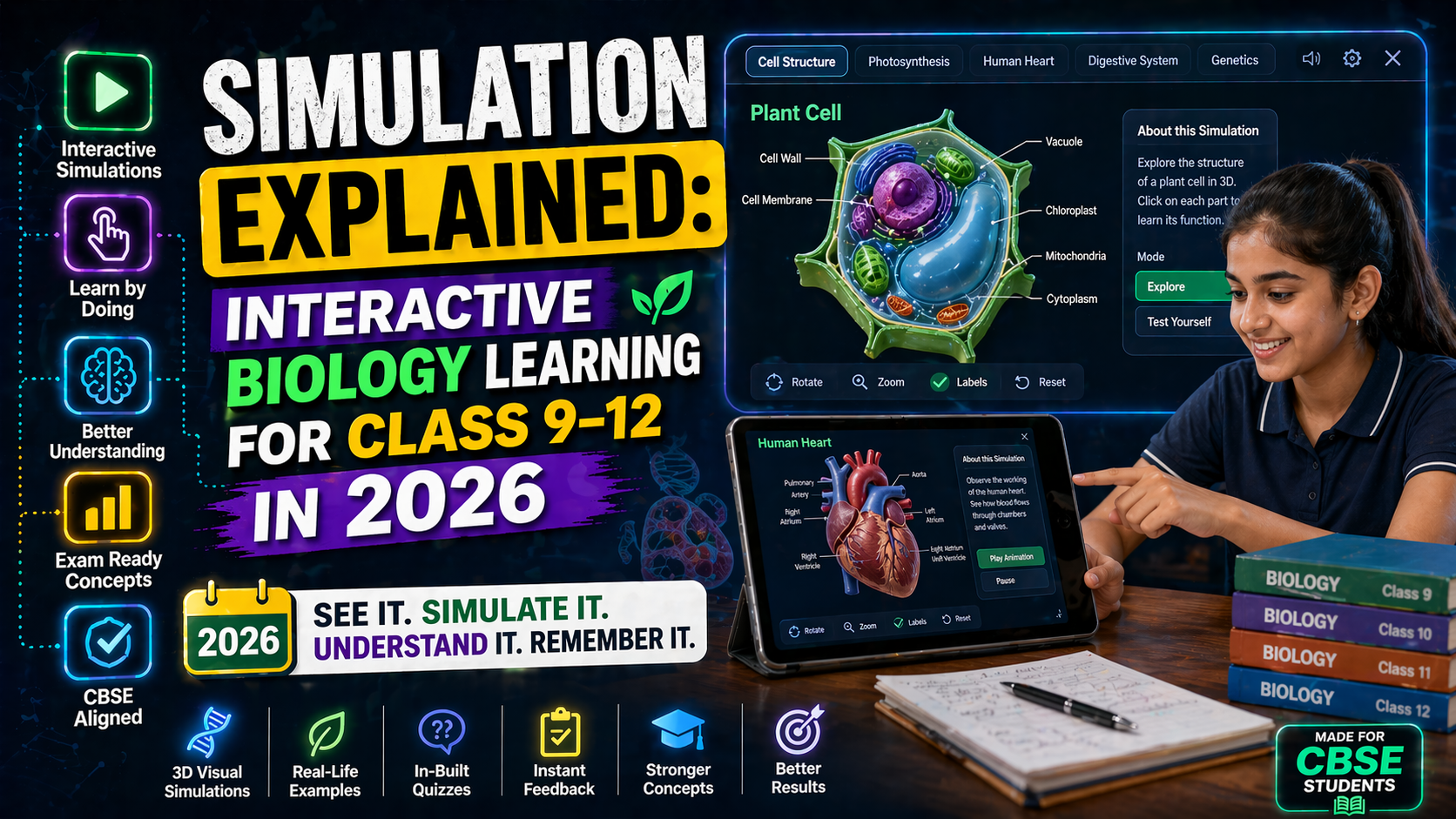
Understanding the human heart and its rhythmic contractions is a cornerstone of CBSE Class 11–12 Biology. With the integration of NEP 2020, schools across India are shifting towards interactive, experiential learning tools. One such powerful tool is the heart rhythm simulator online—a dynamic digital platform that allows students to visualize, manipulate, and analyze the cardiac cycle in real time.
In this guide, we’ll explore how a heart rhythm simulator can enhance your understanding of heart physiology, align with the CBSE curriculum, and support NEP 2020’s emphasis on experiential learning. Whether you're a student preparing for exams or a teacher looking for innovative teaching aids, this interactive tool is a game-changer.
Why Use a Heart Rhythm Simulator in CBSE Biology?
The human heart beats approximately 100,000 times a day, pumping blood throughout the body. Understanding this complex organ requires more than textbook diagrams—it demands interactive visualization. A heart rhythm simulator online offers several key benefits:
- Visual Learning: Students can see how electrical impulses trigger contractions in the sinoatrial (SA) and atrioventricular (AV) nodes.
- Interactive Exploration: Adjust heart rate, simulate arrhythmias, and observe changes in real time.
- NEP 2020 Alignment: Supports experiential learning, a core principle of the National Education Policy 2020.
- Exam Readiness: Helps students grasp concepts like systole, diastole, and the cardiac cycle—key topics in CBSE Class 11 Biology (Chapter 18: Body Fluids and Circulation).
Traditional labs often rely on preserved specimens or limited animations. A simulator, however, allows unlimited experimentation—without the constraints of physical labs.
How Does a Heart Rhythm Simulator Work?
A heart rhythm simulator online uses AI-driven algorithms to model the electrical and mechanical activity of the heart. Here’s a simplified breakdown of how it functions:
1. Electrical Conduction System
The simulator mimics the heart’s natural pacemaker—the SA node—which generates electrical impulses. These impulses travel through the AV node, bundle of His, and Purkinje fibers, causing the heart to contract.
2. Real-Time Visualization
Students can observe:
- The spread of electrical signals across the atria and ventricles.
- The timing of atrial and ventricular contractions (systole and diastole).
- The impact of heart rate changes on blood pressure and cardiac output.
3. Simulation Controls
Most simulators offer adjustable parameters such as:
- Heart Rate: Increase or decrease beats per minute (BPM).
- Arrhythmias: Simulate conditions like tachycardia, bradycardia, or fibrillation.
- Drug Effects: Observe how medications like beta-blockers or calcium channel blockers alter heart rhythm.
This hands-on approach makes abstract concepts tangible and easier to retain.
Heart Rhythm Simulator vs. Traditional Learning Methods
Let’s compare how a heart rhythm simulator stacks up against conventional teaching tools:
| Feature | Heart Rhythm Simulator | Textbook/Diagram | Physical Lab |
|---|---|---|---|
| Interactivity | ✅ High (adjustable parameters, real-time feedback) | ❌ Low (static images) | ⚠️ Medium (limited by lab equipment) |
| Cost | ✅ Free or low-cost (online tools) | ✅ Low (one-time purchase) | ❌ High (equipment, maintenance) |
| Accessibility | ✅ Available 24/7 (any device with internet) | ✅ Available anytime | ❌ Limited to lab hours |
| NEP 2020 Alignment | ✅ Strong (experiential, AI-driven learning) | ❌ Weak (passive learning) | ⚠️ Medium (hands-on but resource-intensive) |
As shown, a heart rhythm simulator bridges the gap between passive learning and hands-on experimentation, making it an ideal tool for modern classrooms.
Top Features to Look for in a Heart Rhythm Simulator Online
Not all simulators are created equal. When choosing a heart rhythm simulator for CBSE biology, prioritize these features:
1. Realistic Cardiac Cycle Visualization
The simulator should accurately depict:
- The P wave (atrial depolarization).
- The QRS complex (ventricular depolarization).
- The T wave (ventricular repolarization).
- The relationship between electrical activity and mechanical contraction.
2. Adjustable Parameters
Look for tools that allow you to modify:
- Heart rate (e.g., 60 BPM, 120 BPM).
- Conduction delays (e.g., AV block simulation).
- Arrhythmias (e.g., atrial fibrillation, ventricular tachycardia).
3. Interactive Quizzes & Assessments
Some advanced simulators include built-in quizzes to test your understanding. For example:
- Identify the type of arrhythmia shown in the simulation.
- Predict the effect of a drug on heart rhythm.
4. NEP 2020 & CBSE-Aligned Content
Ensure the simulator covers topics from the CBSE Class 11 Biology syllabus, such as:
- Double circulation in humans.
- Regulation of cardiac activity by the autonomic nervous system.
- Disorders of the circulatory system (e.g., hypertension, coronary artery disease).
5. Multi-Device Compatibility
Opt for a simulator that works on desktops, tablets, and smartphones for flexibility in learning.
How to Use a Heart Rhythm Simulator for CBSE Biology (Step-by-Step Guide)
Follow these steps to maximize your learning with a heart rhythm simulator:
Step 1: Access the Simulator
Visit a trusted platform like SPYRAL AI Workbench — Biology Simulations and navigate to the heart rhythm simulator.
Step 2: Familiarize Yourself with the Interface
Most simulators feature a dashboard with:
- A 3D model of the heart.
- Controls to adjust heart rate, conduction speed, and arrhythmias.
- A real-time ECG (electrocardiogram) display.
Step 3: Run a Basic Simulation
Start with a normal sinus rhythm (60–100 BPM). Observe how the electrical impulses propagate through the heart. Note the timing of the P wave, QRS complex, and T wave.
Step 4: Experiment with Different Scenarios
Try these exercises:
- Increase Heart Rate: Simulate exercise by increasing the BPM to 120. Observe changes in the ECG and cardiac output.
- Simulate Arrhythmias: Induce atrial fibrillation and note the irregular ECG pattern.
- Apply Drug Effects: Use a beta-blocker simulation to see how it slows the heart rate.
Step 5: Record and Analyze Results
Many simulators allow you to save screenshots or export data. Use these to create study notes or compare different scenarios.
Step 6: Take a Quiz (If Available)
Test your knowledge with interactive questions. This reinforces learning and prepares you for exams.
NEP 2020 and the Role of AI in Biology Simulations
The National Education Policy 2020 emphasizes the use of technology in classrooms to foster critical thinking and problem-solving skills. AI-powered tools like heart rhythm simulators align perfectly with these goals by:
- Personalizing Learning: AI adapts simulations based on student performance, offering targeted challenges.
- Encouraging Inquiry: Students can explore "what-if" scenarios, such as "What happens if the SA node fails?"
- Reducing Cognitive Load: Complex concepts like cardiac conduction are simplified through visualization.
- Supporting Teachers: AI tools can generate reports on student progress, helping educators identify areas needing reinforcement.
By integrating AI-driven simulations into biology lessons, schools can create a more engaging and effective learning environment.
For more on how AI is transforming education under NEP 2020, visit our NEP 2020 Hub.
Common Misconceptions About Heart Rhythm Simulators
Despite their benefits, some students and teachers hesitate to adopt heart rhythm simulators due to misconceptions. Let’s debunk a few:
Misconception 1: "Simulators are just games and not educational."
Reality: Modern simulators are based on physiological models and peer-reviewed research. They provide accurate representations of cardiac activity, making them valuable educational tools.
Misconception 2: "You need advanced technical knowledge to use them."
Reality: Most heart rhythm simulators are designed with intuitive interfaces. Students can start exploring within minutes, even without prior coding experience.
Misconception 3: "Simulators replace real labs entirely."
Reality: Simulators complement physical labs by providing additional practice and visualization. They are not a substitute but an enhancement to hands-on learning.
Misconception 4: "They are only for high school students."
Reality: Even college-level students and medical professionals use advanced cardiac simulators for research and training. The tools are scalable for different learning levels.
Try It Free on SPYRAL
Everything discussed in this article is available for free on SPYRAL AI Workbench — Biology Simulations. No signup required for guest access — just open it and start learning.
Explore SPYRAL AI Workbench — Biology Simulations →Frequently Asked Questions (FAQs)
1. Is a heart rhythm simulator online suitable for CBSE Class 9 students?
While the heart is typically covered in Class 11 Biology, younger students can still benefit from simplified simulations to build foundational knowledge of the circulatory system. Always check your syllabus for age-appropriate content.
2. Can I use a heart rhythm simulator for UPSC preparation?
Yes! Understanding human physiology, including the heart, is part of the UPSC Prelims General Studies Paper 3. A simulator can help you visualize complex processes, making them easier to recall during exams. However, focus on NCERT-based content for UPSC preparation.
3. Are there any free heart rhythm simulators available in 2026?
Yes! Many platforms offer free access to basic heart rhythm simulators. For example, SPYRAL AI Workbench provides a free, interactive heart rhythm simulator as part of its biology simulations toolkit. No credit card is required for guest access.
4. How accurate are online heart rhythm simulators compared to real ECG machines?
Online simulators are based on mathematical models of cardiac activity and are highly accurate for educational purposes. However, they do not replace professional ECG machines used in clinical settings. Think of them as a visual aid rather than a diagnostic tool.
5. Can teachers integrate heart rhythm simulators into their lesson plans?
Absolutely! Teachers can use simulators for:
- Demonstrations during lectures.
- Group activities where students explore different scenarios.
- Assessment tools to gauge student understanding.
- Homework assignments where students record and analyze simulations.
For NEP 2020-aligned lesson plans, visit our NEP 2020 resources.
Conclusion: Master Heart Physiology with Interactive Simulations
The heart is one of the most fascinating organs in the human body, and understanding its rhythm is crucial for students of biology. With a heart rhythm simulator online, you can explore the cardiac cycle, experiment with arrhythmias, and visualize electrical conduction—all from your device. This aligns perfectly with NEP 2020’s vision of experiential learning and prepares you for CBSE exams with confidence.
Whether you're a student aiming for top grades or a teacher looking to innovate your biology lessons, interactive simulations are the future of learning. Start exploring today and see the difference for yourself!
Ready to dive in? Visit SPYRAL AI Workbench — Biology Simulations and begin your interactive journey into the world of heart physiology.