Home›
Blog›
CBSE Vocational AI Subject India 2026: Interactive Labs That Make AI Real
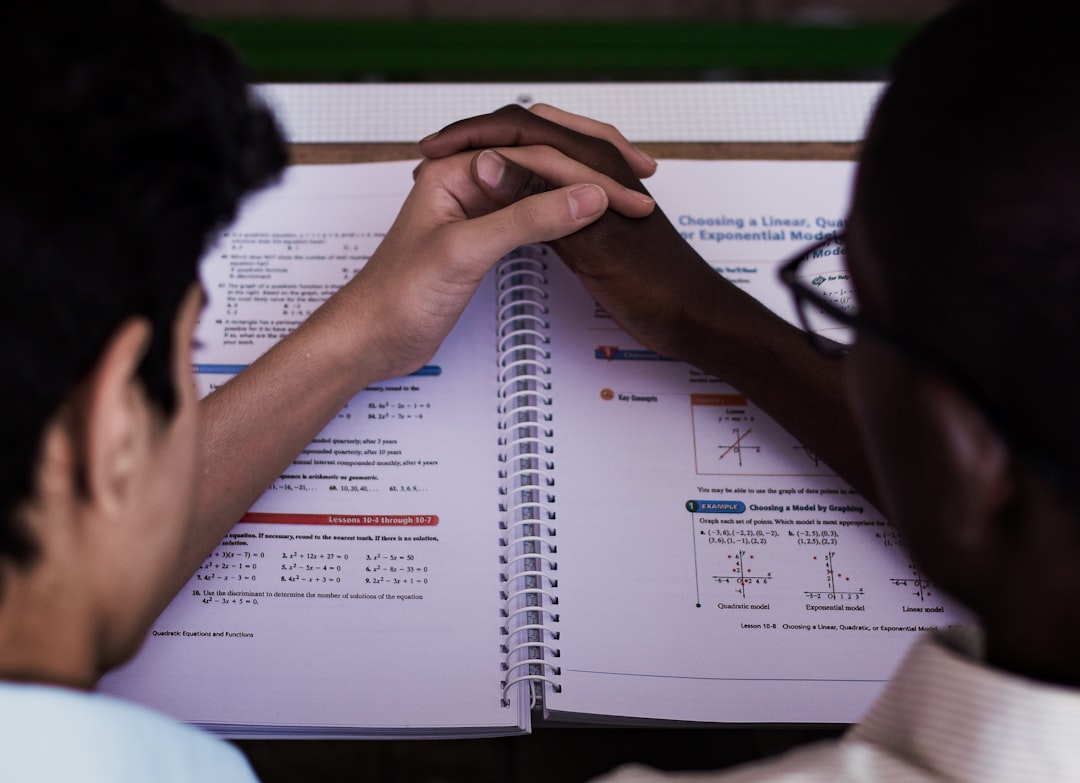
In 2026, the Central Board of Secondary Education (CBSE) is rolling out Artificial Intelligence (AI) as a vocational subject for Classes 9 through 12 across India. This isn’t just another chapter to memorize — it’s a hands-on, minds-on shift. Students aren’t just learning about AI; they’re building, simulating, and feeling it in real time. And the best part? You don’t need a robotics lab or expensive software. With AI-powered interactive simulations, every student can experiment with neural networks, train models, and see AI decisions unfold — right from their browser.
Imagine a Class 10 student in Delhi tweaking a neural network to recognize handwritten digits — and watching the accuracy change live. Or a Class 11 student in Mumbai simulating a chatbot conversation to understand natural language processing. This is what CBSE’s vocational AI subject is designed to deliver: accessible, experiential learning that prepares students for the future. And with platforms like anAIza School, this isn’t a distant dream — it’s a click away.
Why This Matters: AI Is the Vocational Skill of the Future
The CBSE’s move to include AI as a vocational subject reflects a global shift. According to the Ministry of Education, Government of India, over 65% of today’s students will work in jobs that don’t exist yet — and AI is at the core of many of them. From healthcare diagnostics to smart agriculture, AI is transforming industries. But here’s the catch: AI education can’t just be theoretical. Students need to do AI — not just read about it.
That’s where interactive simulations come in. Unlike traditional textbooks or even video lectures, simulations let students:
- See AI in action — train a model, see predictions, and understand bias.
- Experiment safely — no risk of breaking code or hardware.
- Visualize abstract concepts — like how a neural network learns from data.
- Work at their own pace — ideal for diverse classrooms across India.
This aligns perfectly with the NCERT’s competency-based learning framework under NEP 2020, which emphasizes learning by doing. Whether you're in a rural school in Bihar or a top CBSE school in Bangalore, AI simulations level the playing field.
CBSE Vocational AI Subject India 2026: What the Curriculum Looks Like
The CBSE has released updated curriculum guidelines for AI as a vocational subject, effective from the 2026 academic year. The syllabus is divided into four core modules:
1. Introduction to Artificial Intelligence
Students learn what AI is, its types (narrow vs. general AI), and real-world applications. They explore case studies like AI in healthcare, finance, and smart cities. The goal isn’t just to define AI — it’s to feel its presence in daily life.
For example, students simulate an AI chatbot answering FAQs about CBSE exams. They tweak responses and see how tone and accuracy change — a direct, relatable application.
2. AI Ethics and Responsible Use
This is where CBSE stands out. The curriculum emphasizes AI ethics — bias in algorithms, privacy concerns, and the impact of AI on jobs. Students debate scenarios like: “Should AI be used to grade school exams?” They use simulations to test fairness in decision-making models.
This module prepares students not just as users of AI, but as ethical creators — a critical skill in a world where AI systems can amplify inequality.
3. Hands-on AI Projects with Simulations
Here’s where the magic happens. Students build:
- Image recognition models (e.g., classify fruits or handwritten digits)
- Chatbots for school FAQs
- Predictive models for weather or exam scores
- AI-powered sorting systems (e.g., recycling or traffic)
Each project is supported by interactive simulations that let students train models, visualize data, and test outcomes — without writing a single line of code (though they can peek under the hood if they want).
4. AI and Emerging Technologies
Students explore how AI intersects with robotics, IoT, and big data. They simulate a smart home system where AI controls lights and temperature based on occupancy — a fun, futuristic project that connects AI to real life.
This module also introduces students to the CBSE vs. American curriculum debate. While U.S. schools often teach AI in advanced placement (AP) Computer Science, CBSE’s vocational approach is more inclusive — accessible to students without prior coding experience.
How Interactive Simulations Make AI Real in CBSE Classrooms
Let’s be honest: AI can feel abstract. What’s a neural network? How does a model learn? Interactive simulations turn these questions into experiences.
⚗
Try This Simulation Free
Open the interactive simulation on anAIza School — no download, no signup needed.
Open Simulation →Change the variables yourself — see what happens in real time.
In this simulation, students can:
- Train a simple neural network to recognize handwritten digits.
- Adjust the number of hidden layers and see how accuracy changes.
- Visualize the learning process — watch the model’s confidence grow with each epoch.
- Test the model on their own handwritten digits.
This isn’t just a demo — it’s a mini AI lab. And it’s available for free, with no installation required. Teachers can use it in class, or students can explore at home. It’s the kind of tool that makes AI feel tangible — not theoretical.
CBSE Academic AI Curriculum: How It Compares Globally
The CBSE’s approach to AI education is unique. While countries like the U.S. and U.K. offer AI in advanced courses (like AP Computer Science or A-Level AI), CBSE’s vocational subject is designed for all students — not just those aiming for STEM careers.
Here’s how it stacks up:
| Aspect |
CBSE (India) |
AP Computer Science (USA) |
GCSE Computer Science (UK) |
| Accessibility |
Open to all students in Grades 9–12 |
Elective, often in Grades 10–12 |
Elective, often in Grades 9–11 |
| Focus |
Vocational, hands-on, inclusive |
Theoretical + coding (Python/Java) |
Theoretical + coding (Python) |
| Tools Used |
Interactive simulations, no-code AI |
Coding environments (IDLE, Replit) |
Coding environments (Trinket, Python) |
| Ethics Included? |
Yes — core module |
Optional or in advanced courses |
Optional |
| Assessment |
Project-based, practical |
Written exams + coding projects |
Written exams + coding projects |
This makes the CBSE vocational AI subject one of the most inclusive AI curricula in the world. It doesn’t assume prior coding knowledge — it builds it. And it doesn’t just teach AI — it teaches responsible AI.
What Is the CBSE International Curriculum? And How AI Fits In
The term CBSE International Curriculum refers to CBSE-affiliated schools outside India (e.g., in Dubai, Singapore, or Nepal) that follow the same syllabus as Indian schools but adapt it for local contexts. AI is now a key part of this curriculum too.
For example, a CBSE school in Dubai might use AI simulations to teach students about smart city applications — like AI-powered traffic management or waste sorting. The simulations are the same, but the context is tailored to the region.
This global reach means that students in international CBSE schools aren’t just learning AI — they’re learning how AI solves local problems. And with platforms like anAIza School, they can simulate these solutions in real time.
How Teachers Can Teach AI Without Being AI Experts
One of the biggest barriers to teaching AI in schools is teacher confidence. Many educators aren’t AI specialists — and that’s okay. The CBSE’s curriculum is designed to be teacher-friendly, with a strong emphasis on simulations and project-based learning.
Here’s how teachers can approach it:
1. Use AI-Powered Lesson Plans
Platforms like anAIza School’s teacher dashboard offer ready-made lesson plans aligned with CBSE’s AI syllabus. Each lesson includes:
- A step-by-step guide
- Interactive simulations
- Discussion questions
- Assessment rubrics
Teachers don’t need to create content from scratch — they just need to facilitate.
2. Leverage No-Code AI Tools
Students don’t need to write code to understand AI. Tools like anAIza’s Workbench let them build models using drag-and-drop interfaces. They can train a model, test it, and see results — all without typing a single line of code.
This is especially helpful for teachers who aren’t comfortable with programming.
3. Focus on Real-World Projects
The CBSE curriculum encourages project-based learning. Students can work in groups to build AI solutions for school problems — like an AI-powered attendance system or a chatbot for library queries. These projects reinforce AI concepts while building teamwork and problem-solving skills.
What If You Changed This? 3 Interactive AI Experiments to Try
Ready to dive in? Here are three “what-if” scenarios that let you experiment with AI — no setup required. Each is based on CBSE’s vocational AI syllabus.
1. What If You Train a Model on Biased Data?
In this simulation, you’ll train a simple classifier to predict whether a student will pass an exam based on study hours. But what if the training data is biased — for example, only includes students from urban schools?
Try it:
- Use the default dataset (unbiased).
- Train the model and note the accuracy.
- Now, switch to a biased dataset (e.g., only students from private schools).
- What happens to the model’s predictions for rural students?
This teaches students about AI bias — a core concept in the CBSE AI ethics module.
2. What If You Add More Layers to a Neural Network?
In this simulation, you’ll build a neural network to recognize handwritten digits (0–9). Start with one hidden layer. What’s the accuracy?
Now, add a second hidden layer. What happens to the accuracy? What about the training time?
This helps students understand the trade-off between model complexity and performance — a key concept in AI design.
3. What If You Use AI to Grade School Exams?
In this simulation, you’ll train a model to grade short-answer questions. Start with a simple rubric (e.g., “correct,” “partially correct,” “incorrect”).
Now, introduce ambiguity — for example, a student’s answer is partially correct but poorly written. How does the model grade it?
This sparks a discussion about the limits of AI in education — and why human judgment is still essential.
Frequently Asked Questions
What is the CBSE vocational AI subject in India for 2026?
The CBSE vocational AI subject is a new addition to the curriculum for Classes 9–12, designed to teach students about artificial intelligence through hands-on, interactive simulations and projects. It’s part of the board’s effort to prepare students for future careers in AI and related fields.
Is AI a mandatory subject in CBSE schools from 2026?
AI is offered as a vocational elective starting in 2026, meaning students can choose it as one of their optional subjects. It’s not mandatory for all students, but it’s highly recommended for those interested in technology, data science, or future-ready skills.
How does the CBSE online study platform support AI learning?
Platforms like anAIza School provide interactive AI simulations that let students train models, visualize data, and experiment with AI concepts — all within a web browser. These tools align with CBSE’s AI syllabus and are accessible to students and teachers across India.
What are the CBSE curriculum guidelines for AI in 2026?
The CBSE has released detailed curriculum guidelines for AI as a vocational subject, covering four modules: Introduction to AI, AI Ethics, Hands-on AI Projects, and AI and Emerging Technologies. The focus is on practical, project-based learning with an emphasis on ethics and real-world applications.
Can students in CBSE schools learn AI without coding knowledge?
Yes! The CBSE AI curriculum is designed to be inclusive. Students can use no-code AI tools and interactive simulations to build and test AI models without writing code. Platforms like anAIza Workbench make AI accessible to all students, regardless of their coding background.
What is the CBSE academic AI curriculum like for Class 11 and 12?
The CBSE academic AI curriculum for Classes 11 and 12 builds on the foundational concepts from Classes 9 and 10. It includes advanced topics like neural networks, natural language processing, and AI ethics. Students work on real-world projects, such as building chatbots or predictive models, using interactive simulations.
How does the CBSE AI syllabus compare to the American curriculum?
The CBSE AI syllabus is more vocational and inclusive, designed for all students, while the American curriculum (e.g., AP Computer Science) is more theoretical and coding-focused. CBSE’s approach emphasizes hands-on learning and ethics, making AI accessible to students without prior coding experience.
What are the benefits of learning AI in CBSE schools?
Learning AI in CBSE schools prepares students for future careers, builds critical thinking and problem-solving skills, and teaches responsible AI use. It also helps students understand how AI impacts society — from healthcare to education — and empowers them to become creators, not just consumers, of technology.
Are there free tools available for CBSE students to learn AI?
Yes! Platforms like anAIza School’s free tools offer interactive AI simulations, no-code AI builders, and project guides — all aligned with CBSE’s AI syllabus. These tools are available for free and require no installation.
What is the CBSE international curriculum, and how does AI fit in?
The CBSE international curriculum is offered in CBSE-affiliated schools outside India. AI is now a key part of this curriculum, with students using interactive simulations to solve local problems — such as smart city applications or AI in agriculture. The simulations are the same, but the context is tailored to the region.
Can teachers with no AI background teach the CBSE AI subject?
Absolutely. The CBSE AI syllabus is designed to be teacher-friendly, with a strong emphasis on simulations and project-based learning. Platforms like anAIza School’s teacher dashboard provide ready-made lesson plans, step-by-step guides, and assessment tools — so teachers don’t need to be AI experts to teach AI.
What kind of AI projects can CBSE students work on?
CBSE students can work on a variety of AI projects, such as building chatbots for school FAQs, training models to recognize handwritten digits, or creating predictive models for weather or exam scores. These projects are supported by interactive simulations and align with the CBSE AI syllabus.
Is AI education in CBSE schools aligned with NEP 2020?
Yes! The CBSE’s AI vocational subject is fully aligned with the National Education Policy (NEP) 2020, which emphasizes competency-based learning, vocational education, and the integration of technology in classrooms. AI is seen as a key tool for preparing students for the future of work.
Students can access AI simulations for CBSE AI projects through platforms like anAIza School. These simulations are free, require no installation, and are accessible from any device with a web browser. Students can experiment with AI models, visualize data, and test outcomes in real time.
What skills do students gain from the CBSE AI vocational subject?
Students gain a range of skills, including AI literacy, critical thinking, problem-solving, ethical reasoning, and hands-on experience with AI tools. They also develop collaboration and communication skills through group projects and presentations.
Are there any AI ethics lessons in the CBSE AI syllabus?
Yes! AI ethics is a core module in the CBSE AI syllabus. Students learn about bias in algorithms, privacy concerns, the impact of AI on jobs, and responsible AI use. They explore real-world scenarios and use simulations to test fairness in AI systems.
Final Thoughts: AI Is Not the Future — It’s the Present
The CBSE’s decision to introduce AI as a vocational subject in 2026 isn’t just about keeping up with global trends — it’s about preparing students for a world where AI is everywhere. From diagnosing diseases to managing traffic, AI is transforming industries. And the best way to prepare students isn’t to teach them about AI — it’s to let them experience AI.
With interactive simulations, students can see AI in action, experiment with models, and understand its impact — all without the need for expensive equipment or advanced coding skills. This is what makes the CBSE vocational AI subject so powerful: it’s accessible, inclusive, and immersive.
So, whether you’re a student in Mumbai, a teacher in Kolkata, or a parent in Chennai, the message is clear: AI is here. And it’s time to start learning by doing.
Ready to dive in? Visit anAIza School and start exploring AI simulations today — no signup required.