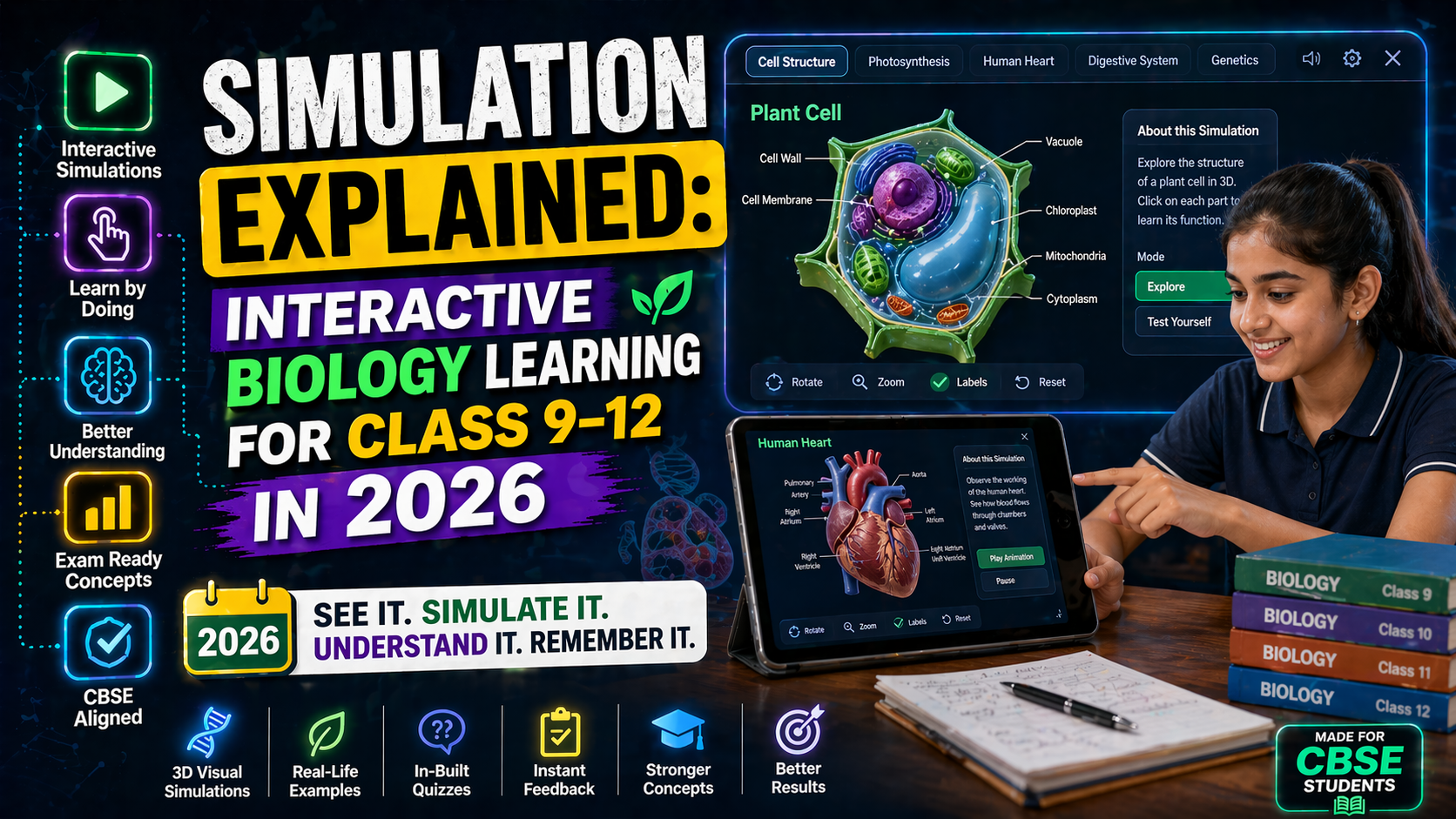
Tired of searching for a heart free png that doesn’t actually help you understand how the heart works? Static images can’t show you the simulation of blood flow, valve movements, or real-time responses to stress—until now. SPYRAL’s AI-powered 3D heart simulations let you dissect, label, and experiment with a virtual heart, making CBSE biology feel alive. No downloads, no guesswork—just interactive learning that sticks.
Whether you’re cramming for your Class 11 biology exam, preparing for NEET/JEE, or helping students grasp Photosynthesis Class 11 Bank of Biology concepts, these simulations turn abstract diagrams into hands-on discovery. Let’s dive into how you can make biology feel real—without ever needing a 'heart free png'.
Why This Matters: When Static Images Aren’t Enough
Imagine trying to explain the heart free treatment hospital scenario to a student—where a patient’s heart suddenly stops—but all you have is a flat heart free png from Google Images. How do you show them why defibrillation works, or how the heart’s electrical system triggers contractions? Static images freeze biology in time; simulations bring it to life.
In India’s CBSE and ICSE classrooms, teachers and students alike are embracing NEP 2020’s focus on competency-based learning. This means no more rote memorization of heart free png labels—students need to see, question, and experiment. SPYRAL’s simulations align perfectly with this shift, offering:
- 3D interactivity: Rotate, zoom, and explore the heart’s chambers, valves, and vessels in real time.
- AI explanations: Get instant, step-by-step breakdowns of how the heart pumps blood, responds to stress, or recovers from a heart attack.
- Curriculum mapping: Directly tied to CBSE Class 9–12 biology syllabus, including topics like Transportation in Plants (for Class 11) and Human Physiology.
- Teacher dashboards: Track student progress, generate quizzes, and even simulate heart free treatment hospital scenarios for emergency response lessons.
For parents, this means your child isn’t just seeing a heart free png—they’re experiencing biology. For teachers, it’s a game-changer in classrooms where resources are limited but curiosity is boundless.
From Flat Diagrams to 3D Discovery: How Simulations Work
Let’s start with the basics: why a heart free png just won’t cut it. A 2D image might show you the heart’s anatomy, but it can’t:
- Show how the atria contract before the ventricles during systole.
- Demonstrate the role of the SA node as the heart’s natural pacemaker.
- Simulate what happens when a valve malfunctions (e.g., mitral valve prolapse).
SPYRAL’s 3D heart simulation changes this. Here’s how it works:
1. Build Your Own Heart (Literally)
Start with a blank canvas and construct the heart layer by layer. Choose from pre-built templates or customize:
- Chamber sizes (e.g., why the left ventricle is thicker than the right).
- Valve types (tricuspid, bicuspid, aortic, pulmonary).
- Blood vessel connections (coronary arteries, vena cavae, aorta).
This hands-on approach ensures students understand the ‘why’ behind the structure, not just memorize a heart free png.
2. See Blood Flow in Real Time
Watch as colored fluids (red for oxygenated, blue for deoxygenated) move through the heart. Adjust variables like:
- Heart rate: See how faster beats affect valve timing.
- Blood pressure: Simulate hypertension or hypotension.
- Valve blockages: Observe how stenosis affects circulation.
This isn’t just a heart free png—it’s a living model of physiology.
3. AI-Powered Explanations for Every Step
Stuck on how the heart free treatment hospital scenario plays out? The AI assistant provides:
- Instant feedback: “Why did the left ventricle contract after the right atrium?”
- Step-by-step breakdowns: “Here’s how the electrical impulse travels from the SA node to the Purkinje fibers.”
- Exam tips: “For NEET/JEE, focus on these 3 high-yield concepts about heart function.”
No more guessing—just confident learning.
Photosynthesis Class 11 Bank of Biology Meets Heart Simulations: The Power of Cross-Disciplinary Learning
You might be wondering how Photosynthesis Class 11 Bank of Biology connects to heart simulations. The answer lies in systems thinking—understanding how different biological processes interact. While photosynthesis focuses on plant energy, the heart simulation teaches:
- Homeostasis: How the heart maintains balance (e.g., adjusting blood flow to meet metabolic demands).
- Energy transfer: How ATP (produced in cells) powers heart contractions.
- Feedback loops: How the body responds to stress (e.g., increased heart rate during exercise).
SPYRAL’s platform lets you compare and contrast these systems. For example:
- See how chloroplasts (in photosynthesis) and mitochondria (in heart cells) both produce energy.
- Explore how transpiration (in plants) parallels circulation (in animals).
- Use the NEP 2020-aligned dashboard to track how students grasp these connections.
This cross-disciplinary approach is exactly what NEP 2020 advocates for—breaking silos between subjects to foster deeper understanding.
Try This Simulation Free
Open the interactive simulation on anAIza School — no download, no signup needed.
Open Simulation →Change the variables yourself—see what happens in real time. Adjust heart rate, block valves, or simulate stress responses to watch the heart adapt (or fail).