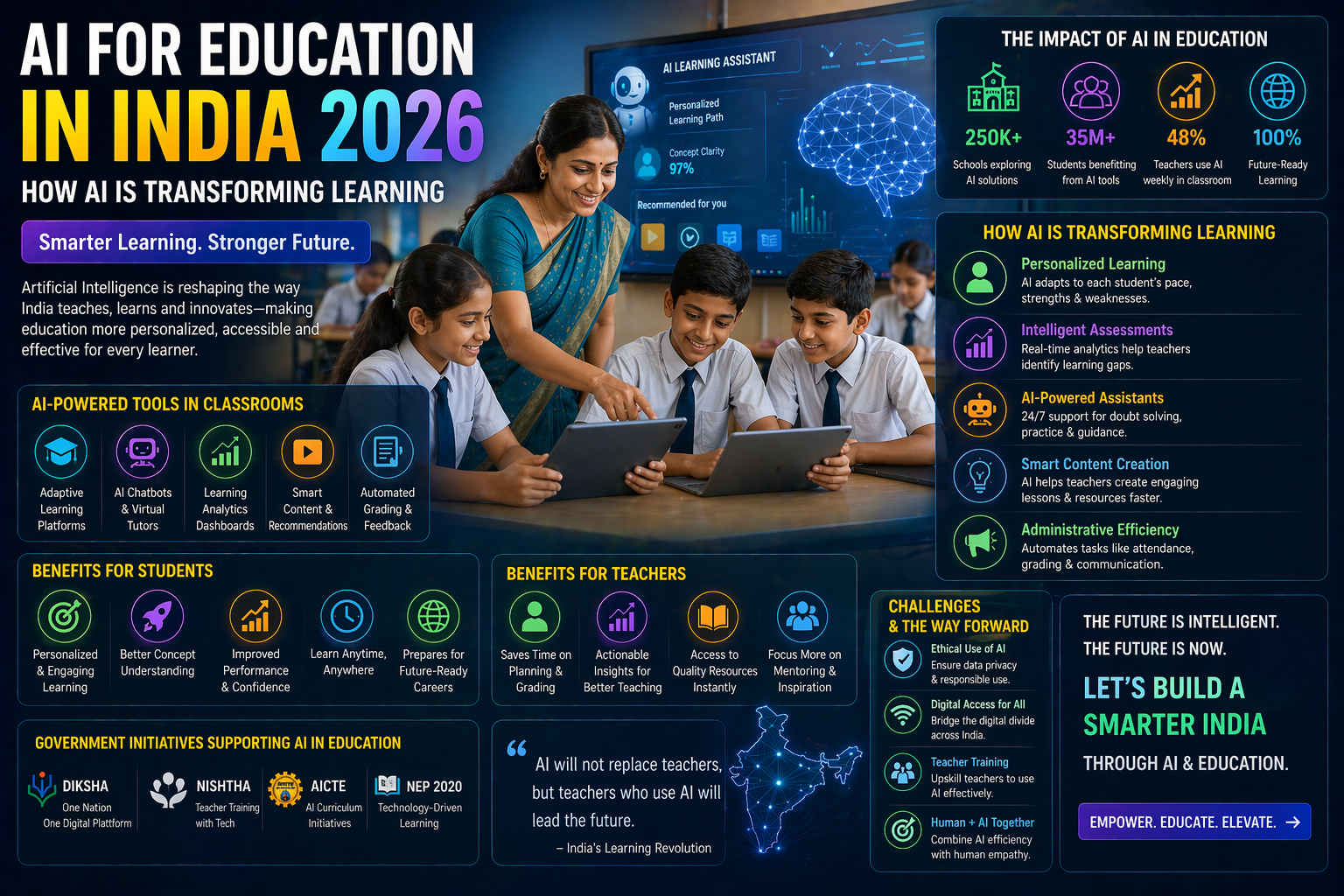
If you’re a student, teacher, or school administrator in India searching for a way to make science and math feel real—not just read about it—then an AI lab in India is your answer in 2026. These AI-powered interactive labs go beyond textbooks, letting you see, touch, and experiment with complex concepts in real time. Whether you're preparing for CBSE, ICSE, or following NEP 2020, AI labs are now the smartest way to learn.
Imagine running a physics experiment on gravity, dissecting a virtual heart in biology, or solving calculus problems with instant visual feedback—all from your classroom or home. That’s not science fiction. It’s the new reality of AI-powered learning tools in India, designed to make STEM engaging, accessible, and deeply intuitive.
Why This Matters: The Indian Classroom in 2026
India’s education system is undergoing a quiet revolution. With the NEP 2020 pushing for experiential learning and digital integration, schools are under pressure to move beyond rote memorization. But here’s the challenge: how do you make abstract concepts like friction, photosynthesis, or neural networks tangible for every student?
Traditional labs are expensive, time-bound, and often inaccessible. Many schools lack the infrastructure for hands-on experiments. That’s where AI labs in India step in. These platforms use interactive simulations powered by AI to recreate lab environments digitally—with real-time feedback, adaptive difficulty, and personalized learning paths. Students don’t just see a diagram of a heart; they simulate blood flow. They don’t just memorize Newton’s laws—they feel gravity in action.
For teachers, it means less prep time, more engagement, and data-driven insights into student progress. For school leaders, it’s a way to align with NEP 2020’s vision of “learning by doing.” And for parents? It’s peace of mind knowing their child is learning with tools used in top global schools.
What Is an AI Lab in India? And How Is It Different From a Regular Lab?
An AI lab in India is not just a digital replica of a physical lab. It’s a smart, adaptive learning environment where AI acts as a tutor, guide, and experiment designer. Here’s what sets it apart:
1. AI-Powered Simulations That Feel Real
Unlike static videos or PDFs, AI labs use interactive 3D simulations where students can manipulate variables and see outcomes instantly. For example:
- Physics: Simulate projectile motion by changing angle and velocity—watch the trajectory update in real time.
- Biology: Explore the human heart in 3D, adjust heart rate, and see how blood flows through chambers.
- Chemistry: Mix virtual chemicals and observe reactions—safely, without lab equipment.
- Math: Visualize calculus concepts like limits and derivatives with dynamic graphs.
These aren’t just animations—they’re interactive models where students learn by doing, just like in a real lab. And with AI, the system adapts to each student’s pace, offering hints or challenges based on performance.
2. Personalized Learning Paths for Every Student
Every student learns differently. An AI education platform in India uses machine learning to track progress and tailor content. If a student struggles with friction in physics, the AI might suggest a simulation with real-time force diagrams. If another excels in algebra, it could introduce calculus early.
This level of personalization was once only possible in elite private schools or expensive coaching centers. Now, it’s available to CBSE and ICSE students across India through AI-powered platforms like SPYRAL AI & Robotics Lab.
3. Teacher Dashboard: Less Grading, More Teaching
Teachers spend hours grading quizzes and tracking progress. AI labs automate this with:
- Instant quiz generation from any topic.
- Progress tracking across classes and students.
- AI-generated explanations for common mistakes.
- Curriculum mapping to CBSE, ICSE, and NEP 2020 standards.
This means teachers can focus on mentoring and inspiring—not paperwork. Schools using AI labs report up to 40% reduction in administrative time and higher student engagement.
4. Accessible Anytime, Anywhere
No need for expensive lab equipment or field trips. An AI lab in India runs on any device—laptop, tablet, or even smartphone. Students can revisit experiments at home, revise concepts before exams, or explore advanced topics ahead of their syllabus.
This aligns perfectly with NEP 2020’s emphasis on flexible, inclusive learning. Whether in a rural school or a metro city, every student gets access to world-class STEM education.
How AI Labs Are Transforming Indian Schools in 2026 (Real-World Examples)
Case Study: A CBSE School in Delhi
A government-run CBSE school in Delhi adopted an AI-powered science lab in 2025. Within six months, the school saw:
- 30% improvement in science scores.
- 90% student participation in lab activities (up from 50%).
- Teachers able to cover more topics with less prep time.
The key? Students weren’t just watching videos—they were running virtual experiments on optics, electricity, and human physiology. The AI provided step-by-step guidance, and the teacher dashboard helped identify weak areas across the class.
Case Study: An ICSE School in Bengaluru
An ICSE school in Bengaluru integrated an AI workbench into its math curriculum. Students used interactive simulations to visualize:
- Calculus concepts like integration and differentiation.
- Geometry problems with 3D shapes.li>
- Statistics with real-world datasets.
Teachers reported that students who previously struggled with abstract math now solved problems faster and with confidence. The AI even generated practice questions based on each student’s performance.
Case Study: A Rural School in Uttar Pradesh
In a rural school with limited lab facilities, an AI lab in India became a game-changer. Students explored:
- Photosynthesis with interactive plant simulations.
- Simple machines like levers and pulleys.
- Basic electronics with circuit simulators.
The school saw a 25% increase in science enrollment the next year. Parents were thrilled—no more expensive lab equipment, no more travel to distant labs. Just high-quality, interactive learning at their fingertips.
AI Labs vs. Traditional Labs: Which Wins? (Spoiler: It’s Not Even Close)
Let’s compare traditional labs and AI-powered virtual labs side by side:
| Feature | Traditional Lab | AI Lab in India (2026) |
|---|---|---|
| Cost | High (equipment, maintenance, safety) | Low (digital, cloud-based) |
| Accessibility | Limited to school hours and location | Available 24/7, anywhere with internet |
| Safety | Risk of accidents (chemicals, electricity) | Completely safe—no physical risks |
| Personalization | One-size-fits-all experiments | Adapts to each student’s pace and level |
| Feedback | Delayed (teacher grading) | Instant (AI explanations and hints) |
| Curriculum Alignment | Manual alignment by teachers | Automated mapping to CBSE/ICSE/NEP 2020 |
But the biggest advantage? AI labs allow experimentation without limits. Want to see what happens if you change gravity on Earth? Or simulate a heart attack in a biology lab? In a traditional lab, that’s impossible. In an AI lab in India, it’s just a click away.
Top 5 AI-Powered Learning Tools in India for 2026 (And What Makes Them Special)
1. SPYRAL AI & Robotics Lab
SPYRAL AI & Robotics Lab is one of India’s first AI-powered interactive science and math labs. It offers:
- 100+ interactive simulations across physics, chemistry, biology, and math.
- AI-generated explanations after every experiment.
- Curriculum mapping to CBSE, ICSE, and NEP 2020.
- Teacher dashboard with progress tracking and quiz generation.
- No-code AI model trainer for students to experiment with machine learning.
What sets it apart? The “what-if” inventor mode, where students can tweak variables and see how systems respond—perfect for project-based learning.
2. Lab4U India
Lab4U brings real-world lab experiences to Indian classrooms with mobile-based simulations. Its strength lies in gamified learning and teacher training programs. Schools use it for:
- Physics experiments on motion and energy.
- Chemistry labs on titration and pH.
- Biology dissections and genetics simulations.
3. Next Education’s ThinkRoom
ThinkRoom is an AI-integrated smart classroom solution used by hundreds of Indian schools. It combines:
- Interactive whiteboards with AI-powered content.
- Virtual labs for science and math.
- Adaptive assessments and personalized learning paths.
4. BYJU’S Learning App (AI Labs Section)
While BYJU’S is known for video lessons, its newer AI labs section offers interactive simulations for:
- Physics: Optics, electricity, and thermodynamics.
- Biology: Human body systems and genetics.
- Math: Algebra, geometry, and calculus.
It’s a great supplement for students already using the app.
5. Avanti Fellows’ AI Tutor
Avanti Fellows focuses on AI-powered tutoring for competitive exams. Its platform includes:
- Interactive problem-solving in physics and math.
- AI-generated hints and step-by-step solutions.
- Personalized revision plans based on performance.
SIM EMBED SECTION
Try This Simulation Free
Open the interactive simulation on anAIza School — no download, no signup needed.
Open Simulation →Change the variables yourself — see what happens in real time.