Home›
Blog›
AI Lab for Kids India 2026: Interactive Science & Math Simulations That Teach
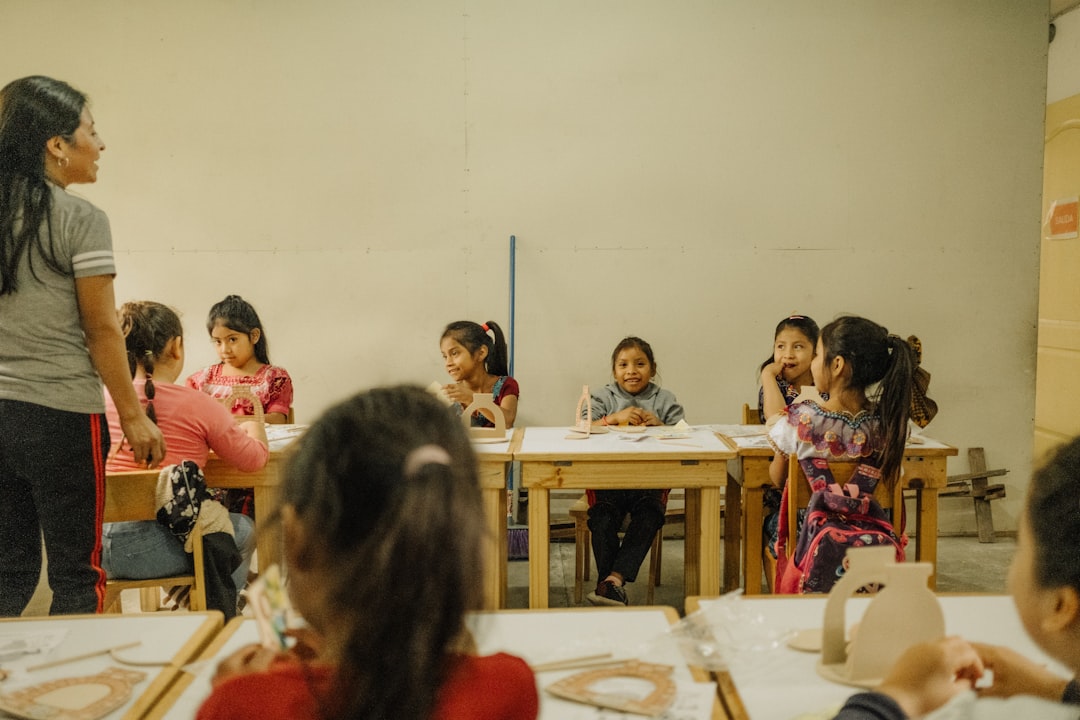
If you’ve been searching for an AI lab for kids in India that makes science and math feel real—not just theoretical—you’re in the right place. In 2026, AI-powered interactive simulations are transforming how students in classes 6 through 12 learn STEM subjects. These aren’t just videos or static diagrams. They’re real-time, hands-on labs where you can change variables, see results instantly, and even build your own AI models—all from your browser.
Whether you're a student curious about how gravity works, a teacher looking for engaging CBSE-aligned content, or a parent wanting to introduce your child to coding and data science early, an AI lab offers a safe, fun, and effective way to learn. And the best part? You can try it for free—no downloads, no logins required for guest access.
Why This Matters: AI Labs Are the Future of Learning in India
India’s education system is evolving rapidly under NEP 2020, which emphasizes experiential, competency-based learning. Traditional labs are expensive, time-consuming, and often inaccessible. But AI-powered virtual labs are changing that. They allow students to:
- Conduct experiments anytime, anywhere — even from home or a mobile device.
- Visualize abstract concepts like electromagnetic fields, cell division, or calculus derivatives in 3D.
- Build AI models without coding first — then dive into Python and data science step by step.
- Get instant AI explanations after every simulation to reinforce understanding.
According to a 2025 report by the Press Information Bureau, over 68% of Indian schools are integrating digital labs to bridge learning gaps. AI labs like anAIza School by SPYRAL are leading this shift by offering curriculum-mapped simulations for CBSE, ICSE, and international boards like IB and IGCSE.
Coding Classes for Kids India Online: Learn by Doing, Not Just Watching
One of the biggest myths about coding is that it’s too hard for young students. But with the right platform, kids as young as 10 can start building simple AI models using drag-and-drop interfaces. Here’s how AI labs make coding accessible:
1. Visual AI Builders for Beginners (Ages 10–13)
Platforms like anAIza School offer a “what-if inventor” mode where students can:
- Train a virtual robot to follow a line using AI.
- Create a simple chatbot that responds to questions.
- Use block-based coding to control a 3D pendulum or spring system.
These activities teach core programming logic—loops, conditionals, variables—without typing a single line of code. It’s like LEGO for AI.
2. Python-Based AI Training for Class 9–12
For older students, AI labs provide a seamless transition to real-world coding. You can:
- Train a neural network to recognize handwritten digits.
- Use a decision tree to predict outcomes in a physics simulation.
- Analyze real datasets (like weather or sports stats) using AI tools built into the platform.
Each simulation comes with a step-by-step AI tutor that explains the code, the math behind it, and how it applies to real-world problems. This aligns perfectly with the CBSE AI curriculum for classes 9–12, which now includes machine learning and data science.
Not all students learn at the same pace. AI-powered labs adapt to your progress. If you struggle with projectile motion, the platform might suggest revisiting Newton’s laws with a simulation. If you excel in algebra, it can challenge you with calculus visualizations or data science puzzles.
This personalized approach is especially valuable in India, where class sizes can be large, and teacher attention is limited. AI acts as a 24/7 tutor—always patient, always available.
⚗
Try This Simulation Free
Open the interactive simulation on anAIza School — no download, no signup needed.
Open Simulation →Change the variables yourself — see what happens in real time.
Data science isn’t just for college students anymore. Middle and high schoolers in India are now analyzing real-world data sets—like election results, sports performance, or climate trends—using AI tools designed for education.
1. Interactive Data Explorers
In an AI lab, you can:
- Upload a CSV file of your school’s monthly attendance and visualize trends.
- Use AI to detect patterns in temperature data across Indian cities.
- Build a simple predictive model to forecast sports scores.
These activities help students understand statistics, probability, and data ethics—key components of the new NCERT math and science syllabi.
2. Ethics and Responsible AI
With great data comes great responsibility. AI labs for kids in India now include modules on AI ethics—teaching students about bias, privacy, and fairness in algorithms. For example:
- Can an AI hiring tool be biased against certain names or genders?
- How does facial recognition affect privacy in public spaces?
- What are the ethical implications of deepfake technology?
These discussions prepare students for a future where AI is everywhere—and they’ll be the ones shaping it.
3. Real-World Projects with Local Relevance
Imagine analyzing air quality data from Delhi or predicting monsoon patterns using historical weather data. AI labs let students work with real datasets from Indian sources, making learning relevant and meaningful. This approach supports NEP 2020’s emphasis on contextual learning.
AI for Class 6, 7, 8 Students India: Spark Curiosity Early
You don’t need to wait until high school to explore AI. In fact, the best time to introduce AI concepts is in middle school—when natural curiosity peaks. Here’s how AI labs engage younger students:
1. Gamified Science and Math Simulations
Young learners can explore:
- Physics: Simulate gravity, friction, and motion with interactive sliders.
- Chemistry: Mix virtual chemicals and observe reactions in real time.
- Biology: Dissect a virtual frog or explore photosynthesis with 3D models.
- Math: Visualize fractions, geometry, and algebra using dynamic graphs.
Each simulation includes a kid-friendly AI assistant that asks guiding questions: “What happens if you increase the slope?” or “Can you make the pendulum swing faster?”
2. Simple AI Experiments
Even without coding, students can experiment with AI:
- Train a virtual pet to recognize commands using voice or text.
- Use image recognition to classify objects (e.g., fruits, animals).
- Play AI-powered games that adapt difficulty based on performance.
These activities build computational thinking and problem-solving skills—foundational for future STEM careers.
3. Teacher-Friendly Classroom Integration
Teachers in India are using AI labs to:
- Demonstrate abstract concepts during lectures.
- Assign virtual lab reports instead of pen-and-paper homework.
- Track student progress with AI-powered dashboards.
Platforms like anAIza School offer teacher tools that include lesson plans, quiz generators, and curriculum maps for CBSE, ICSE, and state boards.
What If You Changed This? 3 Real Experiments to Try Today
Don’t just watch—do. Here are three simulations you can run right now to see AI and science in action:
1. What If You Double the Mass in a Pendulum? (Physics)
In a virtual pendulum lab, change the mass from 100g to 200g. What happens to the period? Does it swing faster, slower, or stay the same? The AI tutor will explain why—using Newton’s laws and energy conservation. This is a great way to prepare for CBSE Class 11 physics exams.
2. What If You Increase the Temperature in a Chemical Reaction? (Chemistry)
In a virtual chemistry lab, simulate the reaction between baking soda and vinegar. Now, increase the temperature from 20°C to 50°C. Watch the bubbles form faster. The AI will explain collision theory and activation energy—key concepts in the CBSE Class 12 chemistry syllabus.
3. What If You Train an AI on Only Red and Blue Flowers? (AI Ethics & Biology)
In a simple image classification simulation, train an AI to recognize red and blue flowers. Now, show it a purple flower. What happens? The AI might misclassify it. This teaches students about bias in AI—a critical topic in the CBSE AI curriculum for Class 11–12. It also connects to real-world issues like gender bias in hiring algorithms.
These “what-if” moments are where real learning happens. You’re not just memorizing facts—you’re experimenting, failing, and iterating—just like real scientists and engineers.
Frequently Asked Questions
What is an AI lab for kids in India and how is it different from regular online classes?
An AI lab for kids in India is an interactive, browser-based platform where students can run real-time science and math simulations powered by AI. Unlike regular online classes that rely on videos or PDFs, AI labs let you change variables, see results instantly, and get AI explanations after every experiment. It’s hands-on learning—just like a real lab, but digital and accessible 24/7.
Are there free coding classes for kids in India online that use AI labs?
Yes! Platforms like anAIza School offer free coding activities for kids as young as 10, using block-based and Python-based AI trainers. Students can build simple AI models, train virtual robots, and even analyze real datasets—all without any cost. These activities align with the CBSE AI curriculum and NEP 2020 guidelines.
Can students in class 6, 7, or 8 use AI labs in India?
Absolutely! AI labs are designed for students from class 6 to 12. Younger students (ages 10–14) can explore gamified simulations in physics, chemistry, biology, and math, while older students (14–18) can dive into coding, data science, and AI ethics. The interface is intuitive, and AI tutors guide them through each step.
The best platform depends on your needs, but anAIza School stands out because it offers:
- Curriculum-mapped simulations for CBSE, ICSE, IB, and IGCSE.
- AI-powered explanations after every simulation.
- Free access to coding tools, data science modules, and AI ethics lessons.
- Teacher dashboards for progress tracking and quiz generation.
It’s designed specifically for Indian students and teachers, making it a top choice for class 9–12 AI learning.
How can school students in India learn data science using AI labs?
AI labs make data science accessible by letting students work with real datasets in a visual, interactive way. You can upload CSV files, visualize trends, and even train simple AI models to make predictions. For example, analyze monsoon rainfall data or predict sports outcomes. These activities build foundational skills in statistics, probability, and machine learning—key for future careers in tech and research.
Do AI labs for kids in India support CBSE and ICSE syllabi?
Yes! Platforms like anAIza School are fully mapped to the NCERT syllabus and include simulations for CBSE and ICSE classes 6–12. Whether you're studying physics, chemistry, biology, or math, you’ll find interactive labs that align with your textbook chapters. This makes AI labs a perfect supplement for school learning.
Can teachers in India use AI labs in their classrooms for free?
Yes! Teachers can access anAIza School’s teacher tools for free, including lesson plans, quiz generators, and progress tracking dashboards. You can assign simulations as homework, use them for demonstrations, or even create custom quizzes based on student performance. It’s designed to save teachers time while enhancing student engagement.
Is there an AI trainer for class 9 to 12 that helps with exams like JEE or NEET?
While AI labs are not a replacement for full exam prep, they can help build conceptual clarity—especially in physics, chemistry, and math. For example, simulating projectile motion or electromagnetic fields can reinforce JEE-level concepts. The AI tutor provides step-by-step explanations, which are great for revision. Pair this with practice tests, and you have a powerful study tool.
Are virtual labs as effective as real labs for learning science?
Research shows that interactive simulations can be just as effective as physical labs for conceptual understanding—especially when combined with guided inquiry and reflection. Virtual labs offer advantages like safety, repeatability, and the ability to visualize invisible phenomena (e.g., magnetic fields or molecular bonds). They also allow students to experiment with variables that would be impossible in a school lab.
Do I need to know coding to use AI labs for kids in India?
No! AI labs are designed for all skill levels. Beginners can start with drag-and-drop AI builders and gamified simulations. As you get comfortable, you can transition to block-based coding and eventually Python. The AI tutor guides you through each step, so you learn by doing—not by memorizing syntax.
Can parents in India monitor their child’s progress in AI labs?
Yes! Some platforms, like anAIza School, offer parent dashboards where you can view your child’s activity, completed simulations, and quiz scores. This helps you support their learning at home and identify areas where they might need extra help. It’s a great way to stay involved in your child’s STEM education.
Are AI labs for kids in India safe and ad-free?
Reputable AI labs like anAIza School are designed with student safety in mind. They are ad-free, COPPA-compliant, and do not collect unnecessary personal data. Simulations run in the browser, so no software needs to be installed. Always check the platform’s privacy policy and terms of service before signing up.
How do AI labs support NEP 2020’s competency-based learning goals?
NEP 2020 emphasizes learning by doing, critical thinking, and real-world application. AI labs support these goals by:
- Encouraging experimentation and inquiry.
- Providing instant feedback and AI explanations.
- Offering project-based learning opportunities.
- Adapting to individual student needs and pacing.
This aligns with the shift from rote learning to competency-based education in Indian schools.
Can students in India use AI labs on mobile devices?
Yes! Most AI labs are optimized for both desktop and mobile browsers. You can run simulations on a smartphone or tablet, making it easy to learn on the go. This is especially helpful for students in rural areas or those without access to computers at home.
Ready to Explore? Your AI Lab Awaits
By now, you’ve seen how an AI lab for kids in India can transform learning—whether you're in class 6 or 12, a teacher, or a parent. These labs aren’t just tools; they’re gateways to curiosity, creativity, and future-ready skills in AI, coding, and data science.
And the best part? You can start for free—no credit card, no signup required for guest access. Just open your browser, visit anAIza School, and begin exploring.
So go ahead—change the mass in the pendulum. Train an AI on flower images. Predict the next monsoon. Make science and math feel real.
The future of learning isn’t just digital. It’s interactive. It’s AI-powered. And it’s waiting for you.