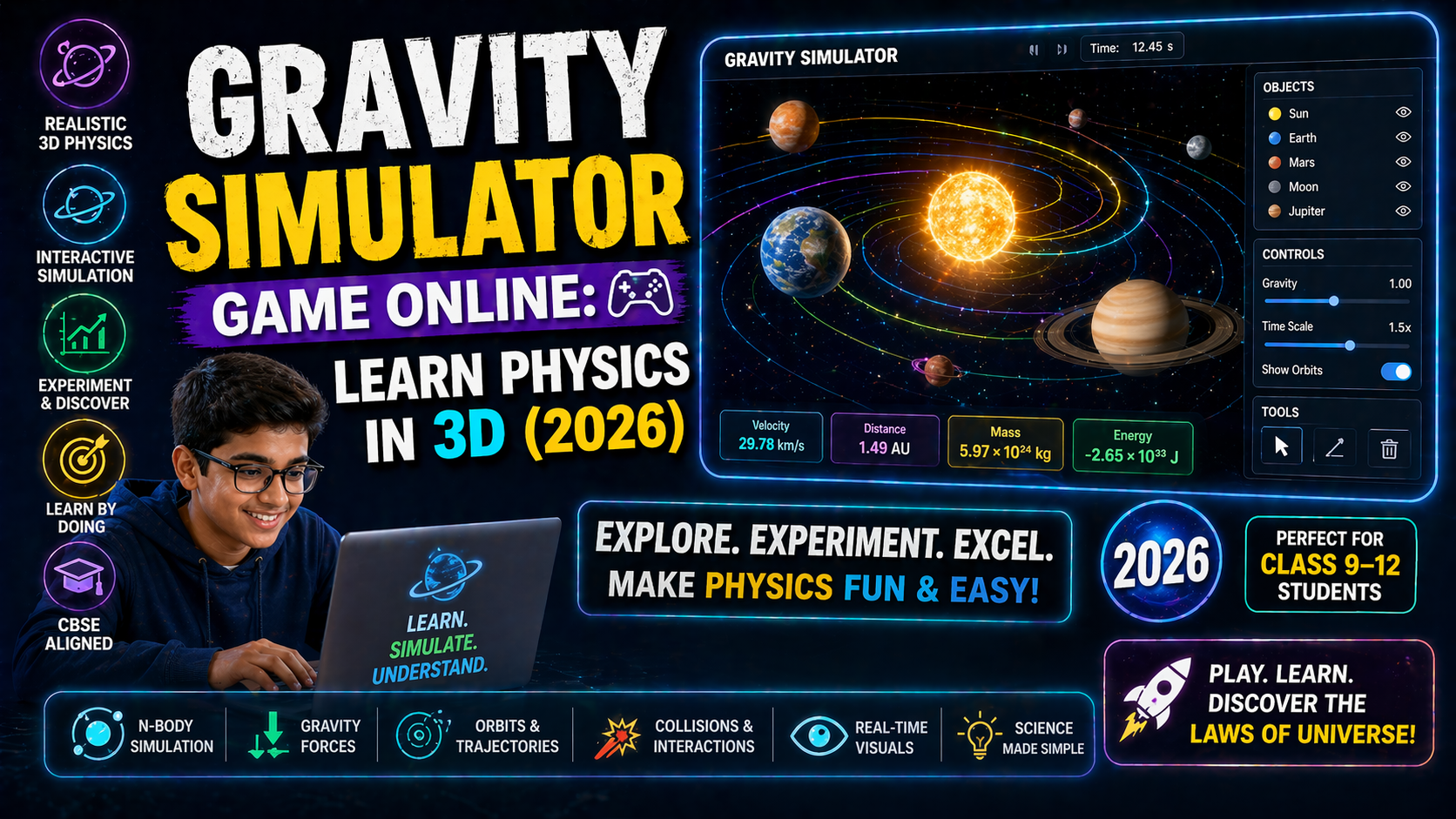
Struggling to grasp CBSE thermodynamics? You’re not alone—most students find heat transfer, gas laws, and energy conversions abstract until they *see* them in action. But what if you could manipulate variables in real time, watch energy flow like water in a river, and instantly visualize how temperature changes affect pressure? That’s exactly what SPYRAL’s AI-powered thermodynamics simulations let you do—no lab equipment required. Dive into interactive thermodynamics for CBSE 2026 and turn confusing concepts into clickable discoveries.
This guide is your shortcut to mastering thermodynamics for CBSE Class 9–12, NEP 2020-aligned experiments, and even NEET/JEE prep. Whether you’re a student stuck on the simulation of heat engines or a teacher hunting for engaging labs, we’ll show you how to make thermodynamics feel real—without the frustration.
Why This Matters: Thermodynamics in CBSE 2026—Beyond the Textbook
Thermodynamics isn’t just a chapter in your CBSE physics textbook—it’s the science behind everything from the engine in your school’s generator to the refrigerator in your home. Yet, many students struggle with abstract concepts like entropy, adiabatic processes, or the ideal gas law, which rely on formulas they can’t visualize. According to the National Education Policy 2020, India is shifting toward competency-based learning, meaning schools now prioritize hands-on, experiential learning over rote memorization. That’s where interactive simulations come in—they bridge the gap between theory and real-world understanding.
For Class 11 and 12 students preparing for CBSE exams or competitive tests like NEET/JEE, thermodynamics is a high-weightage topic. But even for younger students (Class 9–10), grasping basics like heat transfer and temperature-pressure relationships builds a foundation for advanced physics. With SPYRAL’s simulations, you don’t just learn—you experiment. Change the temperature of a gas, observe how its pressure shifts, or simulate a Carnot cycle to see efficiency in action. No more guessing; just discovery.
Thermodynamics Simulation: See Heat & Energy in Action
Thermodynamics is all about energy—how it’s transferred, transformed, and conserved. But until you see it, concepts like first law of thermodynamics (conservation of energy) or second law (entropy) can feel like puzzles. SPYRAL’s thermodynamics simulation lets you explore these ideas interactively:
- Heat Transfer Modes: Experiment with conduction, convection, and radiation. Drag a hot object near a cold one and watch heat flow in real time.
- Gas Laws: Adjust pressure, volume, and temperature of an ideal gas to see how they relate (Boyle’s Law, Charles’s Law, Gay-Lussac’s Law).
- Heat Engines: Build and test a simple heat engine. See how efficiency changes with temperature differences between the hot and cold reservoirs.
- Phase Changes: Simulate melting, boiling, and freezing. Observe how energy is absorbed or released during transitions.
Why This Works for CBSE Students
Unlike static diagrams, SPYRAL’s simulations:
- Align with CBSE Syllabus: Covers all key topics from Class 9–12, including thermodynamics for Class 11’s Thermal Physics and Class 12’s Thermodynamics.
- NEP 2020 Compliant: Encourages inquiry-based learning—students ask questions, test hypotheses, and draw conclusions.
- No Equipment Needed: Accessible from any device, making it perfect for home or school labs with limited resources.
- Instant Feedback: See errors in real time (e.g., “Your heat engine’s efficiency dropped—why?”) and correct them on the spot.
Electrostatics vs. Thermodynamics: How Simulations Help Both
You might wonder why we’re pairing electrostatics simulation with thermodynamics. The answer? Both fields teach you how to model invisible forces—electric fields vs. heat flow. While electrostatics deals with charges and fields, thermodynamics deals with energy and states of matter. SPYRAL’s simulations help you:
- Compare Concepts: See how both fields rely on conservation laws (charge vs. energy) and interactions (Coulomb’s Law vs. gas laws).
- Develop Problem-Solving Skills: Practice setting up equations and interpreting results—critical for both subjects.
- Visualize Abstract Ideas: Electrostatics can feel like “magic” (how do charges repel?), but simulations make it tangible. Similarly, thermodynamics becomes intuitive when you watch energy move.
Key Takeaways for CBSE Exams
Use these simulations to master:
- First Law of Thermodynamics: ΔU = Q – W (Change in internal energy = Heat added – Work done). Simulate scenarios where energy is conserved or transformed.
- Second Law of Thermodynamics: Entropy always increases. Watch simulations where disorder grows (e.g., heat spreading from hot to cold).
- Ideal Gas Law: PV = nRT. Test how changing one variable affects the others.
- Heat Engines: Calculate efficiency (W_out/Q_in) and see how real-world engines fall short of Carnot efficiency.
Fluid Pressure & Buoyancy: Thermodynamics Meets Mechanics
Thermodynamics isn’t just about heat—it’s deeply connected to fluids! The fluid pressure buoyancy simulation lets you explore how pressure varies with depth (Pascal’s Principle) and how buoyant forces work (Archimedes’ Principle). These concepts are crucial for:
- CBSE Class 11 Physics: Understanding hydrostatic pressure and fluid equilibrium.
- NEET/JEE Prep: Solving problems involving submerged objects or fluid dynamics.
- Real-World Applications: Designing dams, submarines, or even understanding why hot air balloons float!
Connecting to CBSE Labs
While you can’t perform real lab experiments at home, SPYRAL’s simulations replicate key CBSE lab setups:
- Calorimetry: Measure specific heat capacity by simulating a coffee-cup calorimeter.
- Gas Laws: Replicate Boyle’s Law experiments with a syringe and pressure gauge.
- Heat Transfer: Simulate Fourier’s Law of heat conduction through different materials.
What If You Changed This?
Now that you’ve seen the simulations in action, try these experiments to deepen your understanding:
1. What If You Doubled the Temperature of a Gas?
In the ideal gas law simulation, set the initial temperature to 300 K. Then double it to 600 K. Observe:
- How does the pressure change if volume is held constant?
- What happens to the volume if pressure is kept the same?
- How does this relate to the Charles’s Law?
2. What If You Added a Resistor to an Ohm’s Law Circuit?
Switch to the ohm law resistor simulation and connect a resistor. Gradually increase its resistance while keeping the voltage constant. Ask yourself:
- How does the current change? Why?
- What happens to the power dissipated as heat?
- How is this similar to thermodynamics’ energy dissipation in real systems?
3. What If You Simulated a Real Heat Engine?
In the heat engine simulation, set the hot reservoir to 500°C and the cold reservoir to 25°C. Then:
- Calculate the maximum possible efficiency using the Carnot efficiency formula: η = 1 – (T_cold/T_hot).
- Adjust the temperatures and observe how efficiency changes.
- Why can’t real engines reach 100% efficiency? (Hint: Think about entropy!)
Try It Free on SPYRAL
Everything discussed in this article is available for free on SPYRAL AI Workbench — Physics Simulations. No signup required for guest access — just open it and start learning.
Explore SPYRAL AI Workbench — Physics Simulations →Frequently Asked Questions
How can I learn thermodynamics for CBSE Class 11 using simulations?
Start with SPYRAL’s thermodynamics simulation to visualize heat transfer, gas laws, and energy conversions. Focus on the first law of thermodynamics (energy conservation) and second law (entropy) by experimenting with temperature, pressure, and work interactions. For Class 11, prioritize simulations of ideal gas behavior and heat engines to align with CBSE’s focus on thermal physics.
Where can I find a free thermodynamics simulation for CBSE?
SPYRAL’s AI Workbench offers free, interactive thermodynamics simulations aligned with CBSE Class 9–12. No signup is needed—just explore the thermodynamics simulation and related labs like fluid pressure buoyancy or heat engines. These tools are designed to replace traditional textbooks with hands-on learning.
Can I use an electrostatics simulation to understand thermodynamics?
Absolutely! Both fields teach you how to model invisible forces—electrostatics deals with electric fields, while thermodynamics deals with energy flow. SPYRAL’s simulations let you compare how both systems follow conservation laws (charge vs. energy) and interactions (Coulomb’s Law vs. gas laws). Try adjusting charges in an electrostatics panel and compare it to adjusting temperature in a thermodynamics panel to see similar “balance” principles in action.
How does the lens formula calculator relate to thermodynamics?
The lens formula calculator might seem unrelated to thermodynamics, but both involve energy transformations and system interactions. While lenses focus light (electromagnetic energy), thermodynamics studies how heat energy moves between systems. SPYRAL’s simulations help you see the parallels: both rely on conservation principles (light energy vs. thermal energy) and efficiency (how much energy is “lost” as heat in lenses vs. in thermodynamic processes). For CBSE, use the lens formula to practice mathematical modeling, a skill you’ll reuse in thermodynamics problems.
What is the best thermodynamics simulation for NEET/JEE prep?
For NEET/JEE, focus on SPYRAL’s thermodynamics simulation that covers:
- First and Second Laws: Simulate scenarios to understand entropy and energy conservation.
- Heat Engines: Calculate efficiency and compare real-world engines to Carnot cycles.
- Phase Changes: Visualize latent heat and specific heat capacity.
- Gas Laws: Test Boyle’s, Charles’s, and Gay-Lussac’s Laws interactively.
These simulations align with NEET/JEE’s emphasis on problem-solving and conceptual clarity. Pair them with ohm law resistor simulations to practice mathematical applications of thermodynamics principles.
How can I simulate fluid pressure and buoyancy for CBSE Class 12?
Use SPYRAL’s fluid pressure buoyancy simulation to explore how pressure varies with depth and how buoyant forces work. For Class 12, this simulation helps you:
- Understand Pascal’s Principle and Archimedes’ Principle through interactive experiments.
- Calculate buoyant force on submerged objects and compare it to real-world examples (e.g., ships, submarines).
- Relate fluid mechanics to thermodynamics by observing how temperature affects fluid density and pressure.
This simulation is perfect for CBSE’s focus on applied physics and real-world connections.
Can I use thermodynamics simulations to learn Ohm’s Law?
While ohm law resistor simulations focus on electric circuits, they share key principles with thermodynamics, such as:
- Energy Conservation: In Ohm’s Law, power (P = VI) is “dissipated” as heat in resistors—just like thermal energy in thermodynamics.
- Resistance as a “Friction”: Resistors limit current, much like how thermodynamics systems resist heat flow (e.g., insulation).
- Mathematical Modeling: Both fields use equations to predict behavior. Practice setting up and solving equations in both simulations to build strong problem-solving skills.
Try this: In the resistor simulation, increase resistance and observe how current drops. Then, in the thermodynamics simulation, increase friction in a moving piston—notice how both systems “resist” change!
How do I use simulations to solve CBSE thermodynamics problems?
SPYRAL’s simulations help you solve CBSE problems by:
- Visualize Concepts: Before solving, interact with the simulation to understand the scenario (e.g., watch a gas expand in a piston).
- Identify Variables: Note which quantities are changing (e.g., temperature, volume, pressure) and which are constant.
- Apply Equations: Use the simulation’s built-in tools to calculate values (e.g., efficiency of a heat engine).
- Test Hypotheses: Change variables and observe outcomes to verify your solutions.
- Connect to Real World: Relate simulations to CBSE’s practical examples (e.g., refrigerators, engines).
For example, to solve a problem about a Carnot engine, simulate its cycle first, then apply the efficiency formula η = 1 – (T_cold/T_hot).
Are there free thermodynamics simulations for CBSE Class 9?
Yes! SPYRAL’s thermodynamics simulation is designed for all CBSE classes, including Class 9. Start with:
- Heat Transfer: Experiment with conduction, convection, and radiation to understand how heat moves.
- Temperature and Thermal Expansion: Observe how solids, liquids, and gases expand when heated.
- Calorimetry Basics: Simulate mixing hot and cold water to learn about specific heat capacity.
These simulations align with Class 9’s focus on thermal properties of matter and energy transfer, making abstract concepts tangible.
How can I use simulations to teach thermodynamics in a CBSE Class 11 lab?
As a teacher, SPYRAL’s simulations are perfect for NEP 2020’s inquiry-based learning. Here’s how to integrate them:
- Hands-On Experiments: Replace traditional labs with simulations (e.g., simulate a calorimetry experiment instead of using real apparatus).
- Group Activities: Divide students into teams to explore different scenarios (e.g., “Design a heat engine with 50% efficiency”).
- Real-Time Feedback: Use the simulations’ instant results to discuss errors and corrections collaboratively.
- Curriculum Mapping: Align simulations with CBSE’s Thermal Physics chapter, covering topics like:
- Thermal equilibrium and temperature
- Heat transfer mechanisms
- Laws of thermodynamics
- Thermodynamic processes (isothermal, adiabatic)
- Assessment Tools: Generate quizzes using SPYRAL’s AI Workbench to test understanding interactively.
For example, simulate a fluid pressure buoyancy experiment to teach hydrostatic pressure, then ask students to calculate the buoyant force on a submerged object.
What’s the difference between a thermodynamics simulation and a PhET simulation?
SPYRAL’s thermodynamics simulations differ from PhET in key ways:
- AI Explanations: SPYRAL provides instant, personalized feedback after every interaction (e.g., “Your heat engine’s efficiency dropped because you reduced the temperature difference—try increasing T_hot!”).
- Curriculum Mapping: Aligned with CBSE, NEP 2020, IB, and Cambridge syllabi, while PhET is broader but less tailored.
- Teacher Dashboard: SPYRAL offers progress tracking, quiz generation, and what-if inventor mode for deeper exploration.
- Offline Access: Download simulations for use without internet (unlike PhET, which requires online access).
- NEP 2020 Focus: Designed for competency-based learning, with simulations that encourage questioning and discovery.
For CBSE students, SPYRAL’s simulations are more interactive and adaptive, making them ideal for self-paced learning.