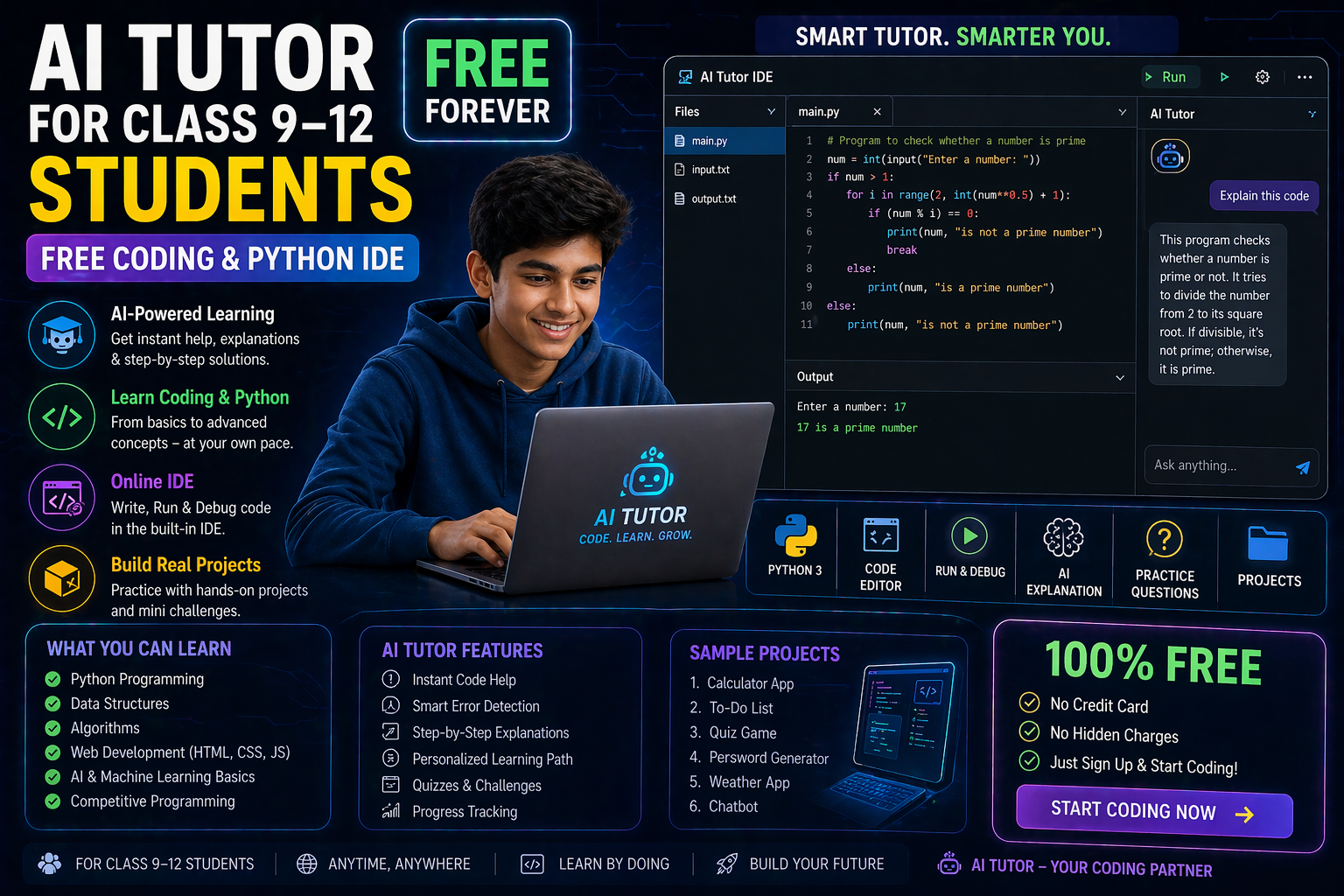
As Indian schools prepare for CBSE registration in 2026, managing student data securely and efficiently has become a top priority. With the National Education Policy (NEP) 2020 emphasizing digital transformation and AI integration in education, schools are now required to adopt AI-powered tools for data management, personalized learning, and compliance reporting.
In this guide, we’ll explore how schools can securely handle student data for CBSE registration, align with NEP 2020 guidelines, and leverage AI tools like no-code ML trainers and AI quiz generators to enhance learning outcomes for Class 9–12 students. Whether you're a teacher, school administrator, or student, this article will help you navigate the process with confidence.
Why Student Data Matters for CBSE Registration in 2026
CBSE registration in 2026 is not just about submitting student details—it’s about ensuring data accuracy, security, and compliance with evolving educational policies. The CBSE board has increasingly emphasized the use of digital platforms for registration, making it essential for schools to maintain up-to-date and secure student records.
Key reasons why student data for CBSE registration is critical:
- Compliance: Schools must adhere to CBSE’s data submission deadlines and formats to avoid penalties.
- Personalized Learning: AI-powered platforms use student data to tailor learning experiences, especially in AI and coding subjects introduced under NEP 2020.
- Transparency: Parents and students need access to their academic records for informed decision-making.
- Future-Readiness: Schools adopting AI tools for data management are better prepared for upcoming digital assessments and AI curriculum integration.
With the rise of AI in education, schools are now expected to use student data not just for registration but also for enhancing learning outcomes through personalized AI-driven tools.
How AI is Transforming Student Data Management for CBSE Schools
The integration of AI in education is reshaping how schools handle student data for CBSE registration. AI-powered platforms can automate data collection, validate entries, and even predict trends in student performance—all while ensuring compliance with data privacy norms.
Key AI Tools for Student Data Management
Here are some of the most impactful AI tools schools can use to streamline student data for CBSE registration:
- AI Quiz Generators: These tools create customized quizzes based on student data, helping teachers assess learning gaps and prepare students for CBSE exams.
- No-Code ML Trainers: Platforms like SPYRAL’s AI Workbench allow students to train machine learning models without writing complex code, making AI accessible for Class 9–12 students.
- Word Embeddings Explorers: These tools help students and teachers visualize how words and concepts are interconnected, enhancing vocabulary and comprehension skills.
- AI-Powered Analytics Dashboards: Schools can use these to track student progress, identify at-risk students, and generate insights for CBSE registration reports.
By leveraging these AI tools, schools can ensure that their student data for CBSE registration is not only accurate but also actionable for improving learning outcomes.
Step-by-Step Guide to Managing Student Data for CBSE Registration 2026
Follow these steps to ensure your school’s student data for CBSE registration is secure, compliant, and ready for AI integration:
Step 1: Data Collection and Validation
Start by gathering student data from reliable sources such as school management systems (SMS), attendance records, and previous academic reports. Use AI tools to validate the data for accuracy and completeness. For example, AI-powered word embeddings explorers can help cross-check student names, IDs, and other details against standardized formats.
Step 2: Data Privacy and Security
Ensure that all student data is stored securely and complies with India’s data protection laws, such as the Digital Personal Data Protection Act (DPDP) 2023. Use encrypted databases and restrict access to authorized personnel only. Schools can also use AI-driven anomaly detection tools to flag any unauthorized access attempts.
Step 3: Integration with AI Learning Platforms
Link your student data with AI-powered learning platforms to enable personalized learning experiences. For instance, platforms like SPYRAL’s AI & Robotics Lab use student data to recommend AI and coding projects tailored to each student’s skill level. This not only enhances engagement but also prepares students for CBSE’s AI curriculum.
Step 4: Generate CBSE Registration Reports
Use AI tools to automatically generate CBSE registration reports based on the validated student data. These reports can include attendance records, academic performance, and extracurricular achievements. AI-powered AI quiz generators can also help create practice tests aligned with CBSE’s exam patterns.
Step 5: Continuous Monitoring and Updates
Student data is dynamic, and schools must continuously monitor and update records. AI tools can automate this process by sending alerts for missing data, inconsistencies, or upcoming deadlines. This ensures that your student data for CBSE registration is always up-to-date and compliant.
How Students Can Use AI Tools to Enhance Learning with Their Data
Students in Class 9–12 can also take advantage of AI tools to make the most of their academic data. Here’s how:
Personalized Learning Paths
AI platforms analyze student performance data to recommend personalized learning paths. For example, if a student struggles with calculus, the platform can suggest interactive calculus visualizers or step-by-step problem-solving guides. This targeted approach helps students improve their understanding and performance in CBSE exams.
AI and Coding Projects
With the introduction of AI and coding in the CBSE AI curriculum, students can use platforms like SPYRAL’s AI Workbench to build and train machine learning models. These no-code ML trainers for CBSE Class 11 and 12 allow students to experiment with AI without needing advanced programming skills. Projects like sentiment analysis, image recognition, and predictive modeling can be explored using student-generated datasets.
Interactive Assessments
AI-powered AI quiz generators can create customized quizzes based on student data, helping them practice for CBSE exams in a gamified format. These quizzes adapt to the student’s performance, providing instant feedback and highlighting areas for improvement.
NEP 2020 and AI: Aligning Student Data with Policy Goals
The National Education Policy (NEP) 2020 places a strong emphasis on digital literacy, AI integration, and personalized learning. Schools must ensure that their student data for CBSE registration aligns with these goals by:
- Promoting AI Literacy: Introduce students to AI concepts through interactive tools like word embeddings explorers and no-code ML trainers.
- Encouraging Project-Based Learning: Use AI platforms to facilitate hands-on projects in robotics, coding, and data science, as outlined in NEP 2020’s multidisciplinary approach.
- Enhancing Teacher Training: Provide teachers with AI tools to analyze student data and tailor their teaching methods accordingly. Platforms like SPYRAL’s NEP-aligned resources offer training modules for educators.
- Ensuring Inclusivity: Use AI to identify students who may need additional support and provide targeted interventions to ensure no student is left behind.
By aligning student data for CBSE registration with NEP 2020, schools can create a future-ready learning environment that prepares students for the digital age.
Top AI Tools for Schools to Manage Student Data in 2026
Here’s a curated list of AI tools that can help schools manage student data for CBSE registration efficiently and securely:
| Tool | Purpose | Best For |
|---|---|---|
| SPYRAL AI & Robotics Lab | AI-powered personalized learning and coding projects | Class 9–12 students and teachers |
| AI Quiz Generator | Create customized quizzes based on student data | Teachers and CBSE exam prep |
| No-Code ML Trainer | Train machine learning models without coding | CBSE Class 11–12 students |
| Word Embeddings Explorer | Visualize and analyze word relationships | Language and AI learning |
| AI Analytics Dashboard | Track student progress and generate reports | School administrators |
These tools not only simplify the process of managing student data for CBSE registration but also enhance the overall learning experience for students.
Try It Free on SPYRAL
Everything discussed in this article is available for free on SPYRAL AI & Robotics Lab. No signup required for guest access — just open it and start learning.
Explore SPYRAL AI & Robotics Lab →Common Challenges and Solutions for Student Data Management
Managing student data for CBSE registration comes with its own set of challenges. Here are some common issues and how to address them:
Challenge 1: Data Privacy Concerns
Solution: Use AI tools that comply with data protection laws like DPDP 2023. Encrypt student data and limit access to authorized personnel only. Regularly audit data handling practices to ensure compliance.
Challenge 2: Data Inaccuracy
Solution: Implement AI-powered validation tools to cross-check student data against multiple sources. Use automated reminders to update records and ensure accuracy before CBSE registration deadlines.
Challenge 3: Lack of AI Literacy Among Teachers
Solution: Provide training sessions on AI tools for teachers. Platforms like SPYRAL offer NEP-aligned resources to help educators integrate AI into their teaching methods.
Challenge 4: Resistance to Digital Transformation
Solution: Start with small, pilot projects like using AI quiz generators for formative assessments. Highlight the benefits of AI tools in reducing workload and improving student outcomes to encourage adoption.
FAQ: Student Data for CBSE Registration 2026
1. What student data is required for CBSE registration in 2026?
CBSE registration typically requires details such as student name, date of birth, class, previous academic records, attendance, and any special needs or accommodations. Schools must ensure this data is accurate and up-to-date.
2. How can AI tools help schools manage student data for CBSE registration?
AI tools can automate data collection, validate entries, generate reports, and provide insights into student performance. Platforms like SPYRAL’s AI Workbench and AI & Robotics Lab offer features like no-code ML trainers and AI quiz generators to streamline the process.
3. Are AI tools for student data management compliant with NEP 2020?
Yes, AI tools that align with NEP 2020’s goals of digital literacy, personalized learning, and multidisciplinary education are compliant. Schools should choose platforms that emphasize AI ethics, inclusivity, and teacher training.
4. Can students use AI tools to improve their CBSE exam preparation?
Absolutely! AI tools like AI quiz generators and interactive simulators can help students practice CBSE exam patterns, receive instant feedback, and focus on weak areas. Platforms like SPYRAL offer free access to these tools for Class 9–12 students.
5. How can schools ensure the security of student data for CBSE registration?
Schools should use encrypted databases, restrict access to authorized personnel, and comply with data protection laws like DPDP 2023. Regular audits and AI-driven anomaly detection can further enhance security.
6. What is the best way to learn Python for CBSE AI curriculum?
The best way to learn Python for CBSE’s AI curriculum is through hands-on projects and interactive platforms. SPYRAL’s Developer tools offer free Python IDEs and coding exercises tailored for beginners and advanced learners alike.
Conclusion: Future-Proof Your School with AI-Powered Student Data Management
As CBSE registration in 2026 approaches, schools must prioritize secure, efficient, and AI-ready management of student data. By leveraging AI tools like no-code ML trainers, AI quiz generators, and analytics dashboards, schools can not only streamline the registration process but also enhance personalized learning for Class 9–12 students.
NEP 2020’s vision of a digital and AI-integrated education system is within reach. Schools that adopt these tools today will be better prepared to meet CBSE’s evolving requirements and provide students with the skills they need for the future.
Ready to transform your school’s approach to student data? Explore SPYRAL’s AI & Robotics Lab and start your journey toward AI-powered education today.
Try It Free on SPYRAL
Everything discussed in this article is available for free on SPYRAL AI & Robotics Lab. No signup required for guest access — just open it and start learning.
Explore SPYRAL AI & Robotics Lab →