Home›
Blog›
Photosynthesis Free Science Lessons for A-Level Biology (2026)
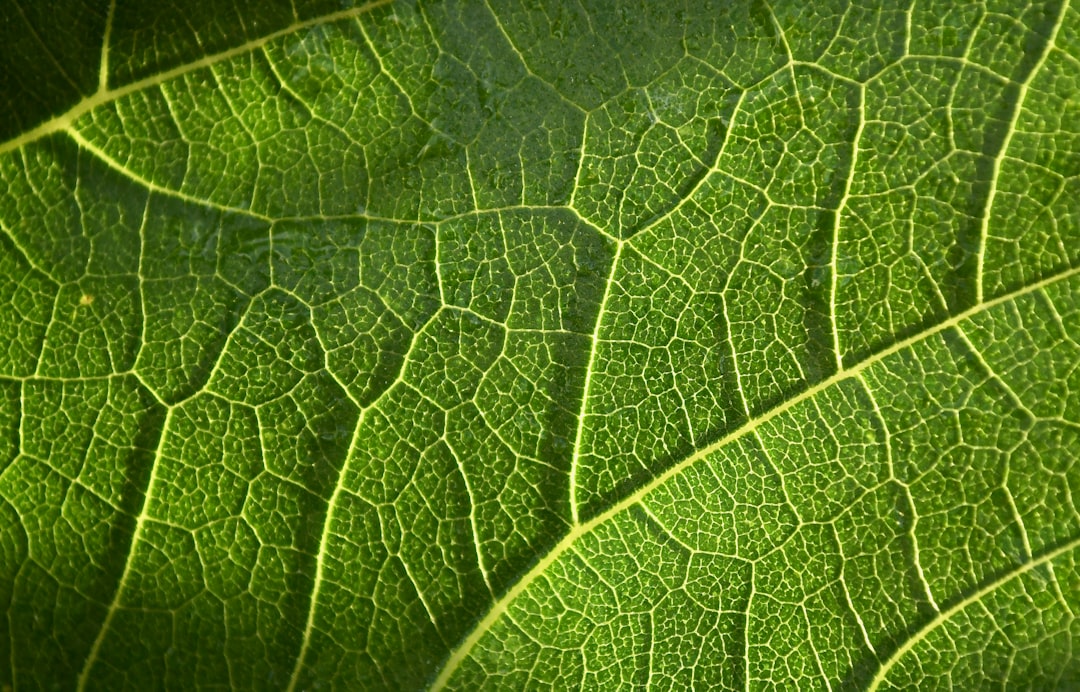
You’re staring at a textbook diagram of photosynthesis, trying to memorize the light-dependent reactions and the Calvin cycle — but it just won’t stick. You need to see it in action, not just read about it. That’s where interactive simulations come in. With free science lessons and A-Level biology simulations, you can manipulate variables like light intensity, CO₂ levels, and temperature to watch photosynthesis unfold in real time. No lab coat required.
This isn’t just another static diagram. These simulations let you change the inputs and observe the outputs — just like a real experiment. Whether you're preparing for A-Level exams, NEET, or CBSE Class 11–12 biology, these tools make photosynthesis tangible. And the best part? They’re free, interactive, and designed for students who want to feel science, not just memorize it.
Why This Matters: Photosynthesis Isn’t Just a Diagram
Photosynthesis is one of the most fundamental processes on Earth — it’s how plants feed themselves, produce oxygen, and form the base of every food chain. But for students, it often feels like a confusing mix of chemistry and biology with too many arrows and not enough action. That’s why interactive simulations are a game-changer.
In India, where CBSE and NEET emphasize conceptual understanding over rote learning, these tools align perfectly with the NEP 2020 focus on experiential learning. Teachers can use them to demonstrate abstract concepts like the role of chlorophyll or the impact of limiting factors. Students can experiment with variables and see why a plant wilts in high heat or thrives in bright light — all without stepping into a lab.
And for A-Level students globally, these simulations bridge the gap between textbook theory and real-world application. You’ll finally understand why photosynthesis matters — not just for exams, but for life on Earth.
Let’s start with the most common struggle: the photosynthesis class 11 diagram. Most textbooks show a simplified version of the process, but it’s hard to visualize how the light-dependent reactions feed into the Calvin cycle. That’s where interactive diagrams come in.
Break It Down: Light Reactions vs. Calvin Cycle
- Light-dependent reactions: These happen in the thylakoid membranes. Chlorophyll absorbs light, splitting water molecules (photolysis) and releasing oxygen. Electrons move through the electron transport chain, creating ATP and NADPH — the energy carriers.
- Calvin cycle (light-independent reactions): Takes place in the stroma. ATP and NADPH power the fixation of CO₂ into glucose. This is where carbon enters the food chain.
With an interactive diagram, you can highlight each stage, see the molecules move, and even toggle between plant types (C3, C4, CAM). This isn’t just memorization — it’s active learning.
Try It Yourself: Interactive Diagram Features
- Click on chlorophyll to see how it absorbs different wavelengths of light.
- Drag CO₂ molecules into the Calvin cycle and watch glucose form.
- Adjust light intensity and see how it affects ATP production.
This is the kind of visual clarity that turns confusion into confidence. No more guessing which arrow points where — you’ll see the process unfold step by step.
For Class 10 students, photosynthesis is often introduced as a basic concept: "Plants make food using sunlight." But CBSE exams (and life) demand more depth. That’s why photosynthesis class 10 CBSE notes with interactive elements are so valuable.
Key Concepts Made Clear
- Raw materials: CO₂ (enters via stomata), water (absorbed by roots), sunlight (absorbed by chlorophyll).
- Products: Glucose (used for energy and growth), oxygen (released as a byproduct).
- Equation: 6CO₂ + 6H₂O + light energy → C₆H₁₂O₆ + 6O₂.
But here’s the catch: these notes aren’t static. With interactive simulations, you can:
- Simulate a plant in a sealed container and measure O₂ production over time.
- Compare photosynthesis rates in different light conditions (direct sunlight vs. shade).
- See how temperature affects enzyme activity (e.g., RuBisCO in the Calvin cycle).
This turns passive reading into active experimentation. You’re not just learning facts — you’re testing hypotheses and drawing conclusions.
Food Web PDF Free Download: Connect Photosynthesis to Ecosystems 🌍
Photosynthesis isn’t just about plants — it’s the foundation of every food web. To understand ecosystems, you need to see how energy flows from producers (plants) to consumers (herbivores, carnivores) and decomposers. That’s where a food web PDF free download with interactive tools comes in handy.
Why Food Webs Matter in Biology
A food web shows how energy is transferred through an ecosystem. At the base? Photosynthetic organisms like plants, algae, and cyanobacteria. Without them, the entire web collapses.
With an interactive food web creator, you can:
- Build your own food web by dragging and dropping organisms.
- See how changes in photosynthesis (e.g., deforestation) ripple through the web.
- Explore real-world examples, like how phytoplankton in the ocean drive global food chains.
This isn’t just theory — it’s a way to connect biology to real life. You’ll see why protecting forests and oceans isn’t just about conservation — it’s about survival.
Food Web Creator Free: Build and Experiment 🔗
Want to go beyond PDFs? Use a food web creator free tool to design your own ecosystems. These tools let you:
- Add organisms: Producers (plants), primary consumers (herbivores), secondary consumers (carnivores), decomposers.
- Draw energy flow: Arrows show who eats whom and how energy transfers.
- Simulate changes: Remove a species and watch the web adapt (or collapse).
For example, simulate the impact of a drought on a forest food web. How does reduced photosynthesis affect deer, wolves, and decomposers? You’ll see the domino effect in real time.
This is the kind of systems thinking that prepares you for A-Level biology exams and beyond. It’s not just about memorizing terms — it’s about understanding relationships.
SIM EMBED SECTION
⚗
Try This Simulation Free
Open the interactive simulation on anAIza School — no download, no signup needed.
Open Simulation →Change the variables yourself — see what happens in real time.
What If You Changed This? 3 Interactive Experiments to Try
Now that you’ve seen the tools, let’s put them to the test. Here are three what-if scenarios to explore in your photosynthesis simulation:
1. What If Light Intensity Doubles?
Increase the light intensity in your simulation. What happens to:
- Oxygen production?
- Glucose formation?
- Temperature of the leaf?
You’ll notice that beyond a certain point, increasing light doesn’t boost photosynthesis — it plateaus. Why? Because other factors (like CO₂ or enzyme availability) become limiting. This is the law of limiting factors in action.
2. What If CO₂ Levels Drop by 50%?
Simulate a scenario where CO₂ levels are cut in half. Watch the Calvin cycle slow down. What happens to:
- The rate of glucose production?
- The plant’s growth over time?
- The oxygen released?
This is why greenhouses often pump in extra CO₂ — to maximize photosynthesis and crop yield.
3. What If Temperature Rises to 40°C?
Most enzymes (like RuBisCO) work best at moderate temperatures. Simulate a heatwave. What happens to:
- The rate of the Calvin cycle?
- The plant’s water loss (transpiration)?
- The risk of photorespiration (a wasteful process where O₂ is used instead of CO₂)?
You’ll see why plants in hot climates (like deserts) often use C4 or CAM photosynthesis to avoid this problem.
These experiments aren’t just fun — they’re how you master photosynthesis for exams and real-world applications.
Frequently Asked Questions
What is photosynthesis and why is it important for A-Level biology?
Photosynthesis is the process by which plants, algae, and some bacteria convert light energy into chemical energy (glucose) using carbon dioxide and water. It’s crucial for A-Level biology because it’s the foundation of food chains, produces oxygen, and regulates Earth’s carbon cycle. Understanding it helps you grasp ecosystems, climate change, and even human respiration (since we rely on plants for O₂).
Where can I download a photosynthesis class 11 diagram PDF for free?
You can find free photosynthesis class 11 diagram PDFs on educational platforms like NCERT’s official site (ncert.nic.in), Khan Academy, or biology-focused websites. However, for the best experience, use an interactive diagram where you can click on parts (like chlorophyll or the thylakoid) to see detailed explanations and animations.
How do I use a photosynthesis simulation to study for NEET or CBSE exams?
Start by selecting a simulation that covers the light-dependent reactions and the Calvin cycle. Adjust variables like light intensity, CO₂ levels, and temperature to see how they affect oxygen production and glucose formation. Use the AI explanations to understand why changes happen. This active learning approach is far more effective than passive reading for NEET and CBSE exams.
What are the key differences between the light-dependent and light-independent reactions?
The light-dependent reactions occur in the thylakoid membranes and require light. They split water, release oxygen, and produce ATP and NADPH. The light-independent reactions (Calvin cycle) happen in the stroma and don’t need light directly. They use ATP and NADPH to fix CO₂ into glucose. Think of the light reactions as the "power plant" and the Calvin cycle as the "factory" that builds food.
Can I get photosynthesis class 10 CBSE notes with diagrams and explanations?
Yes! Many platforms offer photosynthesis class 10 CBSE notes with embedded diagrams and interactive elements. Look for resources that include animations of the photosynthesis equation, labeled diagrams of chloroplasts, and quizzes to test your understanding. These notes are designed to align with the CBSE syllabus and NEP 2020’s emphasis on visual learning.
What is a food web PDF free download, and how can it help me understand ecosystems?
A food web PDF free download is a visual representation of how energy flows through an ecosystem. It shows producers (like plants), primary consumers (herbivores), secondary consumers (carnivores), and decomposers. Using an interactive food web creator, you can build your own and see how changes (like deforestation) affect the entire system. This helps you understand the role of photosynthesis in sustaining life.
How do I create a food web using a free online tool?
With a food web creator free tool, you can drag and drop organisms (plants, deer, wolves, etc.) and draw arrows to show who eats whom. Many tools let you simulate scenarios, like removing a species, to see the ripple effects. Start with a simple food chain (grass → rabbit → fox) and expand it into a full web. This hands-on approach makes ecosystem dynamics clear.
What are the limiting factors of photosynthesis, and how can I test them in a simulation?
The main limiting factors are light intensity, CO₂ concentration, and temperature. In a simulation, you can adjust each variable and observe how it affects the rate of photosynthesis. For example, increasing light beyond a certain point won’t boost photosynthesis if CO₂ is low. This is the law of limiting factors, and simulations let you see it in action.
Where can I find a heart free download for biology simulations?
While this article focuses on photosynthesis, you can find a heart free download for interactive biology simulations on platforms like SPYRAL, PhET, or educational websites. These simulations let you explore heart anatomy, blood flow, and even ECG patterns. They’re great for Class 11–12 biology students studying human physiology.
How does photosynthesis relate to the food web and energy transfer in ecosystems?
Photosynthesis is the starting point of almost all food webs. Plants (producers) convert sunlight into glucose, which fuels herbivores (primary consumers). These herbivores are eaten by carnivores (secondary consumers), and decomposers recycle nutrients back into the soil. Without photosynthesis, the food web collapses. Interactive simulations let you model this energy transfer and see how disruptions (like pollution) affect the entire system.
Are there free interactive simulations for A-Level biology that cover photosynthesis?
Yes! Platforms like SPYRAL’s AI Workbench offer free interactive simulations for A-Level biology. These tools let you manipulate variables, see real-time results, and get AI-powered explanations. Unlike static diagrams, these simulations make photosynthesis tangible and help you prepare for exams with confidence.
What is the role of chlorophyll in photosynthesis, and how can I visualize it in a simulation?
Chlorophyll is the green pigment in plants that absorbs light, primarily in the blue and red wavelengths. In a simulation, you can click on chlorophyll molecules to see how they capture light energy and transfer it to electrons. This starts the light-dependent reactions. Interactive diagrams often highlight chlorophyll’s structure and its role in the thylakoid membrane, making it easier to understand.
How can teachers use photosynthesis simulations in the classroom for NEP 2020 compliance?
Teachers can use photosynthesis simulations to align with NEP 2020’s emphasis on experiential learning. These tools support inquiry-based learning, where students ask questions, test hypotheses, and draw conclusions. Simulations also enable differentiated instruction, allowing students to learn at their own pace. Platforms like SPYRAL offer teacher dashboards to track progress and generate quizzes, making it easy to integrate into lesson plans.
What are the best free resources for A-Level biology photosynthesis revision?
The best free resources include interactive simulations (like SPYRAL’s AI Workbench), YouTube videos from channels like Amoeba Sisters, and quizzes from platforms like Quizlet. Look for resources that combine visuals, explanations, and interactive elements. Avoid relying solely on textbooks — simulations make abstract concepts concrete and improve retention.
Can I use photosynthesis simulations to prepare for competitive exams like NEET or JEE?
Absolutely! Photosynthesis is a high-yield topic in NEET and JEE. Interactive simulations help you understand the mechanisms behind the process, not just memorize facts. You can test scenarios like "What if temperature rises?" or "How does CO₂ concentration affect the Calvin cycle?" This active learning approach is far more effective for competitive exams than passive reading.
What is the difference between C3, C4, and CAM photosynthesis?
C3 plants (like rice and wheat) use the standard Calvin cycle. C4 plants (like maize and sugarcane) have a mechanism to concentrate CO₂, reducing photorespiration in hot climates. CAM plants (like cacti) open their stomata at night to conserve water. Interactive simulations let you compare these pathways and see how they adapt to different environments.
How do I explain the photosynthesis equation to someone who’s new to biology?
Use the analogy of a recipe: 6CO₂ + 6H₂O + light energy → C₆H₁₂O₆ + 6O₂. Think of CO₂ and water as ingredients, sunlight as the oven, and glucose as the cake. The plant uses sunlight to mix CO₂ and water, producing glucose (food) and oxygen (a byproduct). Interactive diagrams can animate this process, making it easier to grasp.
Are there any free AI tools that can generate photosynthesis notes or quizzes for me?
Yes! Platforms like SPYRAL offer AI-powered tools that generate personalized notes, quizzes, and explanations based on your learning level. These tools adapt to your needs, providing targeted feedback and resources. For example, if you struggle with the Calvin cycle, the AI can generate extra practice questions and simulations to reinforce your understanding.
Ready to Master Photosynthesis? Start Simulating Today
Photosynthesis isn’t just a topic to memorize — it’s a process to experience. With free interactive simulations, you can see how light, CO₂, and temperature shape the fate of a plant. You can build food webs and understand the ripple effects of deforestation. And you can do it all without a lab coat or expensive equipment.
For A-Level biology students, these tools bridge the gap between theory and real-world application. For CBSE and NEET aspirants, they provide the hands-on practice needed to ace exams. And for teachers, they align with NEP 2020’s vision of experiential learning.
So why wait? Dive into a photosynthesis simulation today and see science come alive.
Internal Links