NEP 2020 PDF: Everything You Need to Know About India's Education Revolution
The National Education Policy 2020 is arguably the most transformative education reform India has seen in over three decades. Whether you're a student, parent, teacher, or school administrator, understanding this policy is essential. Thousands of people search for the NEP 2020 PDF every month — and for good reason. The document lays the foundation for how education in India will evolve through 2040 and beyond.
In this comprehensive guide, we'll walk you through the key highlights of NEP 2020, where to download the official PDF, what it means for schools, and how platforms like SPYRAL are making NEP implementation practical and accessible.
Where to Download the Official NEP 2020 PDF
The official NEP 2020 PDF was released by the Ministry of Education (formerly MHRD), Government of India, on July 29, 2020. You can download the full document from the official government website:
- English Version: Available on the Ministry of Education portal at education.gov.in
- Hindi Version: Also available on the same portal for Hindi-medium educators and parents
- Page Count: The complete document is approximately 66 pages long
We recommend every educator and school leader read the full document at least once. However, we understand it's dense — so below, we break down the most important parts for you.
Key Highlights of the National Education Policy 2020
The National Education Policy 2020 replaces the 34-year-old National Policy on Education (1986) and introduces sweeping changes across every stage of education. Here are the pillars that matter most:
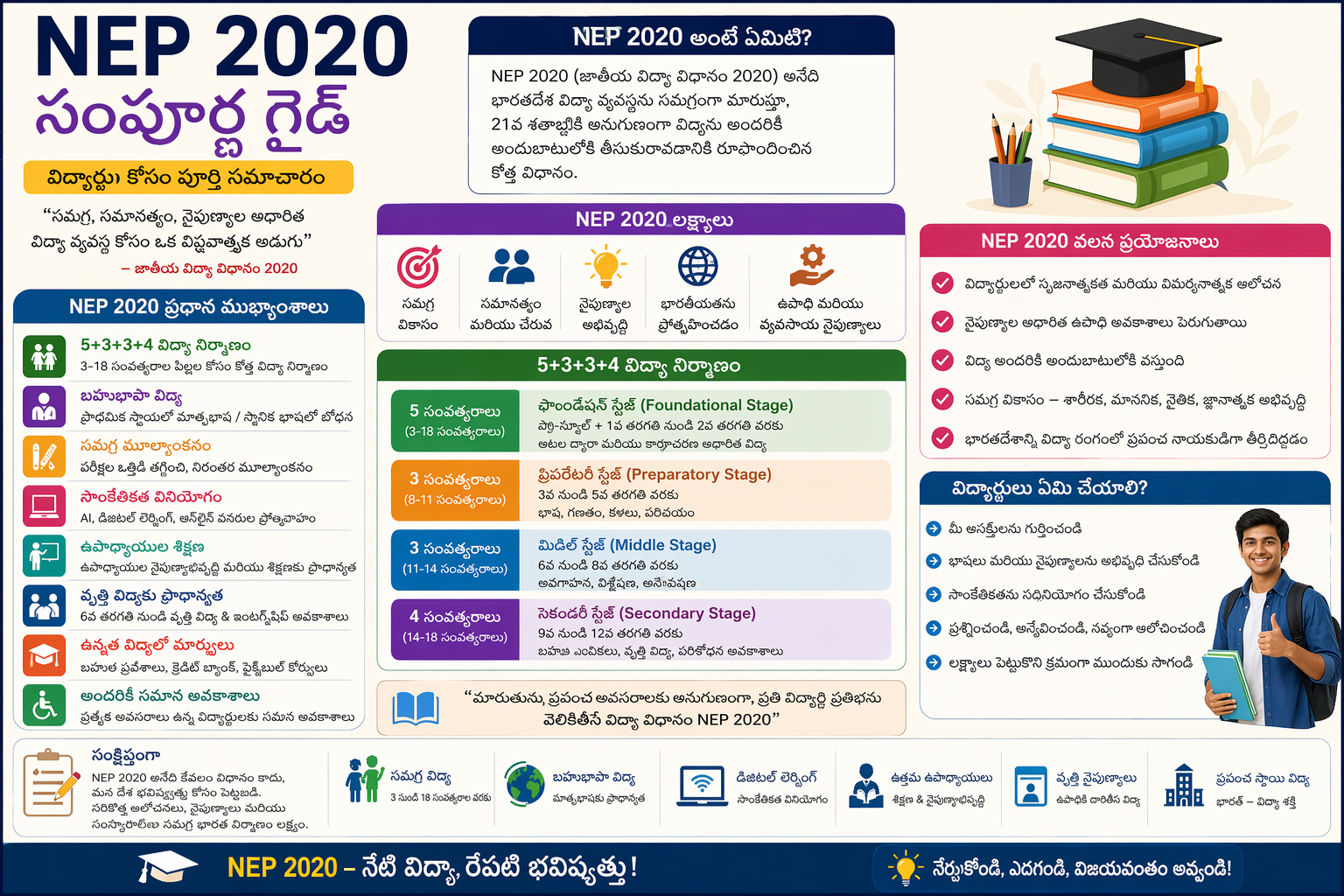
1. New 5+3+3+4 Curricular Structure
NEP 2020 replaces the traditional 10+2 system with a 5+3+3+4 structure covering ages 3 to 18. This includes a Foundational Stage (ages 3–8), Preparatory Stage (ages 8–11), Middle Stage (ages 11–14), and Secondary Stage (ages 14–18). The goal is to align curriculum with cognitive development stages.
2. Multidisciplinary & Holistic Learning
Students will no longer be boxed into rigid streams like Science, Commerce, or Arts. NEP 2020 encourages flexibility — a student can study physics alongside music or economics with computer science. This approach fosters creativity and critical thinking.
3. Competency-Based Assessment
Rote memorization is out. The policy emphasizes competency-based, formative assessments that evaluate understanding, application, and analysis. Schools need tools that support this shift — which is exactly what SPYRAL's NEP 2020 learning platform is designed to do.
4. Integration of Technology & AI
NEP 2020 explicitly calls for the integration of technology, artificial intelligence, and coding into the curriculum starting from Class 6. Platforms like SPYRAL's AI & Coding Workbench help CBSE students gain hands-on experience with AI, coding, and computational thinking — exactly what the policy envisions.
5. Mother Tongue as Medium of Instruction
The policy recommends that children be taught in their mother tongue or regional language until at least Class 5, with a three-language formula applied flexibly across states.
6. Vocational Education from Class 6
NEP 2020 integrates vocational training with mainstream education, with internships and hands-on skill development starting as early as Class 6. Robotics, drone technology, and AI labs in schools are a natural extension of this vision.
NEP 2020 Implementation in Schools: Challenges & Solutions
While the policy is visionary, NEP 2020 implementation in schools remains a significant challenge for most institutions. Common hurdles include:
- Lack of digital infrastructure: Many schools lack the hardware and software to deliver tech-integrated education.
- Teacher training gaps: Educators need upskilling to teach in competency-based, multidisciplinary formats.
- Assessment redesign: Moving from rote-based exams to formative, competency-based evaluation requires new tools.
- Curriculum mapping: Aligning existing CBSE content with NEP's new framework takes time and expertise.
This is where a dedicated NEP school platform becomes essential. SPYRAL has built its NEP learning platform specifically to address these gaps — offering AI-powered assessments, competency mapping, and curriculum-aligned content for Classes 9–12.
How SPYRAL Serves as a Complete NEP Lab for Schools
SPYRAL isn't just another EdTech app. It's a purpose-built NEP lab for schools that brings the policy's vision to life through technology. Here's how:
- AI-Powered Personalized Learning: Every student gets a customized learning path based on their strengths, gaps, and pace — aligned with NEP's learner-centric philosophy.
- Competency-Based Assessments: SPYRAL's assessment engine evaluates understanding and application, not just recall, fulfilling NEP's emphasis on formative evaluation.
- AI & Robotics Workbenches: With tools like the AI Workbench and drone/robotics modules, students get hands-on experience with future-ready skills from their school itself.
- School Dashboard & API: Administrators can track NEP compliance, student progress, and competency mapping through SPYRAL's developer API and school management tools.
- UPSC Foundation: For senior secondary students eyeing civil services, the UPSC Answer Writing Lab builds analytical writing and critical thinking — skills NEP 2020 champions at every level.
NEP 2020 PDF: A Summary Table
Here's a quick-reference summary of the NEP 2020 PDF highlights for educators:
- Released: July 29, 2020
- Replaces: National Policy on Education, 1986
- New Structure: 5+3+3+4 (ages 3–18)
- Key Focus Areas: Holistic development, multidisciplinary learning, technology integration, vocational education, competency-based assessment
- Target GDP Spend on Education: 6% of GDP
- Higher Education Goal: 50% Gross Enrolment Ratio by 2035
- Language Policy: Three-language formula with mother tongue emphasis until Class 5
Frequently Asked Questions (FAQ)
1. Where can I download the NEP 2020 PDF?
The official NEP 2020 PDF is available for free download on the Ministry of Education website (education.gov.in). It is available in both English and Hindi. The document is approximately 66 pages and covers school education, higher education, teacher training, and technology integration.
2. What is the 5+3+3+4 structure in NEP 2020?
The National Education Policy 2020 replaces the 10+2 system with a 5+3+3+4 curricular structure: Foundational Stage (ages 3–8), Preparatory Stage (ages 8–11), Middle Stage (ages 11–14), and Secondary Stage (ages 14–18). This structure aligns education with developmental milestones in children.
3. How can schools implement NEP 2020 effectively?
NEP 2020 implementation in schools requires curriculum realignment, competency-based assessments, teacher training, and technology adoption. Platforms like SPYRAL's NEP learning platform provide end-to-end tools for schools to transition smoothly — from AI-powered assessments to coding workbenches and progress dashboards.
4. Is there an NEP lab platform for schools?
Yes. SPYRAL offers a comprehensive NEP lab for schools that includes AI and robotics workbenches, competency-based evaluation tools, personalized learning paths, and a school admin dashboard. It is designed specifically for Indian schools adopting NEP 2020 guidelines.
5. Does NEP 2020 mandate coding and AI in schools?
NEP 2020 strongly recommends introducing coding, computational thinking, and AI concepts from Class 6 onwards. While not a strict mandate for all schools yet, CBSE and many state boards are progressively integrating these subjects. SPYRAL's AI & Coding Workbench helps students and schools stay ahead of this curve.