Home›
Blog›
Epidemic Spread Meaning Explained with Interactive Simulation 2026
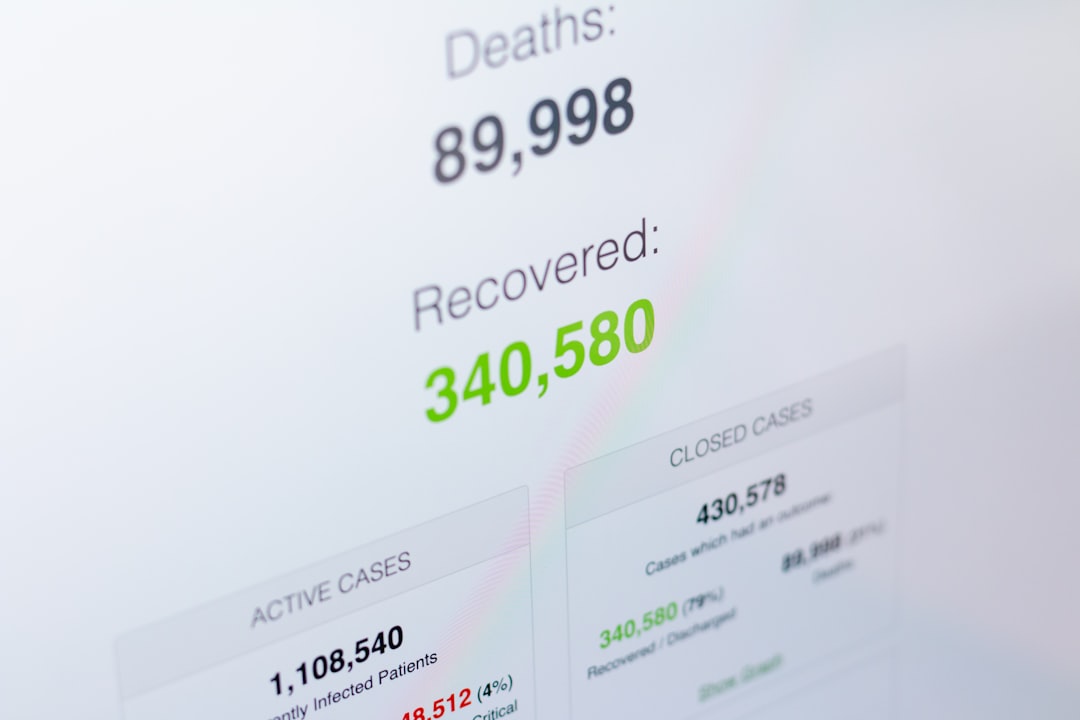
Epidemic spread meaning refers to how a disease rapidly affects a large number of people in a community or region within a short period. Unlike isolated cases, an epidemic involves widespread transmission that can overwhelm healthcare systems and disrupt daily life. But how exactly does this happen? And more importantly, how can we visualize and understand it in real time?
With AI-powered interactive simulations, you can now see and feel how diseases spread — not just read about it in a textbook. These simulations let you adjust variables like population density, infection rate, and intervention strategies to see their impact instantly. Whether you're a CBSE Class 9–12 student studying biology, a teacher preparing NEP 2020-aligned lessons, or simply curious about public health, this guide will help you master the concept of epidemic spread through hands-on learning.
Why This Matters: Real-World Relevance for Students and Teachers
Understanding epidemic spread meaning isn’t just academic — it’s a life skill. The COVID-19 pandemic showed how quickly a virus can travel across continents, affecting millions. For Indian students following the CBSE curriculum, this topic is part of the Class 9 Biology syllabus under Disease and Prevention, and it connects deeply with NEP 2020’s emphasis on experiential and competency-based learning.
Teachers can use simulations to demonstrate concepts like R naught (R₀), herd immunity, and the impact of vaccination — all in a virtual lab setting. Students can experiment with scenarios: What if people wear masks? What if schools close? What if a vaccine is introduced mid-outbreak? These aren’t hypotheticals anymore — they’re interactive lessons that make science feel real.
And here’s the best part: you don’t need a lab or expensive equipment. With platforms like SPYRAL AI Workbench — Biology Simulations, you can run an epidemic spread simulation directly in your browser, no installation required.
Epidemic Spread Meaning: Breaking Down the Concept
1. What Is an Epidemic?
An epidemic occurs when the number of disease cases rises significantly above what is normally expected in a specific area. This could be a city, state, or even a country. The key word is unexpected — it’s not just a seasonal flu outbreak, but a surge that strains resources.
For example, during the 2018 Nipah virus outbreak in Kerala, India, health officials declared an epidemic because the number of cases exceeded the usual pattern. This led to rapid contact tracing, isolation, and public health interventions.
According to the World Health Organization (WHO), an epidemic can turn into a pandemic if it spreads globally. So while all pandemics are epidemics, not all epidemics are pandemics.
2. How Does an Epidemic Spread?
The spread of an epidemic depends on several factors:
- Transmission route: How the pathogen moves from one person to another — through air (droplets), water, vectors (like mosquitoes), or direct contact.
- Basic reproduction number (R₀): The average number of people one infected person will pass the disease to. If R₀ > 1, the disease will spread exponentially.
- Population density: Crowded cities like Mumbai or Delhi see faster spread than rural areas.
- Susceptibility: If a large portion of the population is unvaccinated or has no prior immunity, the disease spreads more easily.
- Behavioral factors: Hand hygiene, mask use, and social distancing play a huge role in controlling spread.
For instance, measles has an R₀ of about 12–18, meaning one infected person can spread it to 12–18 others in a fully susceptible population. That’s why measles outbreaks can grow rapidly unless vaccination coverage is high.
3. Epidemic vs. Pandemic vs. Endemic: What’s the Difference?
These terms are often confused, but they describe different levels of disease spread:
| Term |
Definition |
Example |
| Endemic |
A disease that is consistently present in a population at a low level (e.g., malaria in certain regions of India). |
Dengue in Delhi during monsoon season. |
| Epidemic |
A sudden increase in cases above expected levels in a specific area. |
Cholera outbreak in a village due to contaminated water. |
| Pandemic |
An epidemic that spreads across multiple countries or continents. |
COVID-19 (2020–2023). |
Understanding these differences helps public health officials respond appropriately — whether it’s localized containment or global coordination.
4. Real-Life Examples of Epidemic Spread in India
India has faced several epidemics in recent decades:
- Plague (1994): Outbreak in Surat led to panic and mass migration, highlighting the role of fear in epidemic spread.
- Chikungunya (2006): Spread rapidly due to mosquito vectors in urban areas like Delhi.
- Dengue (annual): Endemic in many states, but epidemics occur during monsoon when mosquito breeding increases.
- COVID-19 (2020–2021): A global pandemic that began as an epidemic in Wuhan and spread rapidly due to high population density and global travel.
Each of these events taught us valuable lessons about surveillance, early detection, and community engagement in controlling outbreaks.
How Epidemic Spread Is Modeled: The SIR Model Explained
1. What Is the SIR Model?
The SIR model is a mathematical framework used to simulate how diseases spread through a population. It divides people into three groups:
- S (Susceptible): People who can catch the disease.
- I (Infected): People who are currently sick and can spread the disease.
- R (Recovered): People who have recovered and are immune (or deceased).
The model uses differential equations to predict how the number of people in each group changes over time. It’s the foundation of most epidemic spread simulations used today.
2. How the SIR Model Works in Simulations
In an interactive simulation, you can adjust parameters like:
- β (beta): The transmission rate (how easily the disease spreads).
- γ (gamma): The recovery rate (how quickly people recover).
- Initial population: Number of susceptible, infected, and recovered individuals.
- Interventions: Mask mandates, lockdowns, vaccination campaigns.
For example, if you set β = 0.3 and γ = 0.1, the simulation will show how the infection peaks and then declines as people move from S → I → R. You can even add a vaccination campaign mid-simulation to see how it flattens the curve.
3. Why This Matters for CBSE Students
The SIR model is part of the Class 12 Biology syllabus under Human Health and Disease. But understanding it through equations alone can be abstract. With simulations, you can see the curve flatten when interventions are applied — making the concept tangible and memorable.
Teachers can use this to demonstrate NEP 2020’s focus on experiential learning and inquiry-based science.
Epidemic Spread Simulation: See It in Action
Ready to experience epidemic spread meaning firsthand? Try this interactive simulation below. You can change the variables and watch how the outbreak evolves in real time.
⚗
Try This Simulation Free
Open the interactive simulation on anAIza School — no download, no signup needed.
Open Simulation →Change the variables yourself — see what happens in real time.
In this simulation:
- Adjust the infection rate to see how fast the disease spreads.
- Toggle masks or lockdowns to observe their impact.
- Introduce a vaccine at different stages to flatten the curve.
- Watch the SIR model in action as people move between groups.
This isn’t just a game — it’s a virtual lab where you can test hypotheses and see the consequences of public health decisions. Perfect for CBSE Class 9–12 biology and NEP 2020-aligned learning.
What If You Changed This? 3 Interactive Scenarios to Try
Don’t just watch — experiment! Here are three what-if scenarios to explore in the simulation:
Scenario 1: What If No One Wears Masks?
Set the mask compliance to 0% and watch the infection curve spike. Notice how quickly the number of infected people rises and overwhelms the healthcare system. This is why public health campaigns emphasize mask-wearing during outbreaks.
Key takeaway: Small behavioral changes can have a huge impact on epidemic spread.
Scenario 2: What If a Vaccine Is Introduced Too Late?
Start the simulation with 10% of the population vaccinated. Then, introduce a vaccine only after 50 days. Compare this to a scenario where the vaccine is introduced on day 10. What do you notice about the peak infection rate?
Key takeaway: Timing matters in vaccination campaigns. Early intervention can prevent thousands of cases.
Scenario 3: What If the Population Is Less Dense?
Reduce the population density by half and observe the spread. How does this affect the R₀ value and the overall duration of the epidemic? This scenario mirrors rural vs. urban spread patterns seen in diseases like COVID-19.
Key takeaway: Geography and urban planning play a role in how epidemics spread.
Frequently Asked Questions
What is epidemic spread meaning in simple terms?
Epidemic spread meaning refers to how a disease rapidly affects a large number of people in a community or region within a short period. It’s not just a few isolated cases — it’s a surge that can overwhelm healthcare systems. Think of it like a wildfire: once it starts, it spreads quickly unless controlled by barriers (like masks or vaccines).
How do epidemics spread in communities?
Epidemics spread through direct or indirect contact with an infected person or contaminated surface. For example, COVID-19 spread through respiratory droplets, while cholera spreads through contaminated water. Factors like population density, hygiene practices, and travel patterns all influence how fast and far a disease travels.
What is the difference between epidemic and pandemic?
An epidemic is a sudden increase in disease cases above expected levels in a specific area, while a pandemic is an epidemic that spreads across multiple countries or continents. For example, a dengue outbreak in Mumbai is an epidemic, but COVID-19 became a pandemic because it spread globally.
How can I simulate epidemic spread in a classroom?
You can simulate epidemic spread using AI-powered platforms like SPYRAL AI Workbench. These tools allow students to adjust variables like infection rate, population density, and interventions (masks, lockdowns) to see real-time effects. It’s a hands-on way to teach the SIR model and public health concepts.
What is the SIR model in epidemic spread?
The SIR model divides a population into three groups: Susceptible (S), Infected (I), and Recovered (R). It uses mathematical equations to predict how diseases spread over time. In simulations, you can see how changing parameters like transmission rate (β) or recovery rate (γ) affects the curve. It’s a key concept in CBSE Class 12 Biology.
Can I use an epidemic spread simulation for CBSE biology projects?
Yes! Platforms like SPYRAL AI Workbench allow you to run epidemic spread simulations and generate data for CBSE Class 9–12 biology projects. You can analyze how different interventions affect the spread and present your findings in a report or presentation. It’s a great way to meet NEP 2020’s emphasis on project-based learning.
What factors influence how fast an epidemic spreads?
Several factors influence epidemic spread, including the disease’s transmission route (air, water, contact), the basic reproduction number (R₀), population density, susceptibility, and public health interventions. For example, a disease with a high R₀ like measles spreads faster than one with a low R₀ like seasonal flu.
How does herd immunity help control epidemic spread?
Herd immunity occurs when a large portion of the population becomes immune to a disease, either through vaccination or prior infection. This reduces the chances of the disease spreading to vulnerable individuals. For example, if 80% of a population is vaccinated against measles, the remaining 20% are protected because the virus can’t find enough susceptible hosts to spread.
What is a food web simulator and how does it relate to epidemic spread?
A food web simulator is a tool that models how energy and nutrients flow through an ecosystem. While it doesn’t directly simulate disease spread, it helps students understand how interconnected systems (like human populations) can facilitate the spread of pathogens. For example, deforestation can disrupt ecosystems and increase human-wildlife contact, leading to zoonotic diseases like COVID-19.
Can I use a photosynthesis simulation lab to understand energy flow in ecosystems?
Yes! A photosynthesis simulation lab helps students visualize how plants convert sunlight into energy, which is the foundation of food webs. Understanding energy flow is crucial for grasping how diseases can spread through ecosystems and affect human health. For example, a decline in plant diversity can disrupt food chains and increase human exposure to disease vectors like mosquitoes.
How does membrane transport simulation help in understanding disease spread?
A membrane transport simulation models how substances move across cell membranes. This is relevant to epidemic spread because pathogens like viruses and bacteria often enter cells through membrane receptors. For example, the SARS-CoV-2 virus uses the ACE2 receptor on human cells to enter and infect the body. Simulations can help students visualize this process and understand how vaccines or drugs might block it.
What is the role of AI in modeling epidemic spread?
AI enhances epidemic spread modeling by analyzing large datasets (like travel patterns, weather data, and vaccination records) to predict outbreaks. AI-powered simulations can adapt in real time, allowing public health officials to test intervention strategies before implementing them. For students, AI tools like SPYRAL AI Workbench make complex models accessible and interactive.
How can teachers use epidemic spread simulations in NEP 2020 classrooms?
NEP 2020 emphasizes experiential learning and competency-based education. Teachers can use epidemic spread simulations to:
- Demonstrate real-world applications of biology concepts.
- Encourage students to ask “what-if” questions and test hypotheses.
- Foster collaborative learning through group experiments.
- Align lessons with CBSE and international curricula like IB and AP.
Platforms like SPYRAL AI Workbench provide teacher dashboards to track progress and generate quizzes, making it easy to integrate into lesson plans.
Where can I find a free epidemic spread simulation for CBSE biology?
You can find a free epidemic spread simulation on SPYRAL AI Workbench — Biology Simulations. It’s designed for CBSE Class 9–12 students and aligns with NEP 2020’s focus on interactive learning. No signup is required for guest access, so you can start experimenting immediately.
What are some real-world examples of epidemic spread in India?
India has faced several epidemics, including the 1994 Surat plague, the 2006 chikungunya outbreak, and annual dengue epidemics. The COVID-19 pandemic (2020–2021) was a global pandemic that began as an epidemic in Wuhan and spread rapidly due to high population density and global travel. These events highlight the importance of surveillance, early detection, and community engagement in controlling outbreaks.
Conclusion: Master Epidemic Spread Meaning with Interactive Learning
Epidemic spread meaning isn’t just a textbook definition — it’s a dynamic process that shapes our world. From the COVID-19 pandemic to annual dengue outbreaks, understanding how diseases spread is crucial for public health, policy-making, and even personal safety. But memorizing facts isn’t enough. You need to see it, feel it, and experiment with it.
With AI-powered simulations, you can do exactly that. Adjust variables, test interventions, and watch the impact in real time. Whether you're a student preparing for CBSE Class 9–12 biology exams, a teacher designing NEP 2020-aligned lessons, or simply curious about how diseases spread, interactive tools make learning engaging and effective.
Ready to dive in? Visit SPYRAL AI Workbench — Biology Simulations and start your first epidemic spread simulation today. No installation, no signup — just click and explore.
Remember: In science, seeing is believing. And in public health, seeing can save lives.
This blog post is part of the NEP 2020 and CBSE-aligned content series by SPYRAL, an AI-powered interactive science and math simulation platform.