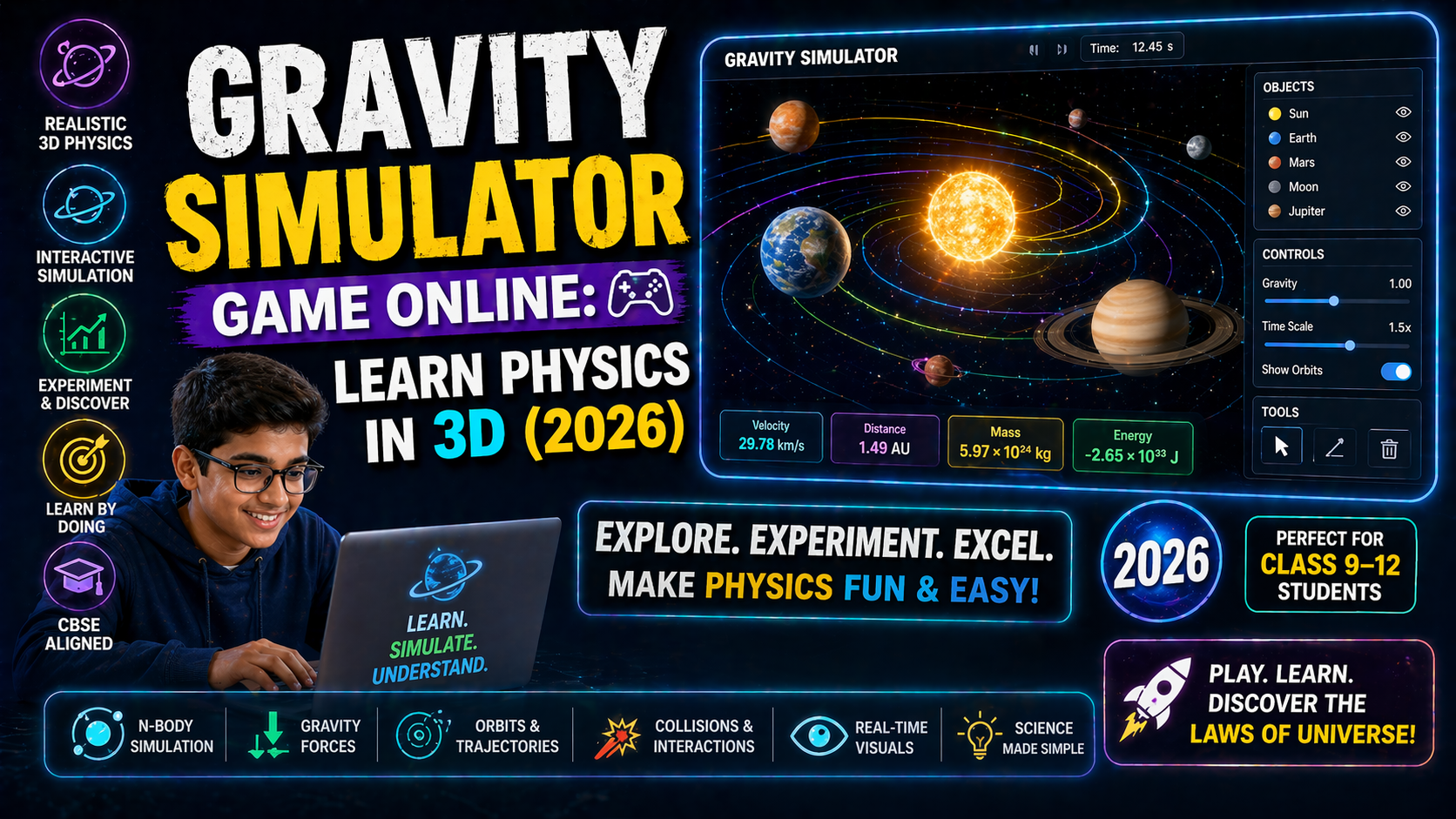
Stuck on thermodynamics CBSE? You’re not alone. The laws of thermodynamics—like the First Law (conservation of energy) or the Second Law (entropy)—can feel like abstract puzzles. But what if you could *see* how heat transfers, how gases expand, and how energy transforms in real time? SPYRAL’s AI-powered simulations turn thermodynamics from a textbook nightmare into an interactive adventure. No more guessing—just *discovering* how the universe works.
Whether you're a CBSE Class 9–12 student, a teacher preparing for NEP 2020 labs, or a parent helping your child grasp this tricky topic, this guide will show you how to master thermodynamics with hands-on simulations. Ready to make physics *click*?
Why This Matters: Thermodynamics CBSE in the Real World
Thermodynamics isn’t just about equations—it’s the science behind everything from the engine in your school’s generator to the refrigerator in your home. In India, where NEP 2020 emphasizes experiential learning, understanding thermodynamics isn’t just academic; it’s practical. Imagine explaining to your class how a heat engine works or why your tea cools down faster in a thin cup than a thick one. With traditional teaching, this requires memorization. With simulations, you *experience* it.
For students preparing for JEE or NEET, thermodynamics is a high-weightage topic. But even for Class 9–10 students, grasping concepts like heat transfer or the ideal gas law builds a foundation for advanced physics. The problem? Most students struggle to visualize these abstract ideas. That’s where interactive simulations come in.
Teachers in CBSE schools face another challenge: limited lab resources. With SPYRAL’s AI-powered simulations, you don’t need expensive equipment. Just a device and internet, and you’re ready to conduct virtual experiments—from measuring temperature changes to simulating gas expansions. It’s thermodynamics CBSE, but *made real*.
Dive Into Thermodynamics CBSE: Simulations That Teach
Thermodynamics is all about energy, heat, and work. But how do you *see* these invisible forces at play? With SPYRAL’s simulations, you don’t just read about them—you *interact* with them. Here’s how:
1. Heat Transfer: See How Energy Moves
Heat transfer is the backbone of thermodynamics. Whether it’s conduction, convection, or radiation, understanding how heat moves is crucial. In SPYRAL’s heat transfer simulation, you can:
- Adjust the temperature of two objects and watch how heat flows between them.
- Compare different materials (like metal vs. wood) to see which conducts heat faster.
- Observe real-time temperature changes and graph them to analyze trends.
This isn’t just theory—it’s *experimentation*. You’ll see firsthand why a metal spoon gets hot faster than a wooden one, or how insulation works in your school’s science lab. For CBSE students, this aligns perfectly with practicals like NCERT’s thermodynamics experiments.
2. Gas Laws: Watch Pressure and Volume Change
The gas laws (Boyle’s, Charles’s, and Gay-Lussac’s) describe how gases behave under different conditions. But how do you *visualize* pressure and volume changing? SPYRAL’s gas laws simulation lets you:
- Adjust the temperature, pressure, or volume of a gas and see how it responds.
- Compare real-world scenarios like a balloon expanding in a hot room or a syringe’s piston moving.
- Plot graphs to understand the mathematical relationships behind the laws.
This simulation is perfect for CBSE Class 11 students studying thermodynamics, as it directly ties to topics like the ideal gas law and the behavior of gases in different states. Teachers can use it to demonstrate concepts like Avogadro’s Law without needing a lab.
3. Heat Engines: Build and Test Your Own
Heat engines are the heart of thermodynamics—powering everything from cars to power plants. In SPYRAL’s heat engine simulation, you can:
- Design a simple engine and adjust parameters like fuel type, temperature, and efficiency.
- See how changing these variables affects the engine’s performance.
- Compare different types of engines (like Otto vs. Diesel cycles) to understand their efficiencies.
This simulation is ideal for Class 12 students preparing for CBSE exams or JEE/NEET, as it connects thermodynamics to real-world applications. It also aligns with NEP 2020’s focus on project-based learning, letting students experiment with design and optimization.
4. Thermodynamic Cycles: Visualize Efficiency
Thermodynamic cycles like the Carnot cycle or Rankine cycle are essential for understanding how heat engines work. SPYRAL’s simulation lets you:
- Plot the cycle on a P-V (pressure-volume) diagram to see the stages of expansion, heat addition, and work output.
- Adjust parameters like temperature and pressure to see how they affect efficiency.
- Compare different cycles to understand their advantages and limitations.
This is a game-changer for students struggling with theoretical diagrams. Instead of memorizing, they *see* how the cycle works, making it easier to grasp concepts like entropy and the Second Law of Thermodynamics.
What If You Changed This?
Thermodynamics isn’t just about memorizing formulas—it’s about *exploring*. Here are three “what-if” scenarios to try in our simulations:
1. What If You Doubled the Temperature of a Gas?
In the gas laws simulation, double the temperature of a gas while keeping the volume constant. What happens to the pressure? According to Gay-Lussac’s Law, pressure increases proportionally with temperature. But why? Try it and observe the real-time changes on the graph. This experiment will help you understand why hot-air balloons rise or how car tires expand in summer heat.
2. What If You Added Insulation to a Heat Transfer Experiment?
In the heat transfer simulation, start with two objects at different temperatures. Then, add insulation between them. How does the rate of heat transfer change? You’ll see firsthand why materials like wool or foam are used in thermos flasks. This experiment ties directly to CBSE’s practicals on heat transfer and insulation.
3. What If You Changed the Fuel in a Heat Engine?
In the heat engine simulation, switch from a hypothetical fuel to one with a higher energy content (like gasoline vs. diesel). How does the engine’s efficiency change? You’ll notice differences in work output and waste heat, connecting thermodynamics to real-world engineering. This is perfect for students interested in JEE or NEET, where understanding engine efficiency is key.
Try It Free on SPYRAL
Everything discussed in this article is available for free on SPYRAL AI Workbench — Physics Simulations. No signup required for guest access — just open it and start learning.
Explore SPYRAL AI Workbench — Physics Simulations →Frequently Asked Questions
How can a thermodynamics simulation help me understand CBSE concepts better?
Traditional textbooks describe thermodynamics with equations and diagrams, but simulations let you *interact* with the concepts. For example, in SPYRAL’s gas laws simulation, you can adjust pressure, volume, and temperature in real time and see how gases behave. This hands-on approach aligns with NEP 2020’s focus on experiential learning, making abstract ideas like the ideal gas law much easier to grasp.
Where can I find a free ohm law resistor simulation for CBSE Class 12?
While Ohm’s Law is typically covered in electricity and magnetism, thermodynamics simulations can complement your understanding by showing how energy (including electrical energy) transforms. For a direct Ohm’s Law simulation, check out SPYRAL’s AI Workbench, where you can explore circuits and resistance in real time. For thermodynamics-specific simulations, our heat transfer and gas laws tools are perfect for visualizing energy flow—key to understanding how thermodynamics connects to other physics topics.
Can I use a fluid pressure buoyancy simulation to study thermodynamics?
Absolutely! While fluid pressure and buoyancy are part of fluid mechanics, they share fundamental principles with thermodynamics, such as the role of pressure in energy transfer. SPYRAL’s simulations allow you to explore how pressure changes affect systems, which is directly relevant to thermodynamics. For example, in a fluid pressure simulation, you can see how temperature affects buoyancy—tying into concepts like the Archimedes’ principle and how gases expand with heat. For a deeper dive into thermodynamics, our gas laws and heat engines simulations are tailored for CBSE students.
How does a lens formula calculator relate to thermodynamics?
The lens formula calculator is primarily used in optics, but understanding how lenses focus light involves principles of energy transfer—something thermodynamics also explores. For instance, the heat generated when light passes through a lens (though minimal) is a small-scale example of energy transformation. While SPYRAL doesn’t offer a lens formula simulation directly in thermodynamics, our heat transfer and energy conversion tools help you visualize how energy moves and transforms in systems, which is foundational for both optics and thermodynamics. For optics-specific tools, explore SPYRAL’s AI Workbench.
Are there simulations for thermodynamics cbse class 11 that cover all the NCERT topics?
Yes! SPYRAL’s simulations align perfectly with the NCERT Class 11 Physics textbook, covering all key thermodynamics topics. Our tools include:
- First Law of Thermodynamics: See how energy is conserved in a system.
- Second Law of Thermodynamics: Explore entropy and the direction of heat flow.
- Ideal Gas Laws: Visualize Boyle’s, Charles’s, and Gay-Lussac’s laws in action.
- Heat Engines and Efficiency: Build and test your own heat engine to understand real-world applications.
Each simulation includes AI-generated explanations and quizzes to reinforce learning, making it easier to ace your CBSE exams.
How can I use a thermodynamics simulation to prepare for JEE or NEET?
Thermodynamics is a high-weightage topic in both JEE and NEET. SPYRAL’s simulations help you prepare by:
- Visualizing Concepts: See how gases expand, how heat engines work, and how entropy changes—key for understanding theoretical questions.
- Practicing Problems: Our simulations include AI-generated quizzes to test your knowledge of topics like the Carnot cycle or adiabatic processes.
- Connecting Theory to Practice: Understand real-world applications like refrigerators, heat pumps, and engines—critical for NEET’s biology and JEE’s physics.
Start with our thermodynamic cycles simulation to master efficiency calculations, a common JEE/NEET question type.
Can I conduct thermodynamics experiments online without a lab?
Absolutely! SPYRAL’s virtual labs eliminate the need for physical equipment. You can:
- Measure temperature changes in real time without thermometers.
- Adjust gas pressures and volumes to test Boyle’s Law.
- Simulate heat engines and observe efficiency changes.
These experiments are designed to replicate CBSE’s practical requirements, such as studying the specific heat capacity of materials or the behavior of gases. Perfect for students in rural areas or those with limited lab access.
How do I use a thermodynamics simulation to understand entropy?
Entropy is one of the trickiest concepts in thermodynamics, but SPYRAL’s simulations make it tangible. In our thermodynamic cycles simulation:
- Adjust the temperature and pressure of a system to see how entropy changes.
- Observe the direction of heat flow and how it relates to the Second Law of Thermodynamics.
- Compare reversible and irreversible processes to understand why entropy always increases in real-world systems.
For a deeper dive, try our heat transfer simulation to see how disorder (entropy) increases as heat spreads from a hot object to a cold one.
Are there simulations for thermodynamics cbse class 12 that include practicals?
Class 12 thermodynamics builds on Class 11 concepts but adds depth, especially in topics like thermodynamic potentials and statistical thermodynamics. SPYRAL’s simulations for Class 12 include:
- Advanced Heat Engines: Test the efficiency of different cycles like the Rankine cycle used in power plants.
- Phase Transitions: Explore how substances change states (solid, liquid, gas) and how this relates to thermodynamics.
- Statistical Thermodynamics: Visualize how microscopic particles contribute to macroscopic properties like temperature and pressure.
These simulations align with CBSE’s practical requirements, such as studying the latent heat of vaporization or the behavior of real gases.
How can I use simulations to study the first law of thermodynamics?
The First Law of Thermodynamics states that energy cannot be created or destroyed—only transferred or converted. SPYRAL’s heat transfer and heat engine simulations let you:
- Add heat to a system and observe how it converts into work or changes the internal energy.
- Adjust the work done by the system (e.g., lifting a weight) and see how it affects the energy balance.
- Compare open and closed systems to understand how energy flows in and out.
For example, in the heat engine simulation, you can input a certain amount of heat and measure the work output, directly illustrating the First Law: ΔU = Q - W (change in internal energy = heat added - work done).
Can I use a thermodynamics simulation to prepare for NEP 2020’s competency-based learning?
NEP 2020 emphasizes competency-based learning, which focuses on applying knowledge rather than rote memorization. SPYRAL’s simulations are perfect for this approach because they:
- Encourage Exploration: Students can experiment with variables (like temperature or pressure) to see real-time effects.
- Provide Instant Feedback: AI-generated explanations help students understand *why* things happen, not just *what* happens.
- Connect Theory to Real World: Simulations like heat engines show how thermodynamics applies to everyday devices like refrigerators or cars.
For example, instead of just learning about the Carnot cycle, students can design their own engine and optimize its efficiency—directly aligning with NEP’s focus on hands-on learning.