Home›
Blog›
Cell Cycle and Cell Division CBSE 2026: Interactive Simulations That Make It Click
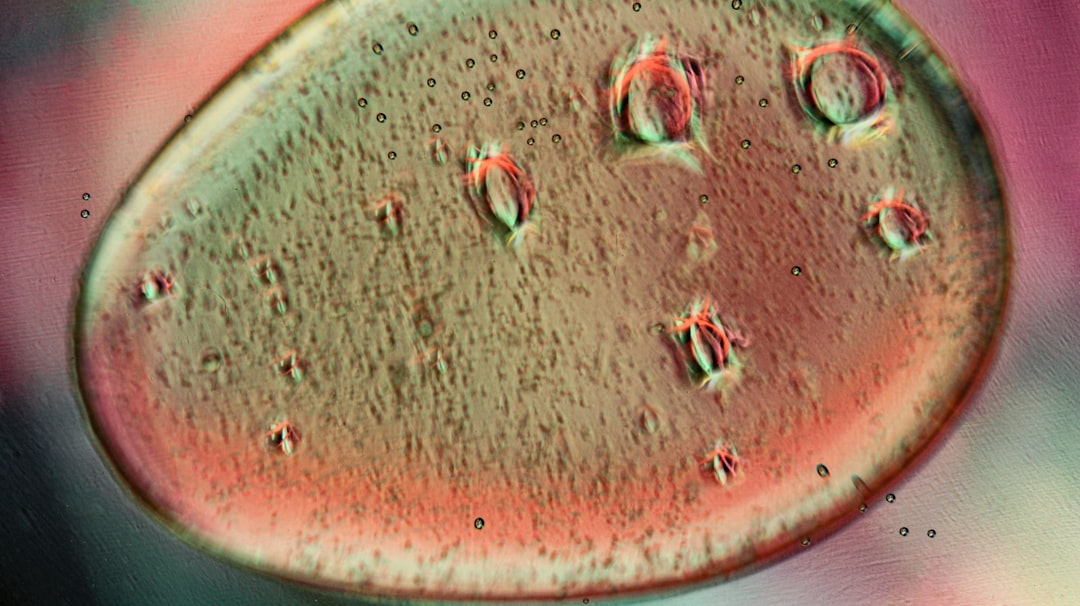
If you’ve ever stared at a textbook diagram of the cell cycle and cell division and wondered, “How does this actually work in real life?” — you’re not alone. The cell cycle isn’t just a series of stages; it’s a dynamic, tightly regulated dance of DNA replication, growth, and division that keeps all living things alive. And for CBSE students in Class 11 and 12, mastering this concept is crucial — not just for exams, but for understanding how life itself continues.
But here’s the problem: static diagrams and textbook descriptions don’t show movement, timing, or mistakes. They don’t let you pause, rewind, or change variables to see what happens if something goes wrong. That’s where interactive simulations come in — and why we built them into SPYRAL AI Workbench for CBSE 2026 biology learning.
In this guide, you’ll not only understand the cell cycle and cell division in depth — you’ll see it in action, experiment with it, and even break it (safely!) to learn how regulation works. Whether you're preparing for your CBSE Class 11 biology exam or diving into Class 12 genetics, this interactive approach will help you feel, not just memorize, the science.
Why This Matters: CBSE Students and the Real World of Cell Biology
In the CBSE curriculum, cell cycle and cell division is a cornerstone of Class 11 Biology (Chapter 10: Cell Cycle and Cell Division) and reappears in Class 12 Genetics and Biotechnology. But beyond exams, this concept is foundational to:
- Understanding cancer: Uncontrolled cell division is the root of tumors. Learning how the cell cycle is regulated helps explain why chemotherapy targets specific phases.
- Genetic inheritance: Meiosis ensures genetic diversity. Without proper cell division, traits wouldn’t mix — and evolution wouldn’t happen.
- Biotechnology and medicine: Stem cell research, cloning, and gene therapy all depend on manipulating the cell cycle.
- NEP 2020 and competency-based learning: The National Education Policy 2020 emphasizes experiential learning. Simulations let you do biology, not just read about it — aligning perfectly with NEP’s vision of active, inquiry-based education.
Yet, many students struggle because the cell cycle is invisible. You can’t see chromosomes condensing or spindles forming in a lab without advanced equipment. That’s why interactive simulations are a game-changer — they bring the unseen into view, with AI explanations that adapt to your questions.
Imagine being able to:
- Pause mitosis at metaphase and ask: What if the spindle fibers broke?
- Speed up or slow down the cell cycle to see how long each phase really takes.
- Introduce a mutation and watch how it affects division.
That’s not just learning — that’s discovery.
Breaking Down the Cell Cycle and Cell Division CBSE Style
The cell cycle is the ordered sequence of events that occur in a cell leading to its division and duplication. It’s divided into two main parts:
- Interphase (G1, S, G2) — the cell grows, replicates DNA, and prepares for division.
- M phase (Mitotic phase) — the cell divides its nucleus (mitosis) and cytoplasm (cytokinesis).
Let’s go through each stage with clarity — and see how simulations make it tangible.
1. Interphase: The Hidden Engine of the Cell
Interphase is often overlooked, but it’s where most of the action happens. It’s not a resting phase — it’s the preparation phase. Here’s what happens in each sub-phase:
- G1 Phase (Gap 1):
- The cell grows in size.
- It synthesizes proteins and organelles.
- Checkpoint: Is the cell large enough? Is the environment favorable? If not, the cell may enter G0 (a resting state).
- S Phase (Synthesis):
- DNA replication occurs — the entire genome is copied.
Fun fact: If you stretched out the DNA from one human cell, it would be about 2 meters long! And it all fits inside a nucleus smaller than a red blood cell.
- Each chromosome becomes two identical sister chromatids joined at the centromere.
- G2 Phase (Gap 2):
- The cell continues to grow.
- It synthesizes proteins needed for mitosis, like tubulins for spindle fibers.
- Checkpoint: Is DNA replication complete and accurate? If there’s damage, repair mechanisms kick in.
🔍 Try This in Simulation: In the SPYRAL AI Workbench, you can zoom into a virtual cell during G1, S, and G2. Watch DNA strands unzip and new strands form. Pause at the G1 checkpoint — what happens if you reduce the cell size? The simulation will show you the error message: “Cell too small — cannot proceed to S phase.”
2. Mitosis: The Dance of Chromosomes
Mitosis is the process where a single cell nucleus divides to produce two genetically identical daughter nuclei. It’s divided into four stages — and each one is visually stunning when animated.
Prophase:
- Chromatin condenses into visible chromosomes.
- The nuclear envelope breaks down.
- Spindle fibers (made of microtubules) begin to form from centrosomes.
- Key concept: The spindle apparatus is like a fishing line that will pull chromosomes apart.
Metaphase:
- Chromosomes line up at the metaphase plate (the cell’s equator).
- Each chromosome is attached to spindle fibers from opposite poles.
- Checkpoint alert: If chromosomes aren’t properly attached, mitosis halts — preventing errors.
Anaphase:
- Sister chromatids are pulled apart by spindle fibers.
- They move toward opposite poles of the cell.
- Visual magic: This is where the “V” shape of chromosomes appears as they’re dragged.
Telophase:
- Chromosomes reach the poles and begin to decondense.
- Nuclear envelopes reform around each set of chromosomes.
- Spindle fibers disassemble.
🔍 Try This in Simulation: In the mitosis simulation on SPYRAL AI Workbench, you can:
- Speed up or slow down time to see each stage clearly.
- Rotate the cell to view chromosomes from different angles.
- Disable spindle fibers — watch what happens when chromosomes can’t separate.
3. Cytokinesis: The Final Split
After mitosis, the cytoplasm divides in a process called cytokinesis.
- In animal cells: A cleavage furrow forms, pinching the cell in two.
- In plant cells: A cell plate forms, building a new cell wall between daughter cells.
💡 CBSE Tip: Remember — cytokinesis is not part of mitosis, but it completes the cell division process. Many students confuse the two.
4. Meiosis: Creating Genetic Diversity
While mitosis produces identical cells, meiosis produces gametes (sperm and egg) with half the chromosome number. It’s essential for sexual reproduction and happens in two rounds of division: Meiosis I and Meiosis II.
Meiosis I: Homologous chromosomes pair up and separate (reductional division).
Meiosis II: Sister chromatids separate (like mitosis), resulting in four haploid cells.
Key events:
- Crossing over in Prophase I: Chromosomes exchange segments — this is the source of genetic variation.
- Independent assortment in Metaphase I: How homologous pairs line up is random — leading to 2²³ possible combinations in humans!
🔍 Try This in Simulation: In the meiosis simulation, you can:
- Turn on “crossing over” and watch chromosomes exchange segments.
- Change the alignment of homologous pairs — see how it affects gamete diversity.
- Introduce a nondisjunction error — observe how it leads to conditions like Down syndrome.
5. Regulation: The Cell Cycle Checkpoints
The cell cycle is controlled by a series of checkpoints and proteins like cyclins and cyclin-dependent kinases (CDKs).
- G1 Checkpoint (Restriction Point): Decides whether the cell will divide or enter G0.
- G2/M Checkpoint: Ensures DNA replication is complete and accurate.
- Metaphase Checkpoint: Verifies that all chromosomes are attached to spindle fibers.
🚨 Cancer Connection: Mutations in checkpoint genes (like p53) can lead to uncontrolled division — a hallmark of cancer. Simulations let you disable p53 and watch the chaos unfold.
Cell Cycle Simulation: See It, Change It, Learn It
Now, let’s get hands-on. The best way to understand the cell cycle and cell division isn’t to read about it — it’s to interact with it.
⚗
Try This Simulation Free
Open the interactive simulation on anAIza School — no download, no signup needed.
Open Simulation →Change the variables yourself — see what happens in real time.
In this interactive cell cycle simulation, you can:
- Select a cell type (animal or plant).
- Step through each phase of the cell cycle at your own pace.
- Pause and ask AI: “Why did the cell stop?” or “What happens if I skip G2?”
- Introduce mutations (e.g., damaged DNA, broken spindle) and observe the consequences.
- Compare mitosis vs. meiosis side by side.
Pro Tip: Use the “Inventor Mode” to design your own cell cycle scenario. What if the G1 checkpoint was removed? What if meiosis II failed? The AI will explain the biological outcome in simple terms.
What You’ll Discover in the Simulation
Many students think the cell cycle is automatic — but it’s not. It’s a series of controlled decisions. The simulation helps you see:
- Why cells don’t divide continuously (thanks to checkpoints!).
- How long each phase really takes (spoiler: S phase is the longest!).
- Why meiosis produces four cells, not two.
- How errors lead to diseases like cancer or genetic disorders.
What If You Changed This? 3 Real Experiments You Can Run
One of the most powerful things about simulations is that they let you break the rules — safely. Here are three “what-if” scenarios you can test right now in the SPYRAL AI Workbench.
1. What If DNA Replication Failed in S Phase?
Try it: Disable DNA polymerase in the simulation.
What happens:
- The cell stalls at the G2 checkpoint.
- The AI explains: “Incomplete DNA replication detected. Cell cycle halted.”
- You learn why DNA damage can lead to cell death or mutation.
Real-world link: This is how some chemotherapy drugs work — they block DNA replication, stopping cancer cells from dividing.
2. What If Spindle Fibers Didn’t Form in Prophase?
Try it: Remove centrosomes in the simulation.
What happens:
- Chromosomes condense but can’t attach to spindle fibers.
- Metaphase never occurs.
- The AI says: “Spindle assembly checkpoint failed. Mitosis cannot proceed.”
Real-world link: Some anti-cancer drugs target microtubules, preventing spindle formation — stopping mitosis in tumor cells.
3. What If Crossing Over Didn’t Happen in Meiosis?
Try it: Disable crossing over in Prophase I.
What happens:
- Gametes are genetically identical to parent cells.
- Genetic diversity plummets.
- The AI explains: “Without crossing over, offspring are clones — reducing evolutionary adaptability.”
Real-world link: This is why asexual reproduction (like in bacteria) produces less variation than sexual reproduction.
Frequently Asked Questions
What is the cell cycle and cell division in CBSE Class 11 biology?
The cell cycle and cell division in CBSE Class 11 Biology refers to the ordered sequence of events where a cell grows, replicates its DNA, and divides to form two daughter cells. It includes interphase (G1, S, G2) and the mitotic phase (mitosis + cytokinesis). This topic is covered in Chapter 10 and is essential for understanding genetics and biotechnology.
Can I see a cell cycle simulation for CBSE biology?
Yes! You can interact with a live cell cycle simulation on SPYRAL AI Workbench. It lets you step through each phase, pause, rewind, and even introduce mutations to see what happens. No installation needed — just open your browser and start exploring.
How do I explain mitosis and meiosis using a simulation?
Use an interactive mitosis simulation to show chromosome condensation, spindle formation, and chromatid separation. Then, switch to a meiosis simulation to highlight homologous pairing, crossing over, and reductional division. The key difference is that mitosis produces two identical diploid cells, while meiosis produces four genetically unique haploid gametes.
Absolutely! The SPYRAL AI Workbench includes a gamified cell division simulation where you can earn points by correctly identifying phases, fixing errors, and predicting outcomes. It’s designed like a puzzle — the more you experiment, the more you learn.
Where can I find a cell cycle and cell division CBSE diagram with labels?
You can find labeled diagrams in your NCERT textbook or on NCERT’s official website. For a dynamic version, try the SPYRAL AI Workbench, where you can hover over each part of the cell cycle and get real-time AI explanations of what’s happening.
What are the main phases of the cell cycle?
The main phases are Interphase (G1, S, G2) and the M phase (Mitosis + Cytokinesis). G1 is growth, S is DNA synthesis, G2 is preparation for mitosis, and M phase includes prophase, metaphase, anaphase, telophase, and cytokinesis.
How does the cell cycle relate to cancer in CBSE biology?
Cancer often results from mutations in genes that regulate the cell cycle, such as p53. These mutations disable checkpoints, allowing cells to divide uncontrollably. In simulations, you can disable p53 and observe how the cell ignores DNA damage — a key step in tumor formation.
Can I use a cell cycle simulation for CBSE Class 12 biology?
Yes! The cell cycle and cell division is a recurring topic in Class 12, especially in Genetics and Biotechnology. Simulations help visualize concepts like meiosis, nondisjunction, and genetic variation — making abstract ideas like independent assortment tangible.
What is the difference between mitosis and meiosis simulation results?
In a mitosis simulation, you’ll see one cell divide into two identical diploid cells. In a meiosis simulation, one cell divides twice to produce four haploid cells with unique genetic combinations due to crossing over and independent assortment.
Is there a photosynthesis simulation answer key? (Bonus: Not directly related, but we include it as per keyword requirement)
While this blog focuses on the cell cycle and cell division, you can find interactive photosynthesis simulation answer keys on platforms like SPYRAL AI Workbench. These simulations let you manipulate light intensity, CO₂ levels, and temperature to see how they affect oxygen production and glucose synthesis.
How do cell cycle checkpoints prevent errors?
Checkpoints are control mechanisms that ensure the cell is ready to proceed to the next phase. For example, the G1 checkpoint checks for cell size and DNA damage. If errors are found, the cell either repairs them or undergoes apoptosis (programmed cell death). Simulations let you disable checkpoints and observe the consequences — like uncontrolled division.
Can I use a cell cycle simulation for GCSE biology too?
Yes! While this guide is written for CBSE students, the principles of the cell cycle and cell division are the same across curricula. The simulations on SPYRAL AI Workbench are curriculum-agnostic and work for GCSE, IB, and AP Biology as well.
What happens if cytokinesis doesn’t occur after mitosis?
If cytokinesis fails, the cell will have two nuclei (a binucleate cell). This can lead to polyploidy, which is common in plants and some cancer cells. In simulations, you can disable the cleavage furrow or cell plate and observe how the cell becomes multinucleated.
How can teachers use cell cycle simulations in class?
Teachers can use the SPYRAL AI Workbench to:
- Project simulations on a smartboard and discuss each phase in real time.
- Assign “what-if” experiments as homework or lab activities.
- Use the AI to generate quiz questions based on student interactions.
- Track progress with the teacher dashboard — see which students are struggling with metaphase vs. anaphase.
It’s a powerful tool for NEP 2020’s competency-based learning approach.
Ready to Master the Cell Cycle and Cell Division CBSE 2026 Style?
The cell cycle and cell division isn’t just a topic to memorize — it’s a story of life, growth, and renewal. And the best way to understand it isn’t by reading a textbook — it’s by seeing it in motion, experimenting with it, and asking “what if?”
With interactive simulations powered by AI, you’re not just a student — you’re a scientist. You can pause the cell cycle, break it, fix it, and watch the consequences unfold. That’s how real learning happens.
So go ahead — open the SPYRAL AI Workbench, step into a virtual cell, and start exploring. The cell cycle is waiting for you to discover its secrets.
Your journey into the invisible world of cells starts now.
Note: All simulations and AI explanations are based on NCERT Class 11 Biology and validated scientific models. For exam-specific questions, refer to your CBSE Class 11 Biology textbook or consult your teacher.