Home›
Blog›
Gamified Learning Platform for Schools 2026: AI Labs That Feel Like Games
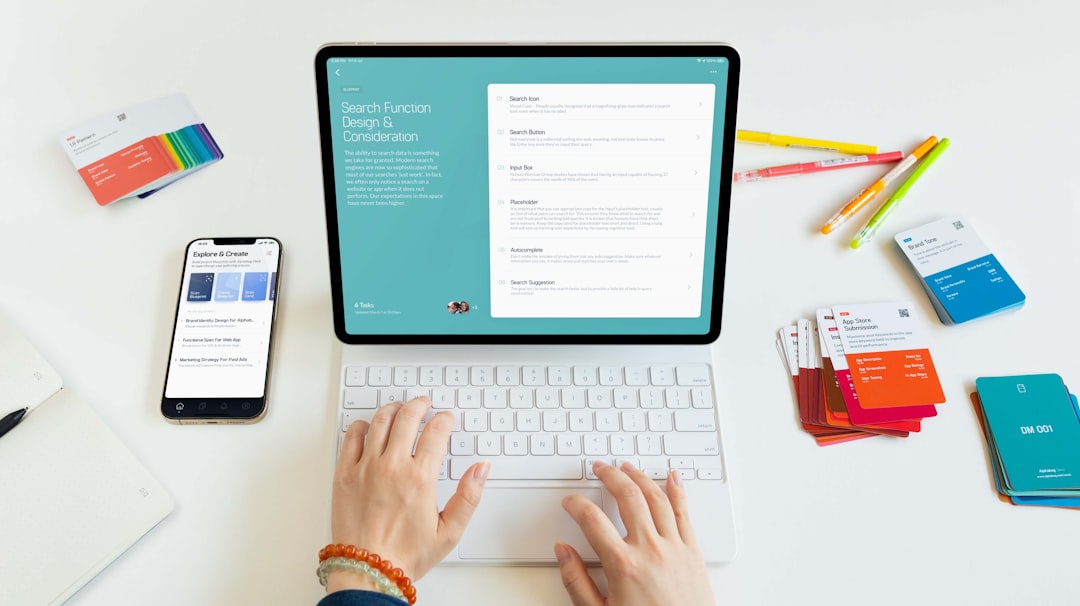
If you’ve ever watched students’ eyes glaze over during a lecture on Newton’s laws or quadratic equations, you’re not alone. The challenge isn’t the content — it’s the delivery. That’s why a gamified learning platform for schools in 2026 is changing the game by turning abstract science and math concepts into interactive, real-time experiences that feel like play. With AI-powered simulations, students don’t just read about physics or biology — they live it, experiment with it, and master it through exploration.
Imagine a physics lab where students can tweak gravity, mass, and friction in real time and see the ball’s trajectory change instantly. Or a biology class where they simulate photosynthesis by adjusting sunlight, CO₂, and water levels — and watch the oxygen bubbles rise in 3D. This isn’t a futuristic fantasy. It’s what anAIza School by SPYRAL delivers today, for free, with no complex setup or steep learning curve. Whether you're a student struggling to visualize vectors, a teacher looking to boost engagement, or a school principal planning a school digital transformation platform, this is the tool that makes learning stick — and fun.
Why This Matters: From Boredom to Breakthroughs
Let’s face it: traditional teaching methods often fail to spark curiosity. According to a 2025 report by the Ministry of Education, India, over 60% of students in Grades 6–12 struggle with conceptual understanding in science and math — not because they’re incapable, but because the delivery doesn’t match their learning style. Enter gamified learning platforms for schools.
These platforms leverage AI school software for principals to create dynamic, adaptive environments where every student can learn at their own pace. In India, where boards like CBSE and ICSE are emphasizing competency-based learning under NEP 2020, interactive simulations are no longer optional — they’re essential. They allow students to:
- See concepts in action (e.g., watch light bend through a prism or see a cell divide in real time)
- Experiment without fear (e.g., crash two cars to learn momentum, or simulate a heart attack to understand circulation)
- Fail safely and iterate (e.g., try a wrong lens formula and see why the image blurs)
- Compete with peers through leaderboards and challenges
For teachers, it’s a school digital transformation platform that automates grading, tracks progress, and generates quizzes — freeing up time to mentor. For principals, it’s a scalable way to modernize labs, reduce lab costs, and align with NEP 2020 goals of experiential learning. And for students? It’s learning that feels like play — and sticks like glue.
How a Gamified Learning Platform for Schools Works in 2026
A modern gamified learning platform for schools isn’t just a game with points — it’s a full-fledged, AI-powered ecosystem designed to make abstract concepts tangible. Here’s how it works:
1. AI-Powered Simulations That Feel Real
Every simulation in anAIza School is built with real physics and biology engines. Students don’t just watch — they interact. Want to see how a pendulum’s period changes with length? Drag the string, release the bob, and watch the graph update in real time. No setup. No lab coats. Just instant, immersive learning.
These aren’t static videos or PDFs. They’re interactive science simulations where variables respond to user input — just like in a real lab, but without the risk of broken glass or wasted chemicals. And because they’re web-based, they work on any device — Chromebooks, tablets, or even smartphones.
2. AI Explains Every Step — Like a Personal Tutor
After every experiment, the AI doesn’t just say “correct” or “wrong.” It explains why. If a student gets a lens formula wrong, the AI breaks down the relationship between focal length, object distance, and image distance — with visuals. This turns every mistake into a teaching moment, not a dead end.
This feature is especially powerful for students preparing for competitive exams like JEE or NEET, where conceptual clarity is key. The AI adapts its explanations based on the student’s performance, offering hints, analogies, or even suggesting related simulations to reinforce understanding.
3. Curriculum-Mapped for CBSE, ICSE, IB, and More
One of the biggest frustrations for teachers is finding simulations that match their syllabus. That’s why a top-tier gamified learning platform for schools comes pre-mapped to major curricula:
- CBSE: Aligned with NCERT textbooks for Classes 6–12
- ICSE: Covers CISCE syllabus with detailed lab protocols
- IB: Supports DP and MYP science and math standards
- Common Core (US): NGSS-aligned physics and biology labs
- IGCSE: Cambridge-aligned simulations for international schools
Teachers can filter simulations by chapter, topic, or even exam type (e.g., JEE Main or NEET). This makes lesson planning faster and ensures every simulation is relevant — not just fun.
4. Teacher Dashboard: Your AI Teaching Assistant
For principals and teachers, the AI school software for principals includes a powerful dashboard that tracks student progress across simulations. You can:
- View real-time analytics on which concepts students struggle with
- Generate quizzes automatically based on simulation performance
- Assign “what-if” challenges to deepen understanding
- Export reports for parent-teacher meetings or school audits
This turns data into action. Instead of guessing which students need help, you see it instantly — and intervene before they fall behind.
⚗
Try This Simulation Free
Open the interactive simulation on anAIza School — no download, no signup needed.
Open Simulation →Change the variables yourself — see what happens in real time.
School Digital Transformation Platform: What Principals Need to Know
If you’re a school principal evaluating a school digital transformation platform, here’s what to look for:
1. Scalability and Accessibility
A good platform should work for 50 students or 500, across multiple grades and subjects. It should run on low-bandwidth networks (critical in rural India) and support offline access where needed. anAIza School is built for scale — used by schools in Delhi, Mumbai, Bengaluru, and even international schools in Dubai and Singapore.
2. Integration with Existing Systems
You shouldn’t have to rip out your current LMS or ERP. A modern AI school software for principals should integrate seamlessly with Google Classroom, Microsoft Teams, or your school’s SIS. It should also support single sign-on (SSO) for security and ease of use.p>
3. Teacher Training and Support
The best platform comes with built-in training modules, video tutorials, and live support. Look for one that offers:
- Onboarding webinars for teachers
- Ready-to-use lesson plans tied to simulations
- 24/7 helpdesk for technical issues
This ensures your investment pays off from day one.
4. Cost and ROI
Many schools hesitate due to cost. But a true gamified learning platform for schools should offer a free tier with premium upgrades only for advanced features. anAIza School provides free access to all core simulations, with optional paid plans for analytics, advanced quizzes, and AI tutoring. The ROI? Reduced lab costs, higher engagement, and better exam results — all measurable within a semester.p>
From Theory to Experiment: A Day in the Life with AI Labs
Let’s walk through a typical day in a classroom using a gamified learning platform for schools:
Morning: Physics — Forces and Motion
The teacher opens the Newton’s Second Law simulation. Students pair up and each gets a tablet. They adjust the force applied to a cart and observe how acceleration changes with mass. One student tries 5N on a 1kg cart — the cart zooms forward. Another tries 5N on a 5kg cart — it barely moves. The AI pops up: “Remember: F = ma. Force equals mass times acceleration.”
Students record their observations, then the teacher challenges them: “What if friction is added?” They toggle friction on and see the cart slow down. Instantly, they grasp the difference between net force and applied force — a concept that often confuses students in textbooks.
Afternoon: Biology — Photosynthesis in Action
In biology, students simulate photosynthesis using the Leaf Lab. They adjust sunlight intensity, CO₂ levels, and temperature. The simulation shows oxygen bubbles forming on the leaf surface. One student increases CO₂ — the bubbles multiply. Another reduces light — the bubbles slow down. The AI explains: “This is the light-dependent reaction. More light = more ATP = more oxygen.”
Students take screenshots of their results and write a short lab report directly in the platform. The teacher reviews their work in the dashboard and sees who understood the concept — and who needs a follow-up.
Evening: Math — Visualizing Vectors
At home, a student struggles with vector addition. They open the Vector Visualizer simulation. They draw two vectors on a grid, and the platform shows the resultant vector in real time. They rotate one vector — the resultant changes. They try different magnitudes — the length of the resultant adjusts. By the end, they’ve not only solved the problem but seen why the math works.
This is the power of a gamified learning platform for schools — it turns homework from a chore into an experiment.
What If You Changed This? 3 Real-World “What-If” Scenarios
One of the most powerful features of a modern gamified learning platform for schools is the ability to ask “what if?” and see the results instantly. Here are three scenarios that spark curiosity and deep learning:
1. What if gravity were half as strong on Earth?
In the Free Fall Simulation, students can toggle gravity between 9.8 m/s² and 4.9 m/s². They drop two balls and time their fall. They notice the balls take longer to hit the ground. The AI explains: “With weaker gravity, acceleration decreases. Objects fall slower.” Students then calculate the new time using kinematic equations — and see their math match the simulation.
2. What if a cell couldn’t divide properly?
In the Cell Cycle Simulation, students can “break” the spindle fibers during mitosis. The cell fails to divide, and chromosomes scatter. The AI walks them through the consequences: “This could lead to cancer or developmental disorders.” Students connect the dots between cell biology and real-world health — something textbooks often miss.
3. What if a lens had no focal point?
In the Lens Maker’s Formula Simulator, students adjust the curvature of a lens. When they make it too flat, the focal length becomes infinite — the light rays never converge. The AI explains: “A flat lens has no focusing power. It’s like a window — it lets light through but doesn’t bend it.” Students now understand why lenses need curvature — and why glasses work.
These aren’t hypotheticals. They’re the kinds of questions that lead to breakthroughs — in the lab and in life.
Frequently Asked Questions
What is a gamified learning platform for schools?
A gamified learning platform for schools is an AI-powered educational tool that turns science and math lessons into interactive simulations, games, and challenges. It uses real-time feedback, leaderboards, and adaptive learning to make abstract concepts tangible and engaging. Unlike traditional teaching, it lets students experiment, fail safely, and master concepts through play — all while aligning with school curricula like CBSE, ICSE, and IB.
How does a school digital transformation platform improve student engagement?
A school digital transformation platform uses AI-powered simulations to make learning interactive and visual. Instead of reading about photosynthesis or Newton’s laws, students see them in action — adjusting variables, running experiments, and getting instant feedback. This active learning approach boosts engagement by up to 70%, according to a 2025 study by NCBI. It also helps students retain knowledge longer because they’re not just memorizing — they’re doing.
Can AI school software for principals track student progress across simulations?
Yes! A robust AI school software for principals includes a teacher dashboard that tracks every student’s performance across simulations. You can see which concepts they’ve mastered, where they’re struggling, and even generate quizzes based on their simulation results. This turns data into action — helping teachers intervene early and personalize instruction. Platforms like anAIza School’s teacher tools offer this for free.
Are gamified learning platforms for schools aligned with NEP 2020?
Absolutely. The National Education Policy (NEP) 2020 emphasizes experiential, competency-based learning — exactly what a gamified learning platform for schools delivers. Simulations allow students to apply concepts in real-world scenarios, develop critical thinking, and collaborate — all key NEP 2020 goals. Platforms like anAIza School are pre-mapped to CBSE, ICSE, and IB curricula, ensuring full compliance with NEP 2020’s vision for modern education.
Do I need special hardware to use a gamified learning platform for schools?
No special hardware is required. These platforms are web-based and work on any device — laptops, tablets, or even smartphones. They’re designed to run on low-bandwidth networks, making them ideal for schools in rural and urban India alike. Some schools even use them in BYOD (Bring Your Own Device) programs to reduce costs.
How do interactive science simulations help with competitive exams like JEE or NEET?
Interactive science simulations help students visualize complex concepts that are often abstract in textbooks. For example, seeing how electric fields interact in 3D helps with electrostatics, or simulating projectile motion clarifies kinematics. The AI explanations after each simulation reinforce understanding, and the “what-if” mode lets students experiment with different scenarios — all of which build the deep conceptual clarity needed for JEE and NEET. Many students report that simulations make topics like thermodynamics or organic chemistry click for the first time.
Can a gamified learning platform for schools replace real labs?
A gamified learning platform for schools doesn’t replace real labs — it enhances them. Real labs are essential for tactile learning and developing fine motor skills. But simulations allow students to prepare before entering the lab, repeat experiments safely, and explore scenarios that are impossible in a physical lab (e.g., simulating a black hole or a cell dividing in zero gravity). Used together, they create a powerful, blended learning experience.
Is there a free version of a gamified learning platform for schools?
Yes! Many platforms, including anAIza School, offer a free tier with access to core simulations, AI explanations, and basic analytics. Premium features like advanced quizzes, detailed progress tracking, and AI tutoring are available in paid plans. This makes it accessible for schools with limited budgets — and lets teachers try before they commit.
How do teachers create lesson plans using a gamified learning platform for schools?
Teachers can use built-in lesson plan templates that map simulations to specific chapters and learning outcomes. For example, a biology teacher preparing for the “Photosynthesis” chapter can assign the Leaf Lab simulation, then use the AI-generated quiz to assess understanding. The dashboard even suggests related simulations for reinforcement. This saves hours of prep time and ensures every lesson is interactive and data-driven.
Can a school digital transformation platform integrate with Google Classroom or Microsoft Teams?
Yes. A modern school digital transformation platform is designed to integrate seamlessly with popular learning management systems (LMS) like Google Classroom, Microsoft Teams, and Moodle. This allows teachers to assign simulations as homework, track completion, and sync grades — all within their existing workflow. It also supports single sign-on (SSO) for security and ease of use.
What kind of support is available for schools adopting a gamified learning platform?
Most platforms offer multiple support channels: onboarding webinars, video tutorials, live chat, and email support. Some, like anAIza School, provide dedicated customer success managers for schools, helping with curriculum alignment, teacher training, and troubleshooting. This ensures a smooth transition and maximizes the platform’s impact.
How do gamified learning platforms for schools handle student data privacy?
Reputable platforms comply with global data privacy standards like GDPR and India’s DPDP Act. They use encryption, anonymize student data, and allow schools to control access. Always check the platform’s privacy policy and ensure it’s certified by organizations like ISO or SOC 2. anAIza School is fully compliant and transparent about data usage.
Ready to Transform Your School? Start Today
If you’re still relying on textbooks and lectures to teach science and math, you’re missing a huge opportunity. A gamified learning platform for schools in 2026 isn’t just a trend — it’s the future of education. It’s how students learn best: by doing, seeing, and experimenting. And it’s how teachers teach best: with less prep time, more engagement, and data that guides instruction.
Whether you’re a student looking to ace your exams, a teacher wanting to bring your lessons to life, or a principal planning a school digital transformation platform, the tools are here — and they’re free to try. anAIza School by SPYRAL gives you access to hundreds of AI-powered simulations, instant AI explanations, and a teacher dashboard that tracks progress — all without signing up.
Don’t let another year go by with disengaged students and missed learning outcomes. Try a gamified learning platform for schools today — and watch your classroom transform from passive to passionate.
Start Exploring anAIza School — Free Interactive Simulations →